Analytical Data
-
Gene name
FGFRL1
- Application
-
Alternative Names
FGFR5; FHFR; FGF homologous factor receptor; FGFR-like protein; Fibroblast growth factor receptor 5
-
Species
Rat
-
Source
E. coli
-
Tag
N-His
-
Purity
Greater than 97% as determined by SDS-PAGE.
-
Uniprot
Q7TQM3
-
Expression Region
Val164~Thr368
-
Protein Length
Partial
-
Molecular Weight
28kDa
-
Endotoxin
< 1.0 EU per μg protein as determined by the LAL method.
-
Form
Freeze-dried powder
-
Buffer formulation
PBS, pH7.4, containing 0.01% SKL, 1mM DTT, 5% Trehalose and Proclin300.
-
Reconstitution
Reconstitute in ddH2O to a concentration of 0.1-0.5 mg/mL. Do not vortex.
- Customization
-
Stability Test
The thermal stability is described by the loss rate. The loss rate was determined by accelerated thermal degradation test, that is, incubate the protein at 37℃ for 48h, and no obvious degradation and precipitation were observed. The loss rate isless than 8% within the expiration date under appropriate storage condition.
-
Storage & Shelf Life
Samples are stable for up to twelve months from date of receipt at -20℃ to -80℃. Store it under sterile conditions at -20℃ to -80℃. It is recommended that the protein be aliquoted for optimal storage. Avoid repeated freeze-thaw cycles.
-
Shipping
In general, recombinant proteins are supplied as lyophilized powder and shipped at ambient temperature. For bulk packages, the proteins are provided as frozen liquid and shipped with blue ice, unless otherwise requested by the customer.
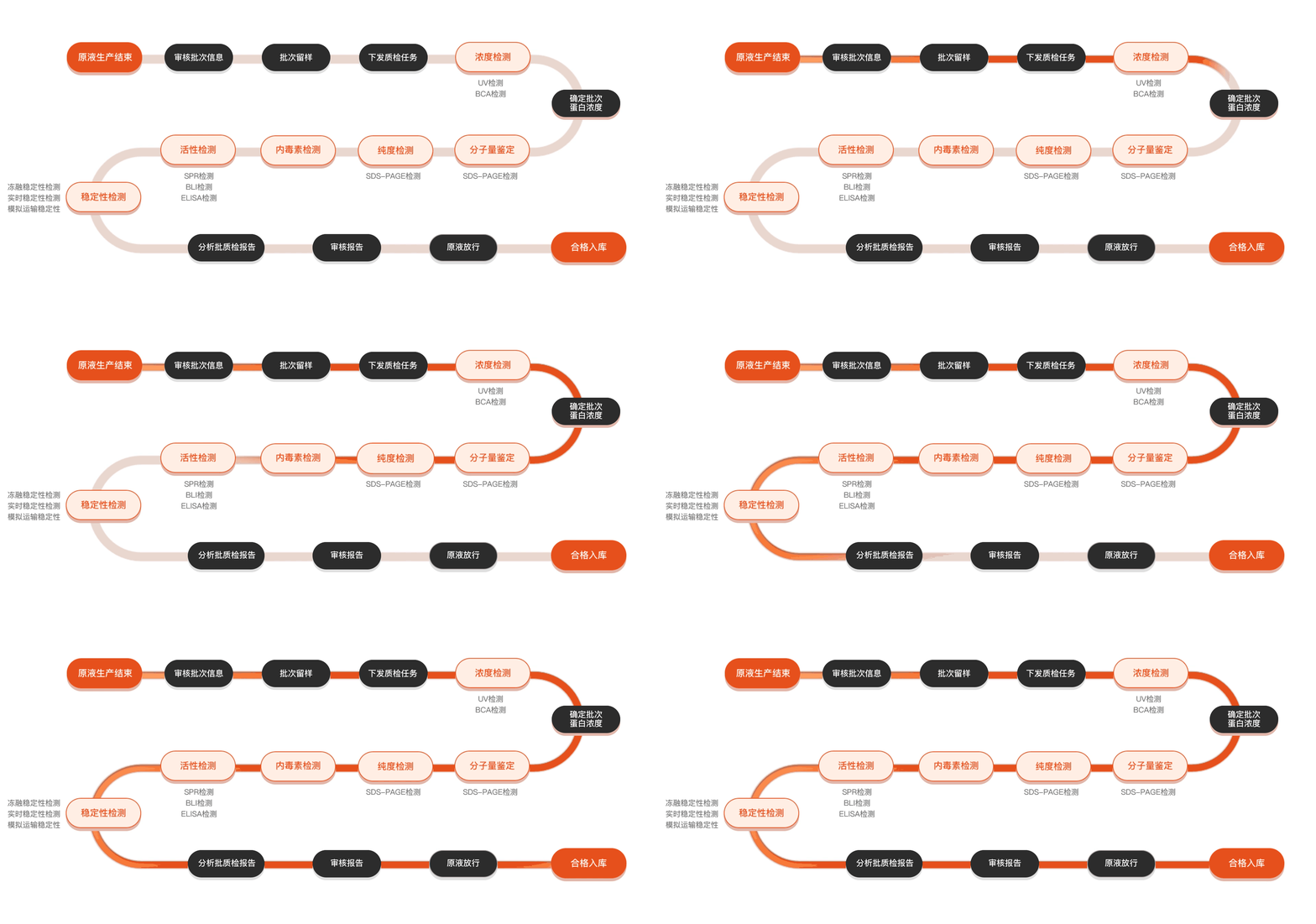
Quality inspection process
Related Products
Protein Description
FGFRL1 (Fibroblast Growth Factor Receptor-Like 1) is a member of the fibroblast growth factor receptor family, known for its unique structure that lacks a classic catalytic tyrosine kinase domain. Research has highlighted its potential role in various biological processes, including cellular signaling, tissue development, and cancer progression. Unlike other FGFRs, FGFRL1 primarily acts as a negative regulator of downstream signaling pathways, thereby influencing cellular proliferation and differentiation. Its predominant expression in skeletal tissues and association with bone development have made it a focal point for studies related to skeletal disorders and regenerative medicine. Additionally, emerging evidence suggests that FGFRL1 might be implicated in tumor biology, particularly in the context of certain malignancies where it exhibits altered expression patterns. The investigation into FGFRL1’s functional properties and molecular mechanisms has spurred interest in the development of FGFRL1-recombinant proteins, aimed at elucidating its biological significance and therapeutic potential. By employing advanced techniques, researchers endeavor to characterize the ligand-binding properties and signaling dynamics of FGFRL1, paving the way for innovative approaches in disease treatment, particularly in bone-related pathologies and cancer therapy. Understanding FGFRL1’s biological actions through recombinant protein studies could contribute invaluable insights into its role in health and disease, as well as its possible applications in targeted therapies.