
Analytical Data
-
Gene name
DNTTIP1
- Application
-
Alternative Names
DNTTIP1;C20orf167;TDIF1;Deoxynucleotidyltransferase terminal-interacting Protein 1
-
Species
Human
-
Source
E. coli
-
Tag
His tag N-Terminus
-
Purity
Greater than 90% as determined by SDS-PAGE.
-
Uniprot
Q9H147
-
Expression Region
1-329aa
-
AA Sequence
MGSSHHHHHH SSGLVPRGSH MGSMGATGDA EQPRGPSGAE RGGLELGDAG AAGQLVLTNP WNIMIKHRQV QRRGRRSQMT TSFTDPAISM DLLRAVLQPS INEEIQTVFN KYMKFFQKAA LNVRDNVGEE VDAEQLIQEA CRSCLEQAKL LFSDGEKVIP RLTHELPGIK RGRQAEEECA HRGSPLPKKR KGRPPGHILS SDRAAAGMVW KPKSCEPIRR EGPKWDPARL NESTTFVLGS RANKALGMGG TRGRIYIKHP HLFKYAADPQ DKHWLAEQHH MRATGGKMAY LLIEEDIRDL AASDDYRGCL DLKLEELKSF VLPSWMVEKM RKYMETLRTE NEHRAVEAPP QT
-
Molecular Weight
39 kDa
-
Endotoxin
< 1.0 EU per μg protein as determined by the LAL method.
-
Form
Freeze-dried powder
-
Buffer formulation
PBS, pH7.4, containing 0.01% SKL, 1mM DTT, 5% Trehalose and Proclin300.
-
Reconstitution
Reconstitute in ddH2O to a concentration of 0.1-0.5 mg/mL. Do not vortex.
- Customization
-
Stability Test
The thermal stability is described by the loss rate. The loss rate was determined by accelerated thermal degradation test, that is, incubate the protein at 37℃ for 48h, and no obvious degradation and precipitation were observed. The loss rate isless than 8% within the expiration date under appropriate storage condition.
-
Storage & Shelf Life
Samples are stable for up to twelve months from date of receipt at -20℃ to -80℃. Store it under sterile conditions at -20℃ to -80℃. It is recommended that the protein be aliquoted for optimal storage. Avoid repeated freeze-thaw cycles.
-
Shipping
In general, recombinant proteins are supplied as lyophilized powder and shipped at ambient temperature. For bulk packages, the proteins are provided as frozen liquid and shipped with blue ice, unless otherwise requested by the customer.
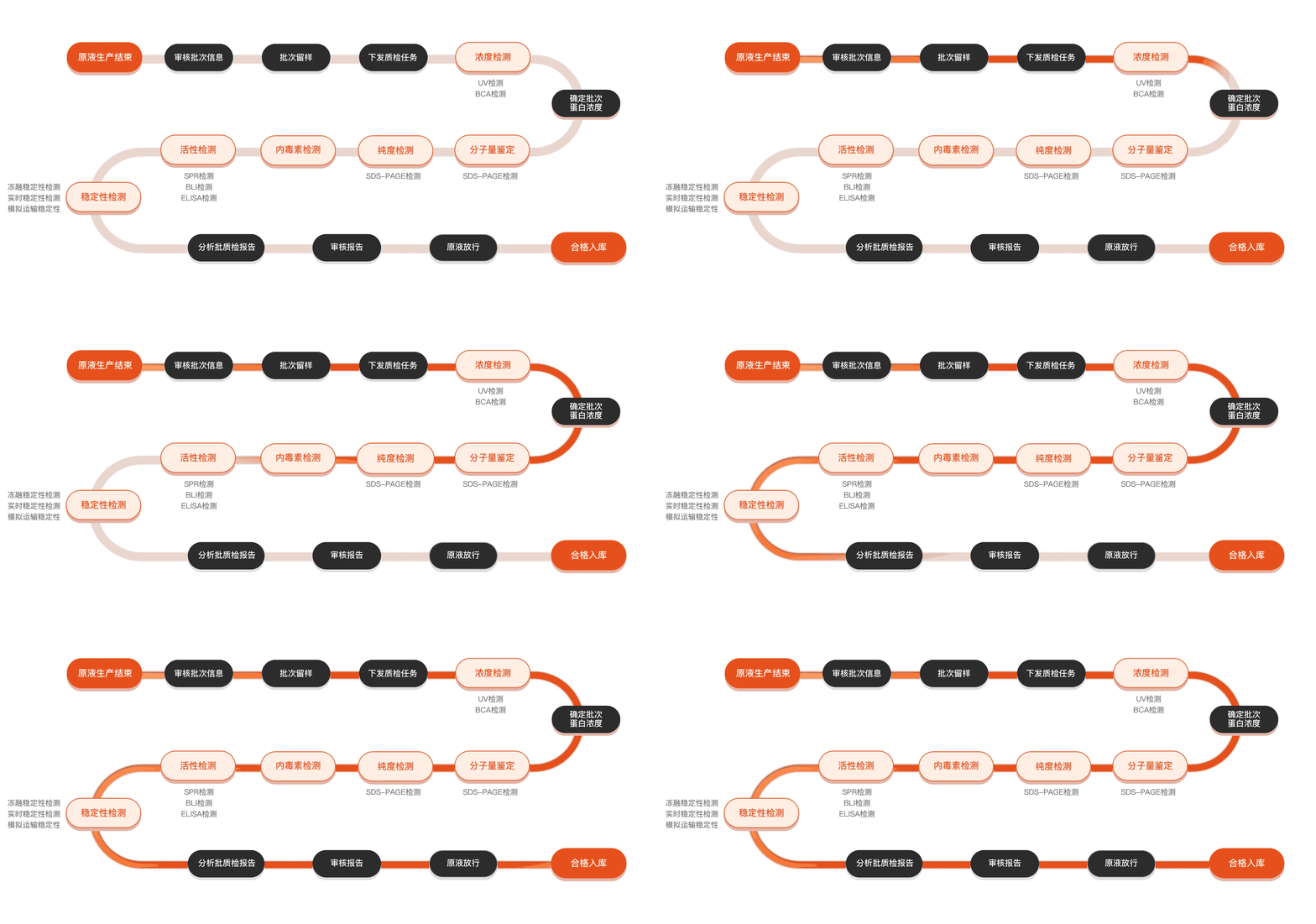
Quality inspection process
Related Products






Protein Description
DNTTIP1, or DNA damage-stimulated transcription initiation protein 1, is a crucial protein involved in the cellular response to DNA damage, playing a key role in maintaining genomic stability. Recent studies have highlighted the importance of DNTTIP1 in various biological processes, including transcription regulation, repair mechanisms, and cell cycle control. Abnormalities in DNTTIP1 function or expression have been linked to several diseases, particularly cancer, where the failure to manage DNA damage can lead to tumorigenesis. Researchers are keen to better understand the molecular mechanisms underlying DNTTIP1's function, particularly its interactions with other proteins involved in the DNA repair pathways and its role in transcriptional regulation under stress conditions. The recombinant production of DNTTIP1 facilitates detailed structural and functional analyses, allowing scientists to investigate its enzymatic activity, binding affinities, and post-translational modifications. By generating and characterizing DNTTIP1 recombinant protein, researchers aim to explore its potential as a therapeutic target and to enhance our understanding of DNA repair mechanisms, ultimately contributing to the development of novel strategies for cancer treatment and other diseases associated with genomic instability.