Analytical Data
-
Gene name
IFN-gamma R1/CD119
-
简介
IFN-gamma R1 (CD119), one of the subunit of IFN-gamma receptor, is a receptor for IFN-gamma. IFN-gamma R1 forms the functional receptor with IFN-gamma R2. Upon binding with IFN-gamma, IFN-gamma R1 and IFN-gamma R2 oligomerize and transphosphorylate[1]. Then, JAK1 and JAK2 are phosphorylated and activated, and STAT1 is recruited to the receptor complex. Phosphorylated STAT1 translocates to the nucleus, where it regulates the expression of IFN-responsive genes (e.g. CD54)[2]. IFN-gamma R1/CD119 Protein, Rat (HEK293, Fc) is a recombinant mouse IFN-gamma R1 (M1-S241) with C-terminal hFc tag, which is produced in HEK293 cells.
- Application
-
Biological Activity
Measured by its binding ability in a functional ELISA. Immobilized Human IFN-gamma at 5 μg/mL (100 μL/well) can bind Rat IFN-gamma R1. The ED50 for this effect is 0.1293 µg/mL. Measured by its binding ability in a functional ELISA. Immobilized Human IFN-gamma at 5 μg/mL (100 μL/well) can bind Rat IFN-gamma R1. The ED50 for this effect is 0.1293 µg/mL
-
Alternative Names
Interferon gamma receptor 1; IFN-gamma-R1; IFN-gamma-R-alpha; CD119; IFNGR1
-
Species
Rat
-
Source
HEK293
-
Tag
C-hFc
-
Purity
Greater than 95% as determined by reducing SDS-PAGE.
-
Uniprot
Q6P6T3
-
Expression Region
A17-S241
-
AA Sequence
ALMSTEDPKPPSVPAPTNVLITSYDLNPVVHWKHQNVSQAAVFTVQVKMYPDNWTDACTNIAHHYCNIYKHISYPDSSAWARVKAKVGQRESAYAQSEEFIMCRKGKVGPPGLDIGRKEDQLIVHIFHPKVNVSQETMFGDGNTCYTFDYTVFVKHYRSGEILHTEHSVLKEDCSETLCELNISVSTLNSNYCVSVVGKSSFWQVNTETSKDACIPFLHDDREES
-
Protein Length
Partial
-
Molecular Weight
65-90 kDa
-
Endotoxin
< 1.0 EU per μg protein as determined by the LAL method.
-
Form
Freeze-dried powder
-
Buffer formulation
PBS, pH7.4, containing 0.01% SKL, 1mM DTT, 5% Trehalose and Proclin300.
-
Reconstitution
Reconstitute in ddH2O to a concentration of 0.1-0.5 mg/mL. Do not vortex.
- Customization
-
Stability Test
The thermal stability is described by the loss rate. The loss rate was determined by accelerated thermal degradation test, that is, incubate the protein at 37℃ for 48h, and no obvious degradation and precipitation were observed. The loss rate isless than 8% within the expiration date under appropriate storage condition.
-
Storage & Shelf Life
Samples are stable for up to twelve months from date of receipt at -20℃ to -80℃. Store it under sterile conditions at -20℃ to -80℃. It is recommended that the protein be aliquoted for optimal storage. Avoid repeated freeze-thaw cycles.
-
Shipping
In general, recombinant proteins are supplied as lyophilized powder and shipped at ambient temperature. For bulk packages, the proteins are provided as frozen liquid and shipped with blue ice, unless otherwise requested by the customer.
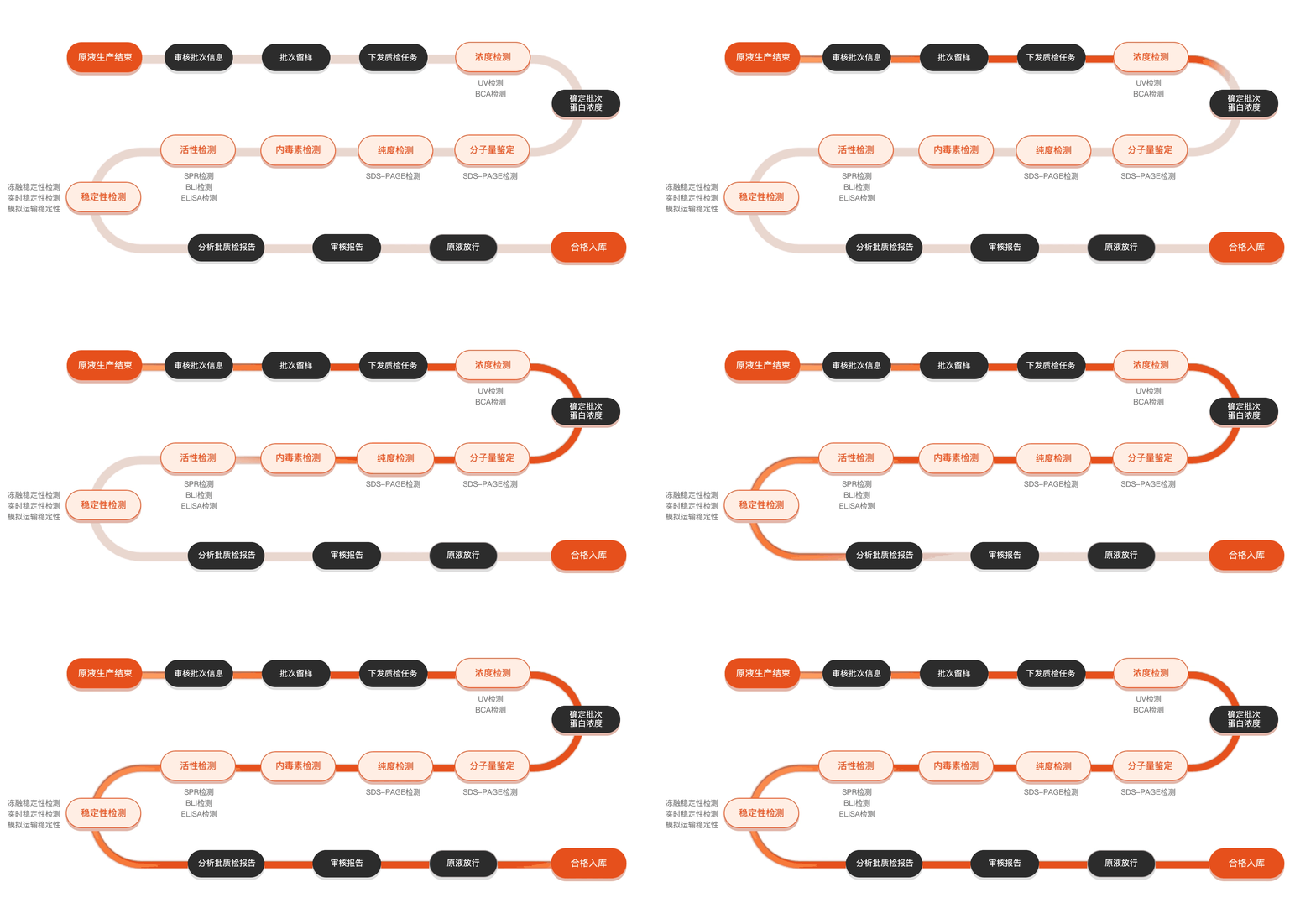
Quality inspection process
Related Products
Protein Description
IFN-gamma receptor 1 (IFN-gamma R1 or CD119) plays a crucial role in the immune response by mediating the effects of interferon-gamma (IFN-γ), a key cytokine involved in the regulation of immune functions, particularly in activating macrophages and promoting Th1 responses. The binding of IFN-γ to its receptor induces a signaling cascade that activates several pathways leading to the expression of genes important for pathogen clearance and immune regulation. Due to its significant role in immunity, CD119 is a critical target for research in various fields, including infectious diseases, cancer therapy, and autoimmune disorders. Recombinant proteins of IFN-gamma R1 are produced for various purposes, including elucidating the receptor's structural characteristics, understanding its signaling mechanisms, and developing therapeutic strategies. Studies involving the recombinant form help investigate the receptor's interaction with its ligand and other proteins, enabling the identification of novel therapeutic targets. Additionally, the recombinant protein can be used in vaccine development and diagnostic assays, enhancing our understanding of immune responses in health and disease. Overall, the research surrounding IFN-gamma R1/CD119 recombinant protein is vital for advancing our knowledge of immune regulation and developing targeted treatments to modulate the immune system effectively.