Analytical Data
-
Gene name
aroE
- Application
-
Alternative Names
aroE;Shikimate dehydrogenase (NADP(+))
-
Species
Human
-
Source
E. coli
-
Tag
His tag N-Terminus
-
Purity
Greater than 90% as determined by SDS-PAGE.
-
Uniprot
P74591
-
Expression Region
1-290aa
-
AA Sequence
MPSITGKTKL LGVIGYPVGH SLSPVMHNAA LQAMASDYAY VAFPIAPEDL TIAIAGLGAS GVQGLSVTIP HKQVVMPLLT QITETARQVG AVNTLWRDGH GWQGTNTDVE GFLAPLLELK QDWSGRTAVI LGYGGAARAV VVGLTQLGCP EIIVVGRSQE KLAQFANSWT DPKIKQALQV LPWEALSTVI PKASLLINST PVGMAPHPKQ SPLDQSLVEK LPPTAIAYDL IYTPRPTRFL QHAQERGLVT IDGAEMLVQQ GAAALKIWLQ QEVPVDVMRQ ALLHHLEKSA
-
Molecular Weight
31 kDa
-
Endotoxin
< 1.0 EU per μg protein as determined by the LAL method.
-
Form
Freeze-dried powder
-
Buffer formulation
PBS, pH7.4, containing 0.01% SKL, 1mM DTT, 5% Trehalose and Proclin300.
-
Reconstitution
Reconstitute in ddH2O to a concentration of 0.1-0.5 mg/mL. Do not vortex.
- Customization
-
Stability Test
The thermal stability is described by the loss rate. The loss rate was determined by accelerated thermal degradation test, that is, incubate the protein at 37℃ for 48h, and no obvious degradation and precipitation were observed. The loss rate isless than 8% within the expiration date under appropriate storage condition.
-
Storage & Shelf Life
Samples are stable for up to twelve months from date of receipt at -20℃ to -80℃. Store it under sterile conditions at -20℃ to -80℃. It is recommended that the protein be aliquoted for optimal storage. Avoid repeated freeze-thaw cycles.
-
Shipping
In general, recombinant proteins are supplied as lyophilized powder and shipped at ambient temperature. For bulk packages, the proteins are provided as frozen liquid and shipped with blue ice, unless otherwise requested by the customer.
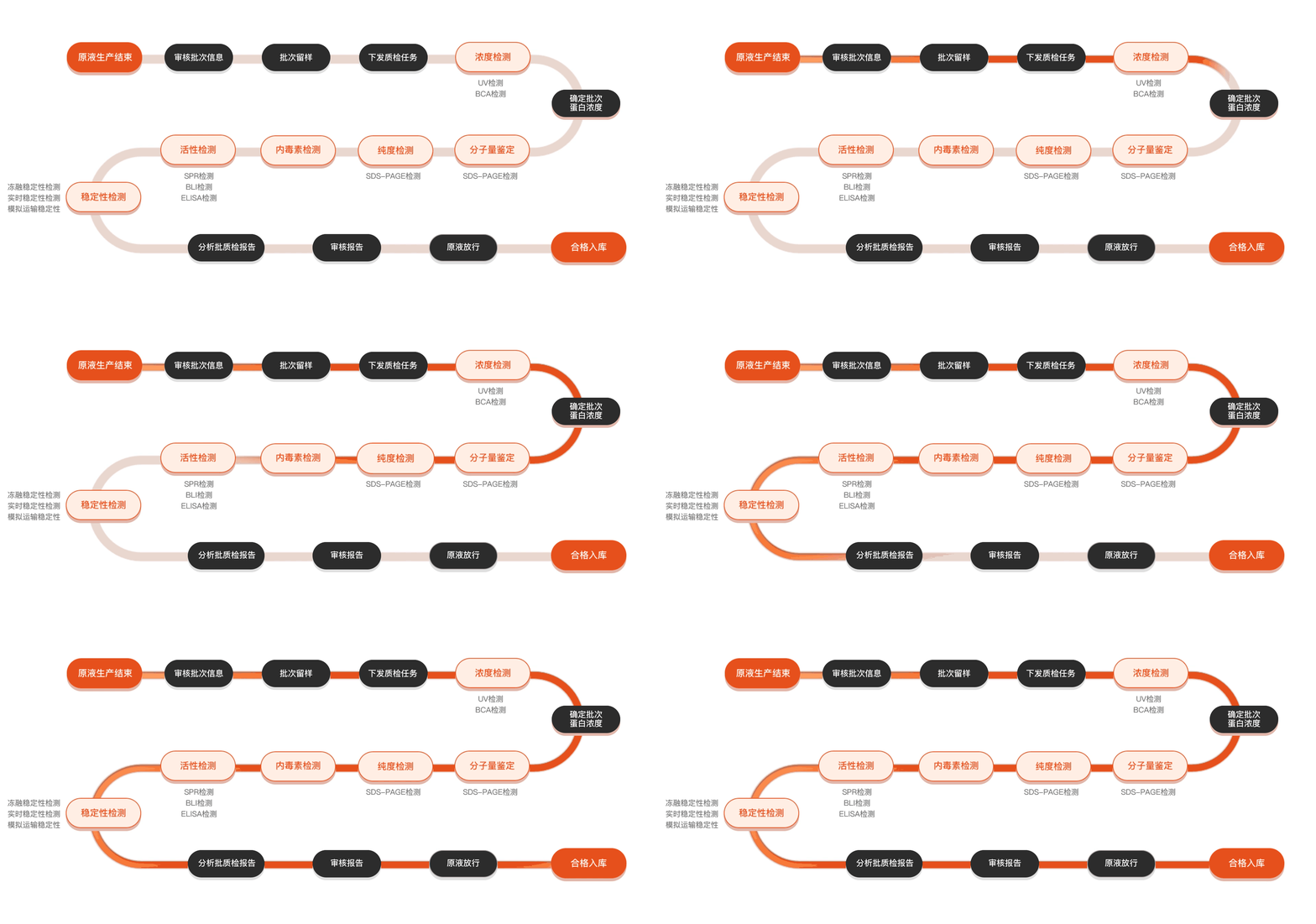
Quality inspection process
Related Products
Protein Description
AroE is an enzyme involved in the shikimic acid pathway, which is crucial for the biosynthesis of aromatic amino acids in microorganisms and plants. The importance of AroE arises from its role in producing essential compounds that are precursors for a variety of metabolites, including lignin and certain secondary metabolites. Due to its significance in agriculture and biotechnology, researchers have focused on studying AroE to explore its potential applications in the development of herbicides, as its inhibition can selectively target plants without affecting other organisms. Additionally, AroE serves as a target for metabolic engineering aimed at enhancing the production of valuable aromatic compounds, such as flavonoids and phenylpropanoids. The recombinant expression of AroE allows for in-depth studies of its enzymatic activity, structure-function relationships, and regulatory mechanisms. Understanding these aspects can lead to advancements in metabolic pathways that contribute to the sustainable production of bio-based aromatic chemicals. Moreover, the study of AroE is gaining traction in the context of synthetic biology, where it can be incorporated into engineered microbial strains to optimize the production of desired compounds from renewable resources. Overall, the investigation of AroE and its recombinant forms holds promise for both fundamental biochemical research and practical applications in various fields, including agriculture, pharmaceuticals, and renewable resource management.