Analytical Data
-
Gene name
DHA
- Application
-
Alternative Names
DHA;ALDH5;ALDHX;Aldehyde dehydrogenase X. mitochondrial
-
Species
Human
-
Source
E. coli
-
Tag
His tag N-Terminus
-
Purity
Greater than 90% as determined by SDS-PAGE.
-
Uniprot
P30837
-
Expression Region
18-517aa
-
AA Sequence
RYS SAAALPSPIL NPDIPYNQLF INNEWQDAVS KKTFPTVNPT TGEVIGHVAE GDRADVDRAV KAAREAFRLG SPWRRMDASE RGRLLNLLAD LVERDRVYLA SLETLDNGKP FQESYALDLD EVIKVYRYFA GWADKWHGKT IPMDGQHFCF TRHEPVGVCG QIIPWNFPLV MQGWKLAPAL ATGNTVVMKV AEQTPLSALY LASLIKEAGF PPGVVNIITG YGPTAGAAIA QHVDVDKVAF TGSTEVGHLI QKAAGDSNLK RVTLELGGKS PSIVLADADM EHAVEQCHEA LFFNMGQCCC AGSRTFVEES IYNEFLERTV EKAKQRKVGN PFELDTQQGP QVDKEQFERV LGYIQLGQKE GAKLLCGGER FGERGFFIKP TVFGGVQDDM RIAKEEIFGP VQPLFKFKKI EEVVERANNT RYGLAAAVFT RDLDKAMYFT QALQAGTVWV NTYNIVTCHT PFGGFKESGN GRELGEDGLK AYTEVKTVTI KVPQKNS
-
Molecular Weight
57.2 kDa
-
Endotoxin
< 1.0 EU per μg protein as determined by the LAL method.
-
Form
Freeze-dried powder
-
Buffer formulation
PBS, pH7.4, containing 0.01% SKL, 1mM DTT, 5% Trehalose and Proclin300.
-
Reconstitution
Reconstitute in ddH2O to a concentration of 0.1-0.5 mg/mL. Do not vortex.
- Customization
-
Stability Test
The thermal stability is described by the loss rate. The loss rate was determined by accelerated thermal degradation test, that is, incubate the protein at 37℃ for 48h, and no obvious degradation and precipitation were observed. The loss rate isless than 8% within the expiration date under appropriate storage condition.
-
Storage & Shelf Life
Samples are stable for up to twelve months from date of receipt at -20℃ to -80℃. Store it under sterile conditions at -20℃ to -80℃. It is recommended that the protein be aliquoted for optimal storage. Avoid repeated freeze-thaw cycles.
-
Shipping
In general, recombinant proteins are supplied as lyophilized powder and shipped at ambient temperature. For bulk packages, the proteins are provided as frozen liquid and shipped with blue ice, unless otherwise requested by the customer.
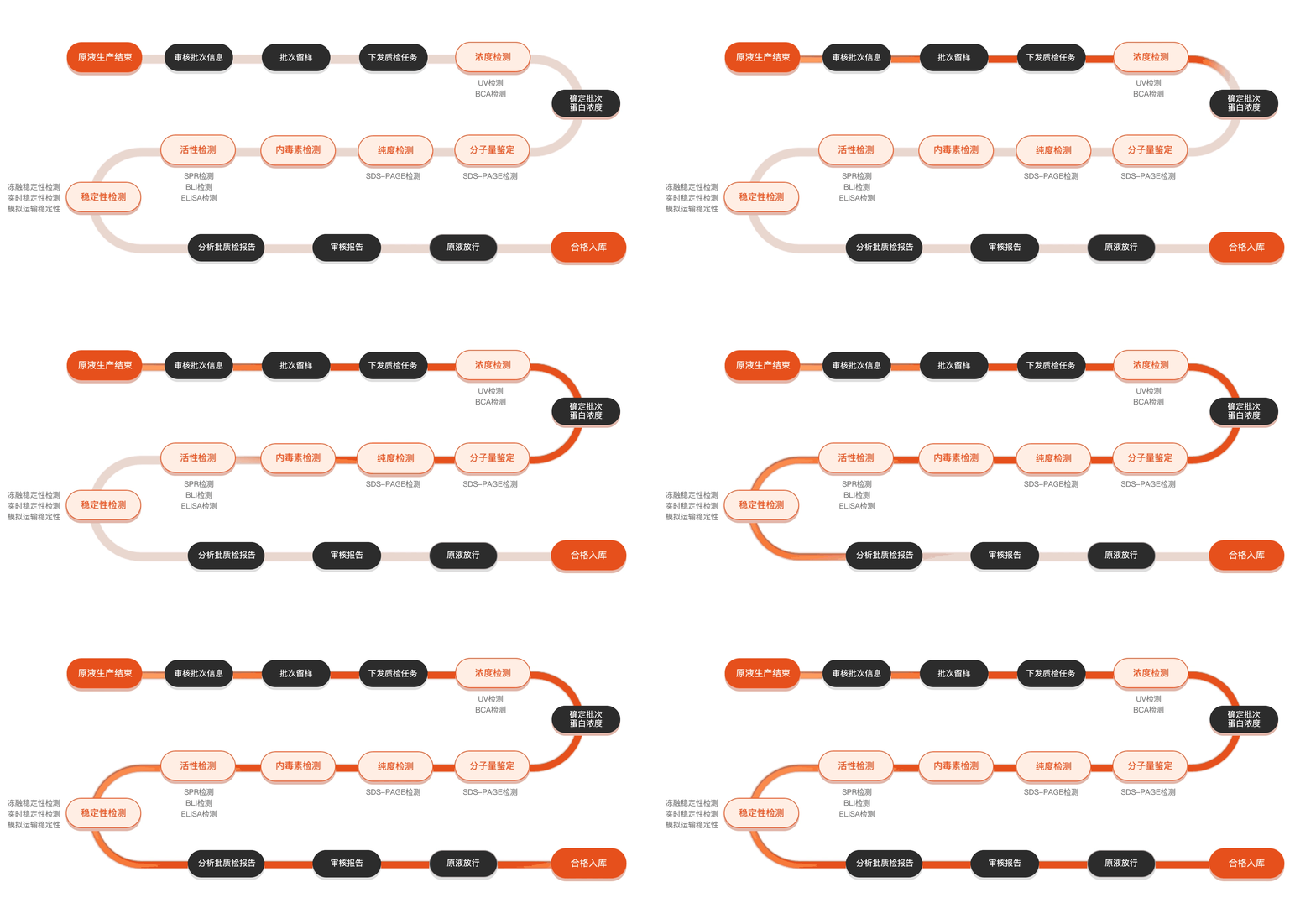
Quality inspection process
Related Products
Protein Description
DHA recombinant proteins have garnered significant attention in recent years due to their potential applications in various fields, including biotechnology, medicine, and nutrition. Docosahexaenoic acid (DHA) is an omega-3 fatty acid vital for human health, particularly in brain and eye development. However, its natural sources are limited and often present in unrefined forms. The development of recombinant proteins that can synthesize DHA offers a promising solution for enhancing the availability and bioavailability of this essential fatty acid. Researchers have been exploring genetic engineering techniques to insert genes responsible for DHA biosynthesis into microorganisms or plant systems. This approach not only paves the way for producing DHA more sustainably and cost-effectively but also allows for the possibility of bio-enrichment in food products. Furthermore, recombinant DHA production has implications for treating omega-3 deficiency-related conditions and may play a role in preventative health strategies. As studies continue to unfold, the potential for DHA recombinant proteins stands to revolutionize dietary supplements and functional foods, meeting the growing consumer demand for health-oriented products.