

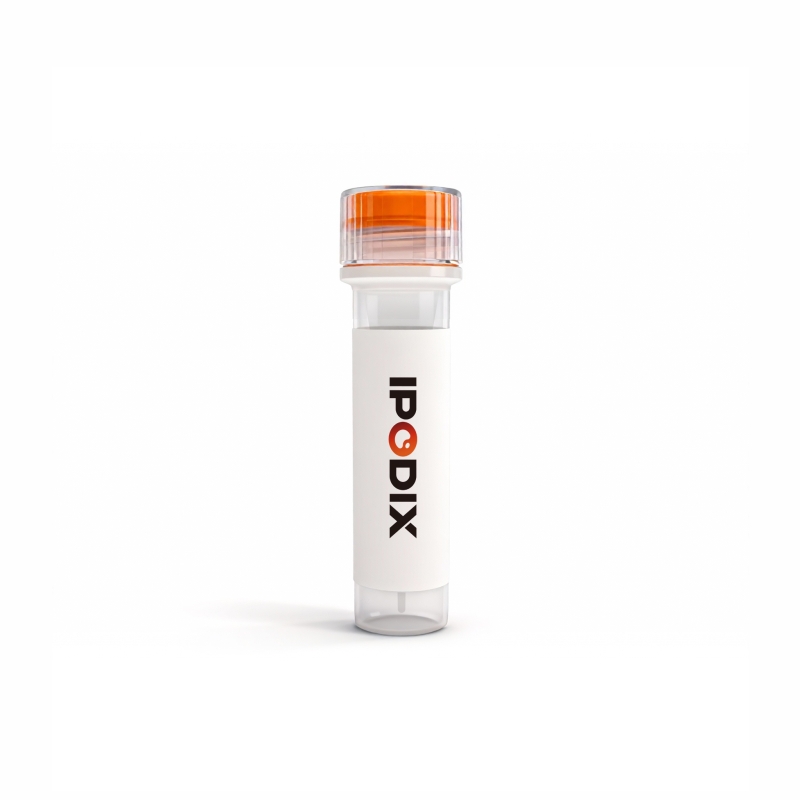
Analytical Data
-
Gene name
TUBa1B
- Application
-
Alternative Names
TUBa1B;Tubulin alpha-1B chain
-
Species
Human
-
Source
E. coli
-
Tag
His tag N-Terminus
-
Purity
Greater than 90% as determined by SDS-PAGE.
-
Uniprot
P68363
-
Expression Region
1-451aa
-
AA Sequence
MRECISIHVG QAGVQIGNAC WELYCLEHGI QPDGQMPSDK TIGGGDDSFN TFFSETGAGK HVPRAVFVDL EPTVIDEVRT GTYRQLFHPE QLITGKEDAA NNYARGHYTI GKEIIDLVLD RIRKLADQCT GLQGFLVFHS FGGGTGSGFT SLLMERLSVD YGKKSKLEFS IYPAPQVSTA VVEPYNSILT THTTLEHSDC AFMVDNEAIY DICRRNLDIE RPTYTNLNRL ISQIVSSITA SLRFDGALNV DLTEFQTNLV PYPRIHFPLA TYAPVISAEK AYHEQLSVAE ITNACFEPAN QMVKCDPRHG KYMACCLLYR GDVVPKDVNA AIATIKTKRS IQFVDWCPTG FKVGINYQPP TVVPGGDLAK VQRAVCMLSN TTAIAEAWAR LDHKFDLMYA KRAFVHWYVG EGMEEGEFSE AREDMAALEK DYEEVGVDSV EGEGEEEGEE Y
-
Molecular Weight
50.1 kDa
-
Endotoxin
< 1.0 EU per μg protein as determined by the LAL method.
-
Form
Freeze-dried powder
-
Buffer formulation
PBS, pH7.4, containing 0.01% SKL, 1mM DTT, 5% Trehalose and Proclin300.
-
Reconstitution
Reconstitute in ddH2O to a concentration of 0.1-0.5 mg/mL. Do not vortex.
- Customization
-
Stability Test
The thermal stability is described by the loss rate. The loss rate was determined by accelerated thermal degradation test, that is, incubate the protein at 37℃ for 48h, and no obvious degradation and precipitation were observed. The loss rate isless than 8% within the expiration date under appropriate storage condition.
-
Storage & Shelf Life
Samples are stable for up to twelve months from date of receipt at -20℃ to -80℃. Store it under sterile conditions at -20℃ to -80℃. It is recommended that the protein be aliquoted for optimal storage. Avoid repeated freeze-thaw cycles.
-
Shipping
In general, recombinant proteins are supplied as lyophilized powder and shipped at ambient temperature. For bulk packages, the proteins are provided as frozen liquid and shipped with blue ice, unless otherwise requested by the customer.
Quality inspection process

Related Products
Protein Description
TUBa1B, a member of the tubulin family, plays a crucial role in the formation and stabilization of microtubules, which are essential for various cellular processes, including cell division, intracellular transport, and maintenance of cell shape. Mutations in the TUBa1B gene have been linked to a spectrum of neurodevelopmental disorders, notably cortical malformations and other neurological impairments. Given its significance in both normal cellular function and pathological conditions, the study of TUBa1B has garnered considerable interest in the fields of molecular biology and medicine. Researchers aim to characterize the structural and functional properties of recombinant TUBa1B protein to better understand its role in microtubule dynamics and the consequences of genetic mutations. By producing and analyzing this protein, scientists can unravel the mechanisms underlying TUBa1B-related disorders and potentially identify therapeutic targets for interventions. Furthermore, insights gained from TUBa1B research may extend beyond neurodevelopmental disorders, offering broader implications for cancer biology and other diseases where microtubule function is disrupted. Such investigations contribute to the development of novel strategies for diagnosis and treatment, underscoring the importance of TUBa1B in both basic research and clinical applications.







