Analytical Data
-
Gene name
PEPP-2
- Application
-
Alternative Names
CT107; Homeobox protein from AL590526; Paired like homeobox protein PEPP 2; Paired like homeobox protein PEPP2; Paired-like homeobox protein PEPP-2; PEPP 2; PEPP subfamily gene 2; PEPP2; Rhox homeobox family member 2; RHOXF 2; RHOXF2; RHXF2_HUMAN; Testis homeobox gene 1; THG 1; THG1
-
Species
Human
-
Source
E. coli
-
Tag
His tag N-Terminus
-
Purity
Greater than 90% as determined by SDS-PAGE.
-
Uniprot
Q9BQY4
-
Expression Region
1-288 aa
-
AA Sequence
MEPPDQCSQY MTSLLSPAVD DEKELQDMNA MVLSLTEEVK EEEEDAQPEP EQGTAAGEKL KSAGAQGGEE KDGGGEEKDG GGAGVPGHLW EGDLEGTSGS DGNVEDSDQS EKEPGQQYSR PQGAVGGLEP GNAQQPNVHA FTPLQLQELE RIFQREQFPS EFLRRRLARS MNVTELAVQI WFENRRAKWR RHQRALMARN MLPFMAVGQP VMVTAAEAIT APLFISGMRD DYFWDHSHSS SLCFPMPPFP PPSLPLPLML LPPMPPAGQA EFGPFPFVIV PSFTFPNV
-
Molecular Weight
31.6 kDa
-
Endotoxin
< 1.0 EU per μg protein as determined by the LAL method.
-
Form
Freeze-dried powder
-
Buffer formulation
PBS, pH7.4, containing 0.01% SKL, 1mM DTT, 5% Trehalose and Proclin300.
-
Reconstitution
Reconstitute in ddH2O to a concentration of 0.1-0.5 mg/mL. Do not vortex.
- Customization
-
Stability Test
The thermal stability is described by the loss rate. The loss rate was determined by accelerated thermal degradation test, that is, incubate the protein at 37℃ for 48h, and no obvious degradation and precipitation were observed. The loss rate isless than 8% within the expiration date under appropriate storage condition.
-
Storage & Shelf Life
Samples are stable for up to twelve months from date of receipt at -20℃ to -80℃. Store it under sterile conditions at -20℃ to -80℃. It is recommended that the protein be aliquoted for optimal storage. Avoid repeated freeze-thaw cycles.
-
Shipping
In general, recombinant proteins are supplied as lyophilized powder and shipped at ambient temperature. For bulk packages, the proteins are provided as frozen liquid and shipped with blue ice, unless otherwise requested by the customer.
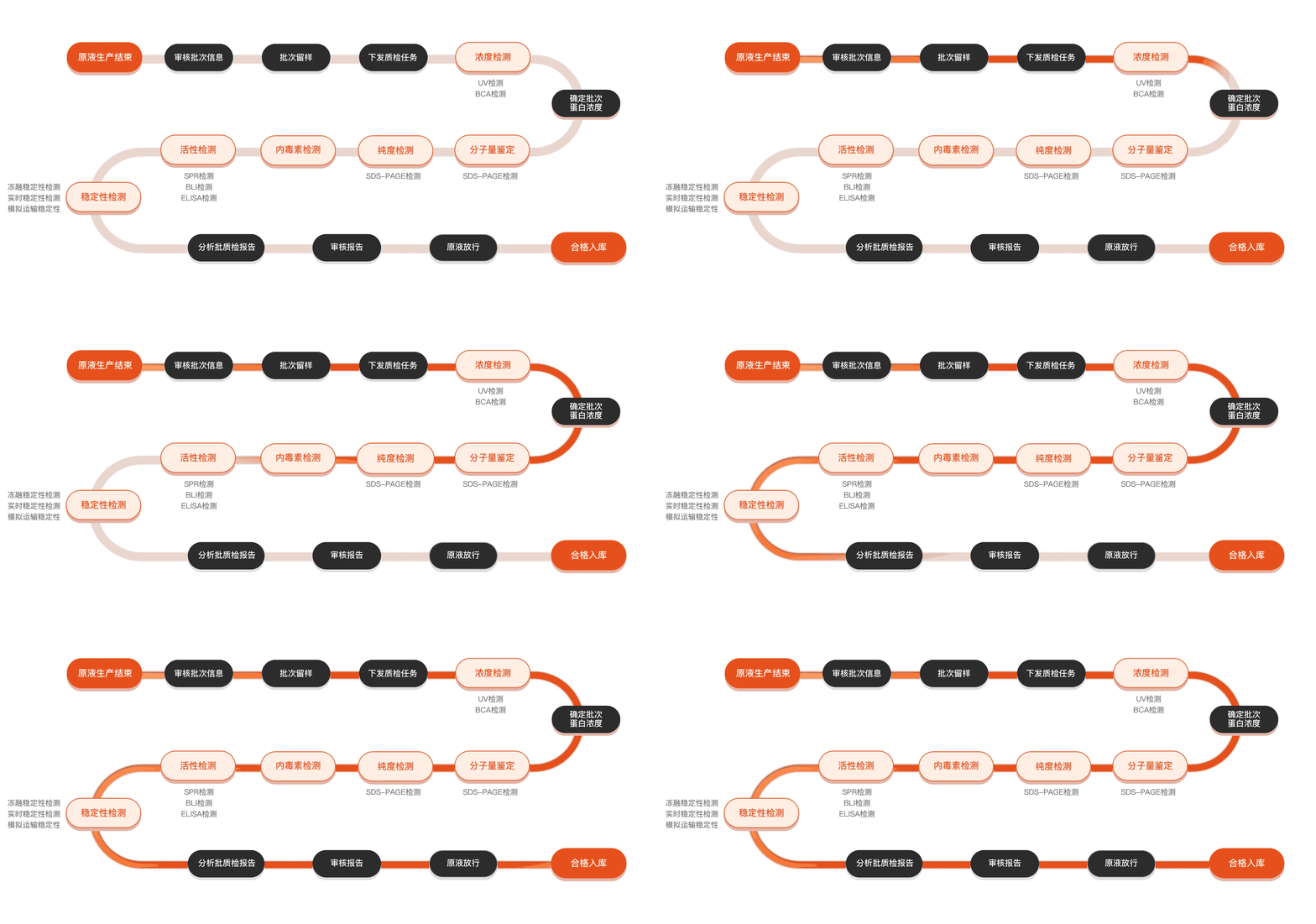
Quality inspection process
Related Products
Protein Description
The PEPP-2 recombinant protein is of significant interest in the field of biomedical research due to its potential applications in therapeutic development and disease understanding. Initially derived from studies focusing on peptide-based immunomodulation, PEPP-2 has shown promise in enhancing immune responses, making it a candidate for vaccine development and cancer immunotherapy. Its structural properties, including stability and bioactivity, have positioned it as a model for investigating protein interactions in various biological processes. Moreover, the ability to produce PEPP-2 through recombinant DNA technology allows for large-scale production and purification, facilitating in-depth studies on its mechanism of action and interactions with immune cells. The ongoing research aims to elucidate the molecular characteristics of PEPP-2, assess its efficacy in preclinical models, and ultimately explore its therapeutic potential in combating diseases characterized by immune dysregulation. This protein's multifunctional role opens avenues for addressing unmet medical needs and provides insights into the development of novel protein-based therapeutic strategies.