Analytical Data
-
Gene name
dhaK
- Application
-
Alternative Names
dhaK;DAK;Triokinase/FMN cyclase
-
Species
Human
-
Source
E. coli
-
Tag
His tag N-Terminus
-
Purity
Greater than 90% as determined by SDS-PAGE.
-
Uniprot
P0A6Y8
-
Expression Region
1-638aa
-
AA Sequence
MGKIIGIDLG TTNSCVAIMD GTTPRVLENA EGDRTTPSII AYTQDGETLV GQPAKRQAVT NPQNTLFAIK RLIGRRFQDE EVQRDVSIMP FKIIAADNGD AWVEVKGQKM APPQISAEVL KKMKKTAEDY LGEPVTEAVI TVPAYFNDAQ RQATKDAGRI AGLEVKRIIN EPTAAALAYG LDKGTGNRTI AVYDLGGGTF DISIIEIDEV DGEKTFEVLA TNGDTHLGGE DFDSRLINYL VEEFKKDQGI DLRNDPLAMQ RLKEAAEKAK IELSSAQQTD VNLPYITADA TGPKHMNIKV TRAKLESLVE DLVNRSIEPL KVALQDAGLS VSDIDDVILV GGQTRMPMVQ KKVAEFFGKE PRKDVNPDEA VAIGAAVQGG VLTGDVKDVL LLDVTPLSLG IETMGGVMTT LIAKNTTIPT KHSQVFSTAE DNQSAVTIHV LQGERKRAAD NKSLGQFNLD GINPAPRGMP QIEVTFDIDA DGILHVSAKD KNSGKEQKIT IKASSGLNED EIQKMVRDAE ANAEADRKFE ELVQTRNQGD HLLHSTRKQV EEAGDKLPAD DKTAIESALT ALETALKGED KAAIEAKMQE LAQVSQKLME IAQQQHAQQQ TAGADASANN AKDDDVVDAE FEEVKDKK
-
Molecular Weight
69 kDa
-
Endotoxin
< 1.0 EU per μg protein as determined by the LAL method.
-
Form
Freeze-dried powder
-
Buffer formulation
PBS, pH7.4, containing 0.01% SKL, 1mM DTT, 5% Trehalose and Proclin300.
-
Reconstitution
Reconstitute in ddH2O to a concentration of 0.1-0.5 mg/mL. Do not vortex.
- Customization
-
Stability Test
The thermal stability is described by the loss rate. The loss rate was determined by accelerated thermal degradation test, that is, incubate the protein at 37℃ for 48h, and no obvious degradation and precipitation were observed. The loss rate isless than 8% within the expiration date under appropriate storage condition.
-
Storage & Shelf Life
Samples are stable for up to twelve months from date of receipt at -20℃ to -80℃. Store it under sterile conditions at -20℃ to -80℃. It is recommended that the protein be aliquoted for optimal storage. Avoid repeated freeze-thaw cycles.
-
Shipping
In general, recombinant proteins are supplied as lyophilized powder and shipped at ambient temperature. For bulk packages, the proteins are provided as frozen liquid and shipped with blue ice, unless otherwise requested by the customer.
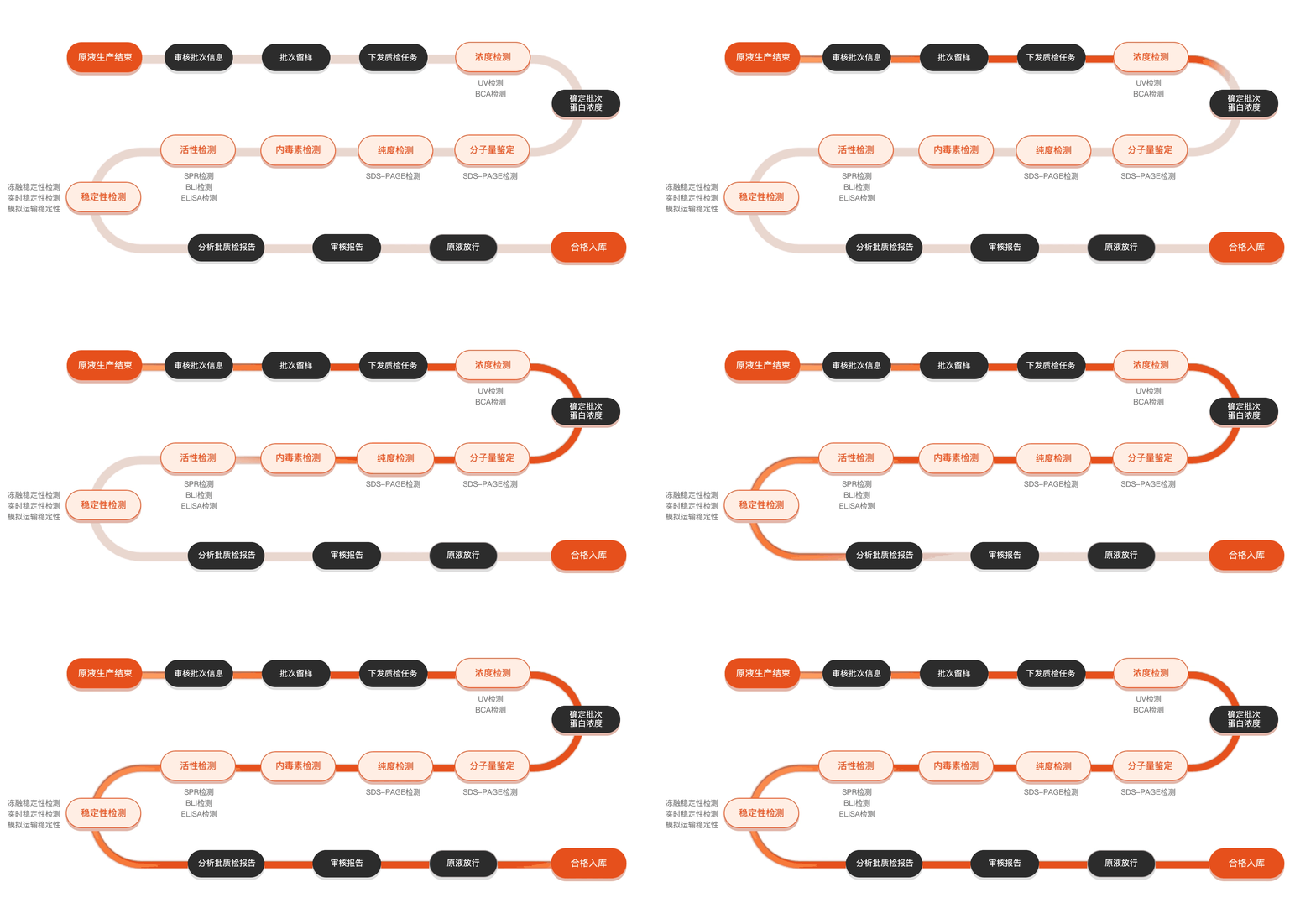
Quality inspection process
Related Products
Protein Description
DhaK, a member of the transport protein family, has drawn significant interest in the field of microbiology and biotechnology due to its role in the uptake of diverse substrates, including essential nutrients and signaling molecules. Understanding the structure and function of DhaK is crucial for elucidating its mechanisms and potential applications. The protein is part of a larger regulatory network in microbes that allows for the adaptation to varying environmental conditions. Previous studies have revealed that DhaK interacts with various ligands, making it a key player in nutrient sensing and transport. Moreover, given its pivotal role in microbial metabolism, characterizing DhaK can provide insights into metabolic pathways, potentially leading to biotechnological applications such as optimizing microbial production processes. Additionally, studying DhaK and its associated pathways could advance our understanding of microbial interactions in natural ecosystems. Researchers are employing techniques such as recombinant protein expression, crystallography, and docking studies to gain deeper insights into DhaK's functional mechanisms and its potential as a target for antibiotic development. The ongoing research into DhaK is not only aimed at fundamental biological understanding but also at harnessing its properties for industrial and pharmaceutical applications, emphasizing the multifaceted relevance of this protein in contemporary life sciences.