Analytical Data
-
Gene name
ctxB
- Application
-
Alternative Names
ctxB;Cortexillin-2
-
Species
Vibrio
-
Source
E. coli
-
Tag
His tag N-Terminus
-
Purity
Greater than 90% as determined by SDS-PAGE.
-
Uniprot
P01556
-
Expression Region
22-124aa
-
AA Sequence
TPQNITDLCAEYHNTQIYTLNDKIFSYTESLAGKREMAIITFKNGAIFQVEVPGSQHIDSQKKAIERMKDTLRIAYLTEAKVEKLCVWNNKTPHAIAAISMAN
-
Molecular Weight
15.6 kDa
-
Endotoxin
< 1.0 EU per μg protein as determined by the LAL method.
-
Form
Freeze-dried powder
-
Buffer formulation
PBS, pH7.4, containing 0.01% SKL, 1mM DTT, 5% Trehalose and Proclin300.
-
Reconstitution
Reconstitute in ddH2O to a concentration of 0.1-0.5 mg/mL. Do not vortex.
- Customization
-
Stability Test
The thermal stability is described by the loss rate. The loss rate was determined by accelerated thermal degradation test, that is, incubate the protein at 37℃ for 48h, and no obvious degradation and precipitation were observed. The loss rate isless than 8% within the expiration date under appropriate storage condition.
-
Storage & Shelf Life
Samples are stable for up to twelve months from date of receipt at -20℃ to -80℃. Store it under sterile conditions at -20℃ to -80℃. It is recommended that the protein be aliquoted for optimal storage. Avoid repeated freeze-thaw cycles.
-
Shipping
In general, recombinant proteins are supplied as lyophilized powder and shipped at ambient temperature. For bulk packages, the proteins are provided as frozen liquid and shipped with blue ice, unless otherwise requested by the customer.
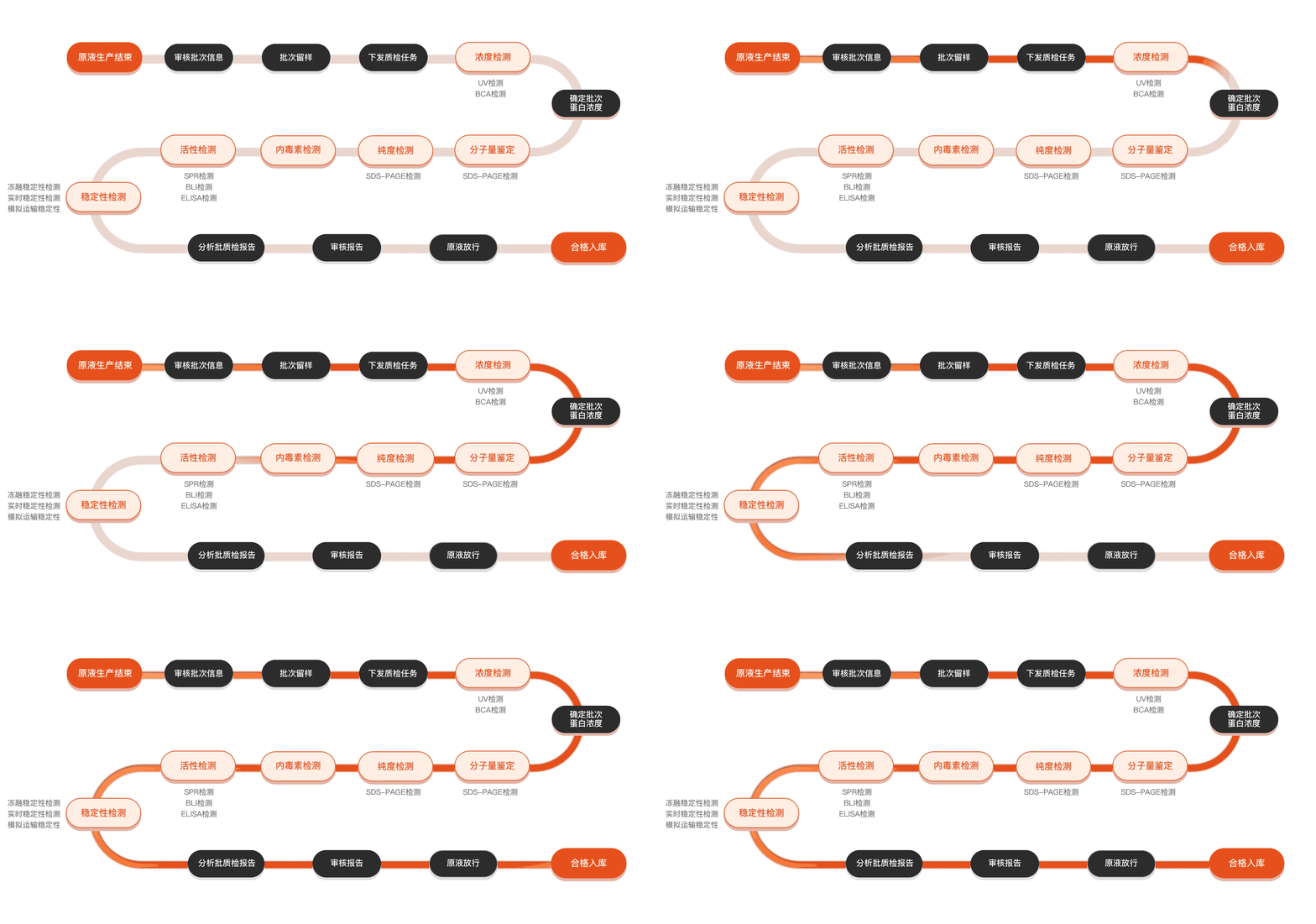
Quality inspection process
Related Products
Protein Description
Recombinant ctxB protein, derived from the cholera toxin B subunit, has garnered significant attention in biomedical research due to its potential applications in vaccine development and immunotherapy. Cholera toxin, produced by the bacterium Vibrio cholerae, consists of an A subunit that is enzymatically active and a pentameric B subunit (ctxB) that binds to GM1 gangliosides on host cells, facilitating cellular entry of the A subunit. By studying ctxB, researchers aim to exploit its properties for enhancing mucosal immunity, an important aspect of vaccine design. Recombinant ctxB can be produced using various expression systems, such as bacteria or yeast, allowing for large-scale production and purification. This protein serves as an effective adjuvant when conjugated to antigens, enhancing their immunogenicity and promoting more robust immune responses. Furthermore, its role in drug delivery systems and cancer therapy has been investigated, as ctxB can target specific cells and facilitate the uptake of therapeutic agents. The ongoing research focuses on optimizing the efficacy and safety of ctxB-based vaccines and therapies, with the ultimate goal of improving public health outcomes in the face of infectious diseases.