Analytical Data
-
Gene name
CLK1
- Application
-
Alternative Names
CDC like kinase 1; CDC-like kinase 1; CDC28/CDC2 like kinase; CLK; CLK/STY; Clk1; CLK1_HUMAN; Dual specificity protein kinase CLK1; Protein tyrosine kinase STY; STY
-
Species
Human
-
Source
E. coli
-
Tag
His tag N-Terminus
-
Purity
Greater than 90% as determined by SDS-PAGE.
-
Uniprot
P49759
-
Expression Region
1-484aa
-
AA Sequence
MRHSKRTYCPDWDDKDWDYGKWRSSSSHKRRKRSHSSAQENKRCKYNHSK MCDSHYLESRSINEKDYHSRRYIDEYRNDYTQGCEPGHRQRDHESRYQNH SSKSSGRSGRSSYKSKHRIHHSTSHRRSHGKSHRRKRTRSVEDDEEGHLI CQSGDVLSARYEIVDTLGEGAFGKVVECIDHKAGGRHVAVKIVKNVDRYC EAARSEIQVLEHLNTTDPNSTFRCVQMLEWFEHHGHICIVFELLGLSTYD FIKENGFLPFRLDHIRKMAYQICKSVNFLHSNKLTHTDLKPENILFVQSD YTEAYNPKIKRDERTLINPDIKVVDFGSATYDDEHHSTLVSTRHYRAPEV ILALGWSQPCDVWSIGCILIEYYLGFTVFPTHDSKEHLAMMERILGPLPK HMIQKTRKRKYFHHDRLDWDEHSSAGRYVSRRCKPLKEFMLSQDVEHERL FDLIQKMLEYDPAKRITLREALKHPFFDLLKKSI
-
Molecular Weight
79 kDa
-
Endotoxin
< 1.0 EU per μg protein as determined by the LAL method.
-
Form
Freeze-dried powder
-
Buffer formulation
PBS, pH7.4, containing 0.01% SKL, 1mM DTT, 5% Trehalose and Proclin300.
-
Reconstitution
Reconstitute in ddH2O to a concentration of 0.1-0.5 mg/mL. Do not vortex.
- Customization
-
Stability Test
The thermal stability is described by the loss rate. The loss rate was determined by accelerated thermal degradation test, that is, incubate the protein at 37℃ for 48h, and no obvious degradation and precipitation were observed. The loss rate isless than 8% within the expiration date under appropriate storage condition.
-
Storage & Shelf Life
Samples are stable for up to twelve months from date of receipt at -20℃ to -80℃. Store it under sterile conditions at -20℃ to -80℃. It is recommended that the protein be aliquoted for optimal storage. Avoid repeated freeze-thaw cycles.
-
Shipping
In general, recombinant proteins are supplied as lyophilized powder and shipped at ambient temperature. For bulk packages, the proteins are provided as frozen liquid and shipped with blue ice, unless otherwise requested by the customer.
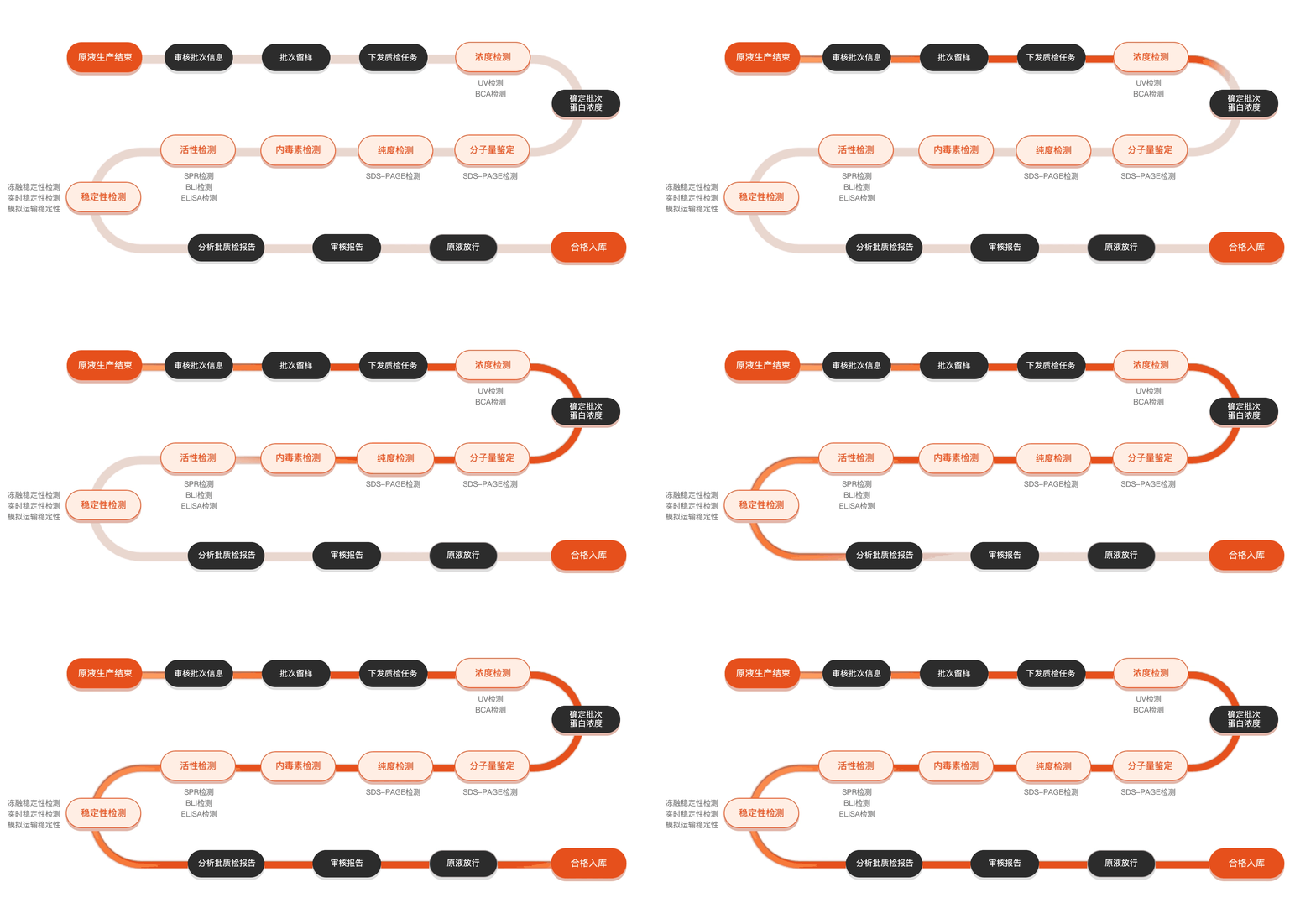
Quality inspection process
Related Products
Protein Description
CLK1 (Clock-Associated Protein 1) is a pivotal component in the regulation of circadian rhythms, which are critical for maintaining physiological homeostasis in various biological processes. The protein is encoded by the CLK1 gene, which has been linked to the development of several diseases, including neurodegenerative disorders and metabolic syndromes. Research has shown that CLK1 is involved in modulating the circadian clock by affecting the expression of core clock genes, thus playing a significant role in the synchronization of biological processes with the external environment. Furthermore, CLK1 has gained attention for its potential as a therapeutic target. For instance, its inhibition has been explored as a strategy for cancer treatment, given its influence on cell proliferation and apoptosis in cancerous cells. Recent studies employing recombinant CLK1 protein have sought to elucidate its structure and function further, aiming to understand how it interacts with other molecular components within the circadian clock network. These insights could pave the way for novel drug development and innovative approaches in treating diseases associated with circadian misalignment. The exploration of CLK1 as a recombinant protein not only enhances our fundamental understanding of circadian biology but also presents opportunities for translating this knowledge into clinical applications, promoting better health outcomes through the manipulation of circadian rhythms. Thus, the study of CLK1 continues to be a vibrant field of research, bridging molecular biology, pharmacology, and clinical medicine in the quest to harness the power of our biological clocks.