Analytical Data
-
Gene name
TFDP2
- Application
-
Alternative Names
DP2; E2F dimerization partner 2; Tfdp2; TFDP2_HUMAN; Transcription factor Dp 2; Transcription factor Dp-2
-
Species
Human
-
Source
E. coli
-
Tag
His tag N-Terminus
-
Purity
Greater than 90% as determined by SDS-PAGE.
-
Uniprot
Q14188
-
Expression Region
2-446 aa
-
AA Sequence
TAKNVGLTS TNAEVRGFID QNLSPTKGNI SFVAFPVSNT NSPTKILPKT LGPINVNVGP QMIISTPQRL TSSGSVLIGS PYTPAPAMVT QTHIAEATGW VPGDRKRARK FIDSDFSESK RSKKGDKNGK GLRHFSMKVC EKVQRKGTTS YNEVADELVS EFTNSNNHLA ADSAYDQKNI RRRVYDALNV LMAMNIISKE KKEIKWIGLP TNSAQECQNL EIEKQRRIER IKQKRAQLQE LLLQQIAFKN LVQRNRQNEQ QNQGPPALNS TIQLPFIIIN TSRKTVIDCS ISSDKFEYLF NFDNTFEIHD DIEVLKRMGM SFGLESGKCS LEDLKLAKSL VPKALEGYIT DISTGPSWLN QGLLLNSTQS VSNLDLTTGA TLPQSSVNQG LCLDAEVALA TGQFLAPNSH QSSSAASHCS ESRGETPCSF NDEDEEDDEE DSSSPE
-
Molecular Weight
49.2 kDa
-
Endotoxin
< 1.0 EU per μg protein as determined by the LAL method.
-
Form
Freeze-dried powder
-
Buffer formulation
PBS, pH7.4, containing 0.01% SKL, 1mM DTT, 5% Trehalose and Proclin300.
-
Reconstitution
Reconstitute in ddH2O to a concentration of 0.1-0.5 mg/mL. Do not vortex.
- Customization
-
Stability Test
The thermal stability is described by the loss rate. The loss rate was determined by accelerated thermal degradation test, that is, incubate the protein at 37℃ for 48h, and no obvious degradation and precipitation were observed. The loss rate isless than 8% within the expiration date under appropriate storage condition.
-
Storage & Shelf Life
Samples are stable for up to twelve months from date of receipt at -20℃ to -80℃. Store it under sterile conditions at -20℃ to -80℃. It is recommended that the protein be aliquoted for optimal storage. Avoid repeated freeze-thaw cycles.
-
Shipping
In general, recombinant proteins are supplied as lyophilized powder and shipped at ambient temperature. For bulk packages, the proteins are provided as frozen liquid and shipped with blue ice, unless otherwise requested by the customer.
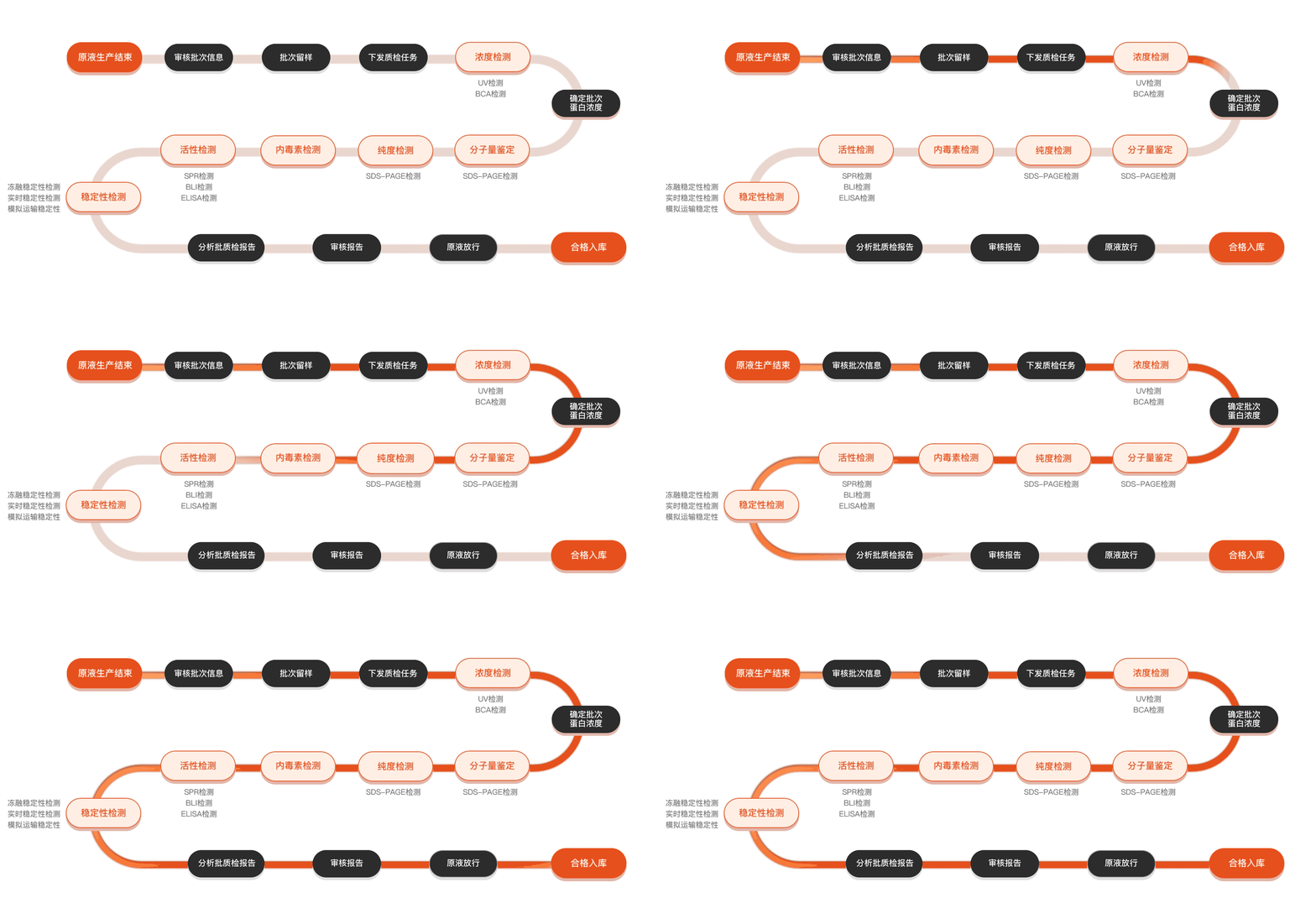
Quality inspection process
Related Products
Protein Description
TFDP2 (Transcription Factor Dp-2) is an essential nuclear protein that plays a crucial role in the regulation of cell cycle progression and the transcription of various genes, particularly those involved in cellular differentiation and proliferation. It functions as a heterodimeric partner of E2F transcription factors, which are pivotal for the transition from the G1 phase to the S phase of the cell cycle. Aberrations in TFDP2 expression and functionality have been linked to various cancers, indicating its potential as a biomarker for tumor progression and a target for therapeutic intervention. Recent studies have focused on understanding the molecular mechanisms underlying TFDP2’s interactions with E2F and other regulatory proteins, as well as its involvement in cell signaling pathways that govern cell fate decisions. The development of recombinant TFDP2 proteins has enabled detailed investigations into its structural characteristics and binding affinities, paving the way for high-throughput screening of small molecules that may modulate its activity. This research is particularly significant given the increasing recognition of the complexity of transcriptional regulation in oncogenesis. By elucidating the function and regulation of TFDP2, researchers aim to uncover novel insights into cancer biology and identify potential targets for innovative treatment strategies.