Analytical Data
-
Gene name
TFEC
- Application
-
Alternative Names
bHLHe34; Class E basic helix-loop-helix Protein 34; hTFEC-L; TCFEC; TFE-C; Tfec; TFEC Protein; TFEC_HUMAN; TFECL; Transcription factor EC; Transcription factor EC-like
-
Species
Human
-
Source
E. coli
-
Tag
His tag N-Terminus
-
Purity
Greater than 90% as determined by SDS-PAGE.
-
Uniprot
O14948
-
Expression Region
1-347 aa
-
AA Sequence
MTLDHQIINP TLKWSQPAVP SGGPLVQHAH TTLDSDAGLT ENPLTKLLAI GKEDDNAQWH MEDVIEDIIG MESSFKEEGA DSPLLMQRTL SGSILDVYSG EQGISPINMG LTSASCPSSL PMKREITETD TRALAKERQK KDNHNLIERR RRYNINYRIK ELGTLIPKSN DPDMRWNKGT ILKASVEYIK WLQKEQQRAR ELEHRQKKLE QANRRLLLRI QELEIQARTH GLPTLASLGT VDLGAHVTKQ QSHPEQNSVD YCQQLTVSQG PSPELCDQAI AFSDPLSYFT DLSFSAALKE EQRLDGMLLD DTISPFGTDP LLSATSPAVS KESSRRSSFS SDDGDEL
-
Molecular Weight
38.7 kDa
-
Endotoxin
< 1.0 EU per μg protein as determined by the LAL method.
-
Form
Freeze-dried powder
-
Buffer formulation
PBS, pH7.4, containing 0.01% SKL, 1mM DTT, 5% Trehalose and Proclin300.
-
Reconstitution
Reconstitute in ddH2O to a concentration of 0.1-0.5 mg/mL. Do not vortex.
- Customization
-
Stability Test
The thermal stability is described by the loss rate. The loss rate was determined by accelerated thermal degradation test, that is, incubate the protein at 37℃ for 48h, and no obvious degradation and precipitation were observed. The loss rate isless than 8% within the expiration date under appropriate storage condition.
-
Storage & Shelf Life
Samples are stable for up to twelve months from date of receipt at -20℃ to -80℃. Store it under sterile conditions at -20℃ to -80℃. It is recommended that the protein be aliquoted for optimal storage. Avoid repeated freeze-thaw cycles.
-
Shipping
In general, recombinant proteins are supplied as lyophilized powder and shipped at ambient temperature. For bulk packages, the proteins are provided as frozen liquid and shipped with blue ice, unless otherwise requested by the customer.
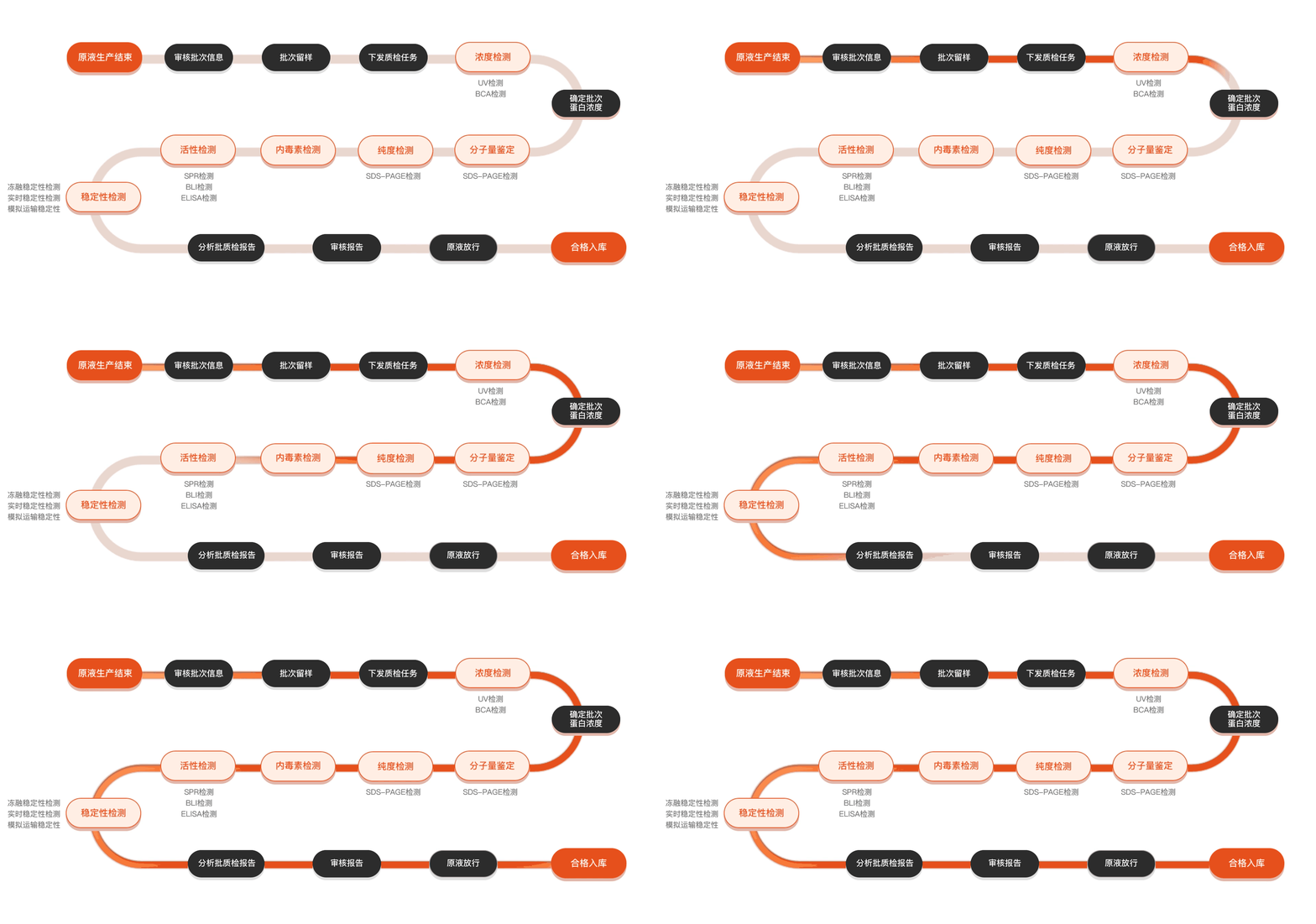
Quality inspection process
Related Products
Protein Description
TFEC (Transcription Factor E Cryptic) is a member of the basic helix-loop-helix (bHLH) transcription factor family, which plays a crucial role in various biological processes, including cellular differentiation, development, and responses to environmental stimuli. Recent studies have highlighted TFEC's involvement in important pathways, such as those regulating immune responses and cancer progression. Its expression is often dysregulated in various tumors, suggesting a potential role as an oncogene or tumor suppressor, depending on the context. Research into TFEC's structure, function, and mechanisms of action is essential for understanding its role in health and disease. Recombinant TFEC protein is being explored as a tool for deciphering its interactions with other proteins and DNA, aiding in the identification of target genes and pathways it regulates. This research can provide valuable insights into the molecular underpinnings of diseases and may unveil novel therapeutic targets. The generation of TFEC recombinant protein is a pivotal step in these investigations, allowing for detailed functional assays and the potential development of TFEC-targeted therapies. As the field progresses, elucidating the multifaceted roles of TFEC in cellular processes will be crucial for advancing our understanding of its contributions to both normal physiology and pathophysiological conditions.