Analytical Data
-
Gene name
GNA14
- Application
-
Alternative Names
AU023208; g alpha 14; G alpha-14; G protein alpha subunit 14; G protein subunit alpha 14; G-protein subunit alpha-14; gna14; GNA14_HUMAN; Guanine nucleotide binding protein (G protein) alpha 14 ; Guanine nucleotide binding protein 14
-
Species
Human
-
Source
E. coli
-
Tag
His tag N-Terminus
-
Purity
Greater than 90% as determined by SDS-PAGE.
-
Uniprot
O95837
-
Expression Region
1-355aa
-
AA Sequence
MAGCCCLSAE EKESQRISAE IERQLRRDKK DARRELKLLL LGTGESGKST FIKQMRIIHG SGYSDEDRKG FTKLVYQNIF TAMQAMIRAM DTLRIQYVCE QNKENAQIIR EVEVDKVSML SREQVEAIKQ LWQDPGIQEC YDRRREYQLS DSAKYYLTDI DRIATPSFVP TQQDVLRVRV PTTGIIEYPF DLENIIFRMV DVGGQRSERR KWIHCFESVT SIIFLVALSE YDQVLAECDN ENRMEESKAL FKTIITYPWF LNSSVILFLN KKDLLEEKIM YSHLISYFPE YTGPKQDVRA ARDFILKLYQ DQNPDKEKVI YSHFTCATDT DNIRFVFAAV KDTILQLNLR EFNLV
-
Molecular Weight
41.5 kDa
-
Endotoxin
< 1.0 EU per μg protein as determined by the LAL method.
-
Form
Freeze-dried powder
-
Buffer formulation
PBS, pH7.4, containing 0.01% SKL, 1mM DTT, 5% Trehalose and Proclin300.
-
Reconstitution
Reconstitute in ddH2O to a concentration of 0.1-0.5 mg/mL. Do not vortex.
- Customization
-
Stability Test
The thermal stability is described by the loss rate. The loss rate was determined by accelerated thermal degradation test, that is, incubate the protein at 37℃ for 48h, and no obvious degradation and precipitation were observed. The loss rate isless than 8% within the expiration date under appropriate storage condition.
-
Storage & Shelf Life
Samples are stable for up to twelve months from date of receipt at -20℃ to -80℃. Store it under sterile conditions at -20℃ to -80℃. It is recommended that the protein be aliquoted for optimal storage. Avoid repeated freeze-thaw cycles.
-
Shipping
In general, recombinant proteins are supplied as lyophilized powder and shipped at ambient temperature. For bulk packages, the proteins are provided as frozen liquid and shipped with blue ice, unless otherwise requested by the customer.
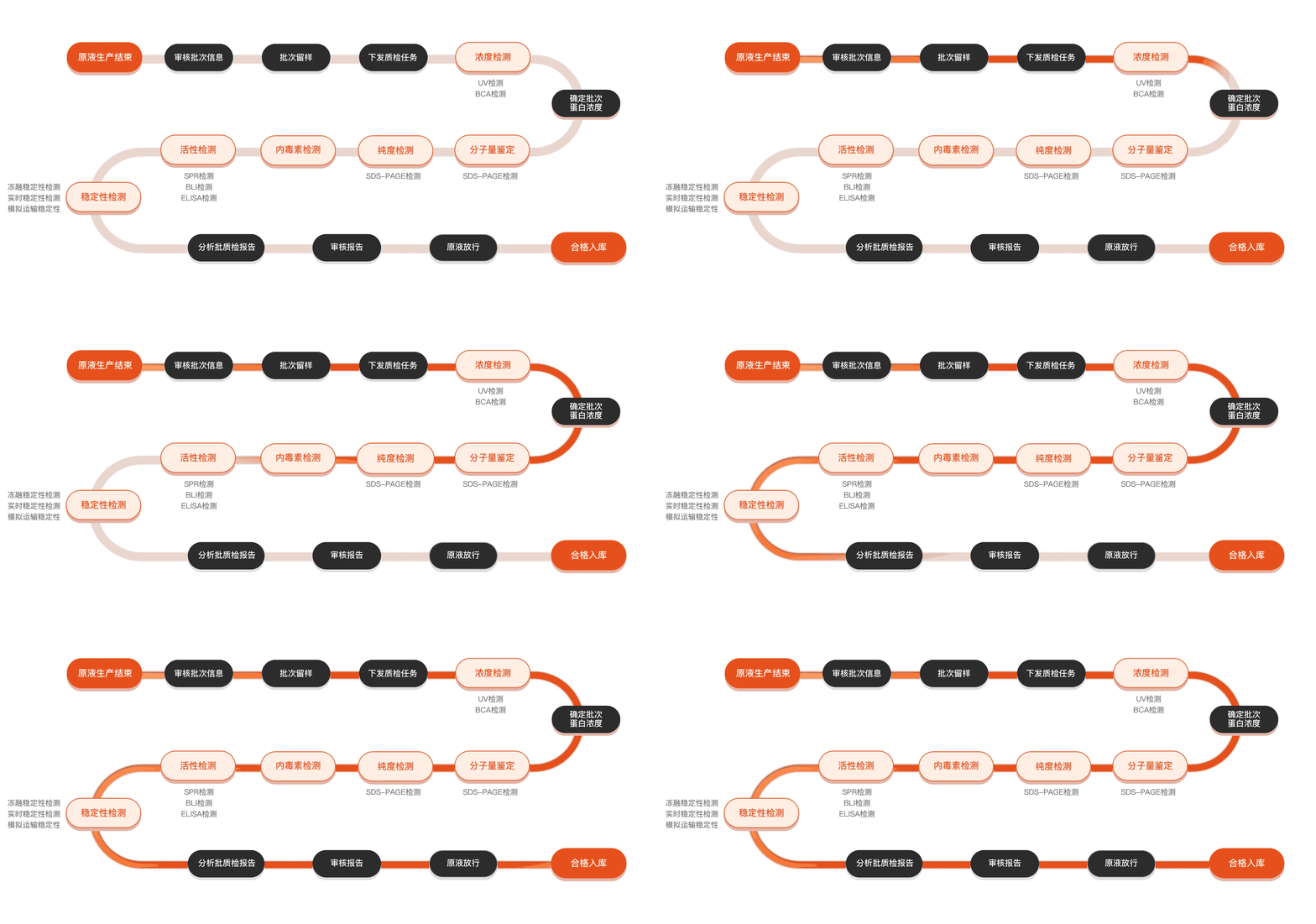
Quality inspection process
Related Products
Protein Description
GNA14, a member of the G protein alpha subunit family, plays a critical role in various cellular signaling pathways by regulating processes such as cell proliferation, differentiation, and migration. Its importance is underscored in the context of various diseases, including cancer and metabolic disorders, where dysregulation of G protein signaling is often observed. Recent research has highlighted the potential of GNA14 as a therapeutic target, prompting studies aimed at understanding its structure, function, and interaction with other cellular components. Recombinant GNA14 protein has been produced for these studies, enabling scientists to investigate its biochemical properties and role in signaling cascades. The ability to generate this protein in vitro allows for high-throughput screening of potential drug candidates that could modulate GNA14 activity, offering new avenues for intervention in related diseases. Additionally, understanding the mechanism by which GNA14 influences signaling pathways could contribute to the development of precision medicine approaches tailored to individual patient profiles. Overall, research on recombinant GNA14 protein is paving the way for innovative therapeutic strategies, emphasizing the relevance of G protein-coupled receptors in health and disease.