Analytical Data
-
Gene name
NGFR
-
简介
Nerve Growth Factor Receptor (NGFR) also known as CD271, p75NTR, TNFRSF16, is a transmembrane low-affinity receptor for the neurotrophin family. NGFR has no intrinsic tyrosine kinase activity. NGFR can act as a tumour suppressor, negatively regulating cell growth and proliferation[1]. NGF-NGFR cascade activates NF-κB, leading to inhibition of apoptosis, increases survival of schwannoma, and breast cancer cells[3]. NGFR Protein, Mouse (HEK293, His) is a recombinant protein with a C-Terminal His label, It consists of 243 amino acids (M1-N243) and is produced in HEK293 cells.
- Application
-
Biological Activity
Measured by its ability to inhibit beta-NGF-dependent proliferation of TF-1 human erythroleukemic cells. The ED50 for this effect is 0.714-3.772 µg/mL in the presence of 2 ng/mL of recombinant human beta-NGF. Measured by its ability to inhibit beta-NGF-dependent proliferation of TF-1 human erythroleukemic cells. The ED50 for this effect is 3.772 µg/mL in the presence of 2 ng/mL of recombinant human beta-NGF, corresponding to a specific activity is 2.686×10² units/mg.
-
Alternative Names
NGFR; Gp80-LNGFR; p75 ICD; CD271; TNFRSF16
-
Species
Mouse
-
Source
HEK293
-
Tag
C-6*His
-
Purity
Greater than 95% as determined by reducing SDS-PAGE.
-
Uniprot
Q9Z0W1
-
Expression Region
K32-N253
-
AA Sequence
KETCSTGMYTHSGECCKACNLGEGVAQPCGANQTVCEPCLDSVTFSDVVSATEPCKPCTECLGLQSMSAPCVEADDAVCRCSYGYYQDEETGRCEACSVCGVGSGLVFSCQDKQNTVCEECPEGTYSDEANHVDPCLPCTVCEDTERQLRECTPWADAECEEIPGRWITRSTPPEGSDVTTPSTQEPEAPPERDLIASTVADTVTTVMGSSQPVVTRGTADN
-
Protein Length
Extracellular Domain
-
Molecular Weight
43-60 kDa.
-
Endotoxin
< 1.0 EU per μg protein as determined by the LAL method.
-
Form
Freeze-dried powder
-
Buffer formulation
PBS, pH7.4, containing 0.01% SKL, 1mM DTT, 5% Trehalose and Proclin300.
-
Reconstitution
Reconstitute in ddH2O to a concentration of 0.1-0.5 mg/mL. Do not vortex.
- Customization
-
Stability Test
The thermal stability is described by the loss rate. The loss rate was determined by accelerated thermal degradation test, that is, incubate the protein at 37℃ for 48h, and no obvious degradation and precipitation were observed. The loss rate isless than 8% within the expiration date under appropriate storage condition.
-
Storage & Shelf Life
Samples are stable for up to twelve months from date of receipt at -20℃ to -80℃. Store it under sterile conditions at -20℃ to -80℃. It is recommended that the protein be aliquoted for optimal storage. Avoid repeated freeze-thaw cycles.
-
Shipping
In general, recombinant proteins are supplied as lyophilized powder and shipped at ambient temperature. For bulk packages, the proteins are provided as frozen liquid and shipped with blue ice, unless otherwise requested by the customer.
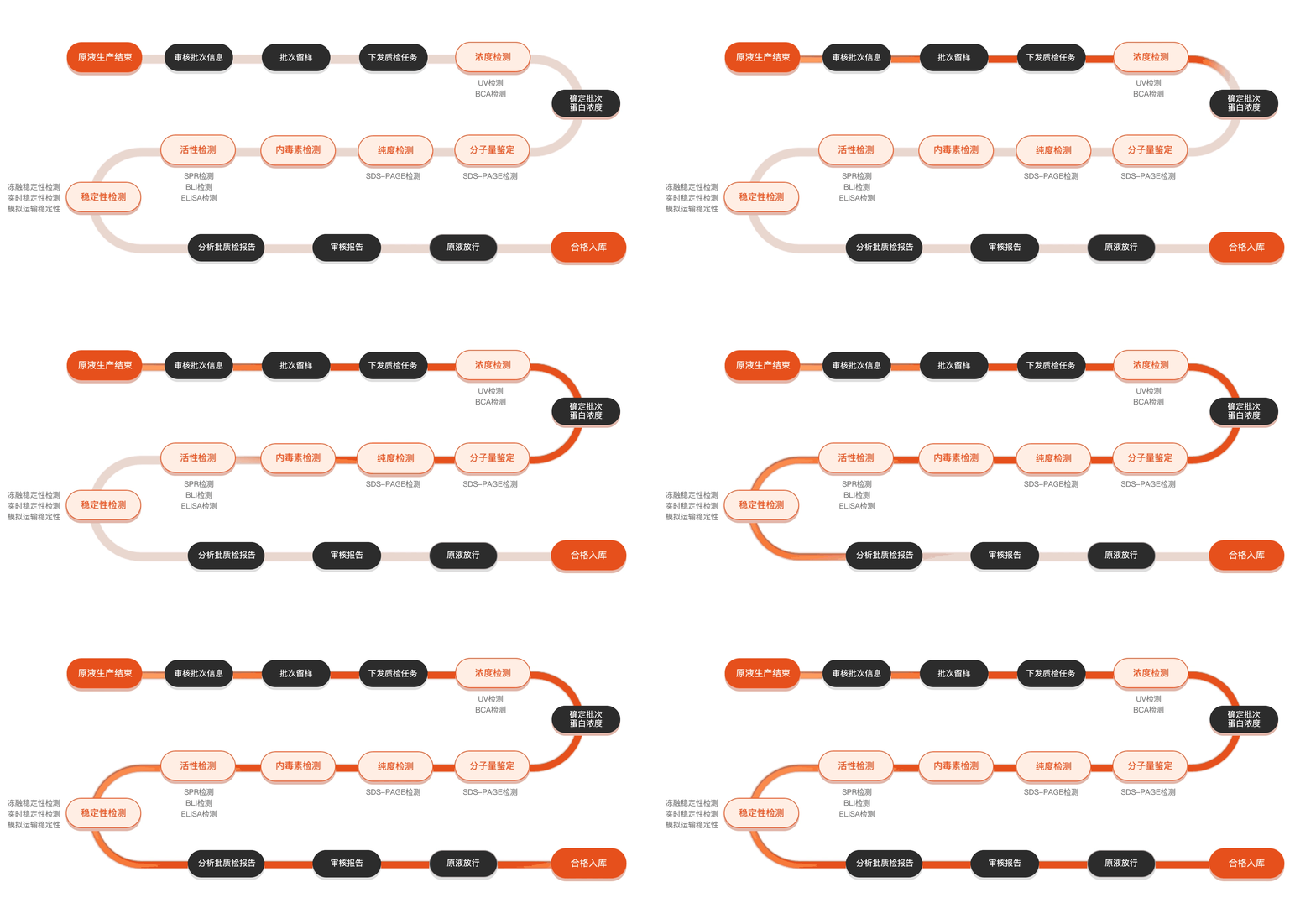
Quality inspection process
Related Products
Protein Description
The nerve growth factor receptor (NGFR), also known as p75 neurotrophin receptor (p75NTR), plays a crucial role in the development and maintenance of the nervous system by mediating the effects of neurotrophins, such as nerve growth factor (NGF). Research into NGFR has gained prominence due to its involvement in various neurodegenerative diseases, including Alzheimer's disease and Amyotrophic Lateral Sclerosis (ALS). The receptor is unique as it can trigger both pro-survival and pro-apoptotic signaling pathways depending on the cellular context and the presence of other neurotrophic factors. Understanding the structure and functioning of NGFR, specifically through the development and characterization of recombinant NGFR proteins, has become essential for elucidating its dual roles in neuronal health and disease. These recombinant proteins can be utilized in vitro to investigate ligand-binding interactions and downstream signaling pathways, thus providing insights into their therapeutic potential. Additionally, the study of NGFR can enhance our understanding of cellular responses to stress and injury, making it a target of interest for drug discovery aimed at modulating its activity in neurodegenerative conditions. By developing reliable expression systems and purification methods, researchers aim to produce high-quality NGFR proteins that can be employed in various experimental settings, ultimately contributing to the advancement of neurological research and potential therapeutic interventions.