Analytical Data
-
基因名
IL-21
-
简介
IL-21 protein is an immunomodulatory cytokine that promotes the transition from innate immunity to adaptive immunity. It induces B cells to produce IgG(1) and IgG(3), harnessing an effective antibody response to fight viral infections. IL-21 Protein, Human (HEK293) is the recombinant human-derived IL-21 protein, expressed by HEK293, with tag free.
- Application
-
别名
Interleukin-21; IL-21; Za11; IL21
-
种属
Human
-
表达系统
HEK293
-
标签
Tag Free
-
纯度
> 90% as determined by SDS-PAGE.
-
蛋白编号
Q9HBE4
-
表达区间
Q32-S162
-
蛋白长度
Partial
-
分子量
13-19 kDa
-
内毒素
< 1.0 EU per μg protein as determined by the LAL method.
-
性状
Freeze-dried powder
-
缓冲液
PBS, pH7.4, containing 0.01% SKL, 1mM DTT, 5% Trehalose and Proclin300.
-
复溶方法
Reconstitute in ddH2O to a concentration of 0.1-0.5 mg/mL. Do not vortex.
- 个性化定制
-
稳定性测试
The thermal stability is described by the loss rate. The loss rate was determined by accelerated thermal degradation test, that is, incubate the protein at 37℃ for 48h, and no obvious degradation and precipitation were observed. The loss rate isless than 8% within the expiration date under appropriate storage condition.
-
保存条件 & 期限
Samples are stable for up to twelve months from date of receipt at -20℃ to -80℃. Store it under sterile conditions at -20℃ to -80℃. It is recommended that the protein be aliquoted for optimal storage. Avoid repeated freeze-thaw cycles.
-
运输条件
In general, recombinant proteins are supplied as lyophilized powder and shipped at ambient temperature. For bulk packages, the proteins are provided as frozen liquid and shipped with blue ice, unless otherwise requested by the customer.
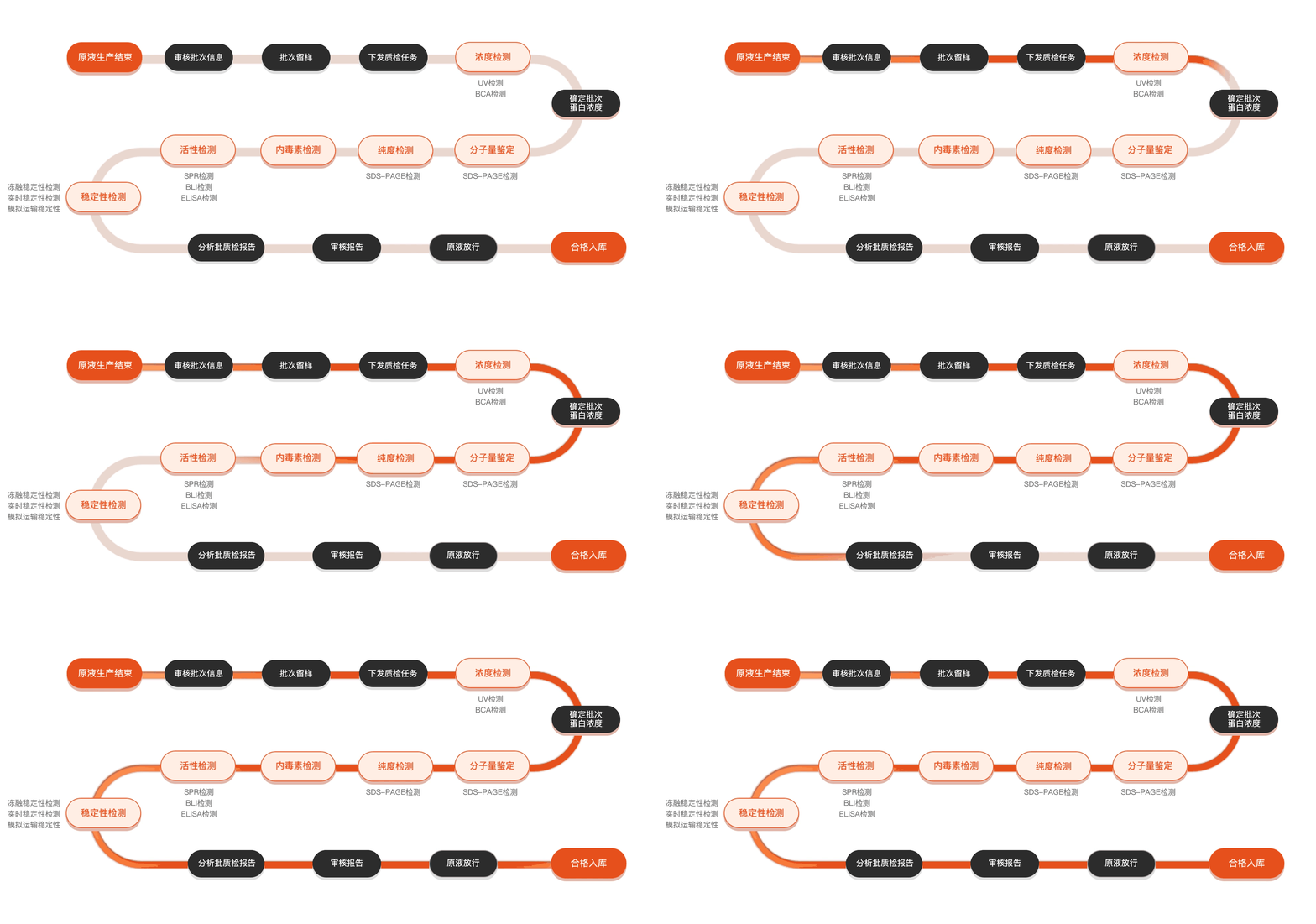
Quality inspection process
Related Products
Protein Description
Interleukin-21 (IL-21) is a crucial cytokine involved in the regulation of immune responses, primarily produced by T-follicular helper cells, natural killer cells, and certain subsets of CD4+ T cells. It plays a significant role in the differentiation and activation of B cells, promoting antibody production, and modulating the functions of various immune cells, including T cells and dendritic cells. Due to its vital function in both adaptive and innate immunity, IL-21 has garnered substantial interest in therapeutics, particularly in the context of autoimmune diseases, cancer, and viral infections. The recombinant IL-21 protein has been developed to explore its potential clinical applications, providing a tool for understanding its mechanisms in immune modulation. Research indicates that IL-21 can enhance anti-tumor immunity and improve vaccine responses, making it a promising candidate for immunotherapy. Moreover, studies have suggested that modulating IL-21 activity could have therapeutic benefits in conditions characterized by immune dysregulation, such as systemic lupus erythematosus and rheumatoid arthritis. Ongoing investigations aim to elucidate its precise roles and optimize its application in clinical settings, including combination therapies that leverage IL-21's ability to boost immune responses against malignancies or chronic infections. Overall, the exploration of IL-21 recombinant protein serves as a pivotal step toward harnessing its immunomodulatory properties for innovative treatment strategies in various diseases.