Analytical Data
-
Gene name
srtA
- Application
-
Alternative Names
srtA;Sortase A
-
Source
E. coli
-
Tag
N-6His
-
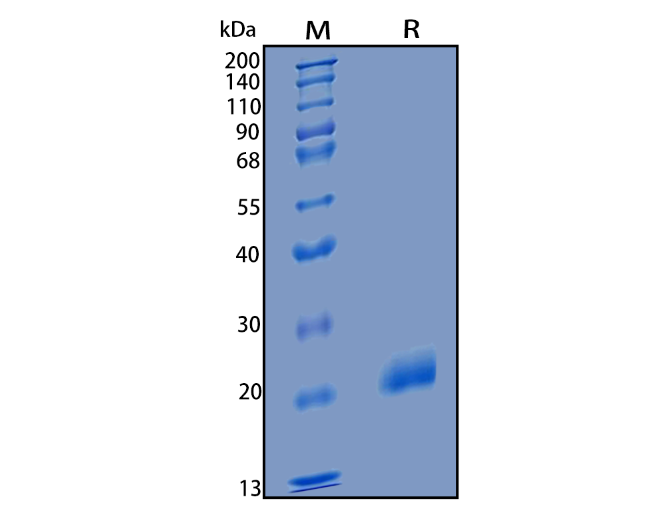
Purity
Greater than 90% as determined by SDS-PAGE.
-
Uniprot
Q9S446
-
Expression Region
25-206aa
-
Molecular Weight
24 kDa
-
Endotoxin
< 1.0 EU per μg protein as determined by the LAL method.
-
Form
Freeze-dried powder
-
Buffer formulation
PBS, pH7.4, containing 0.01% SKL, 1mM DTT, 5% Trehalose and Proclin300.
-
Reconstitution
Reconstitute in ddH2O to a concentration of 0.1-0.5 mg/mL. Do not vortex.
- Customization
-
Stability Test
The thermal stability is described by the loss rate. The loss rate was determined by accelerated thermal degradation test, that is, incubate the protein at 37℃ for 48h, and no obvious degradation and precipitation were observed. The loss rate isless than 8% within the expiration date under appropriate storage condition.
-
Storage & Shelf Life
Samples are stable for up to twelve months from date of receipt at -20℃ to -80℃. Store it under sterile conditions at -20℃ to -80℃. It is recommended that the protein be aliquoted for optimal storage. Avoid repeated freeze-thaw cycles.
-
Shipping
In general, recombinant proteins are supplied as lyophilized powder and shipped at ambient temperature. For bulk packages, the proteins are provided as frozen liquid and shipped with blue ice, unless otherwise requested by the customer.
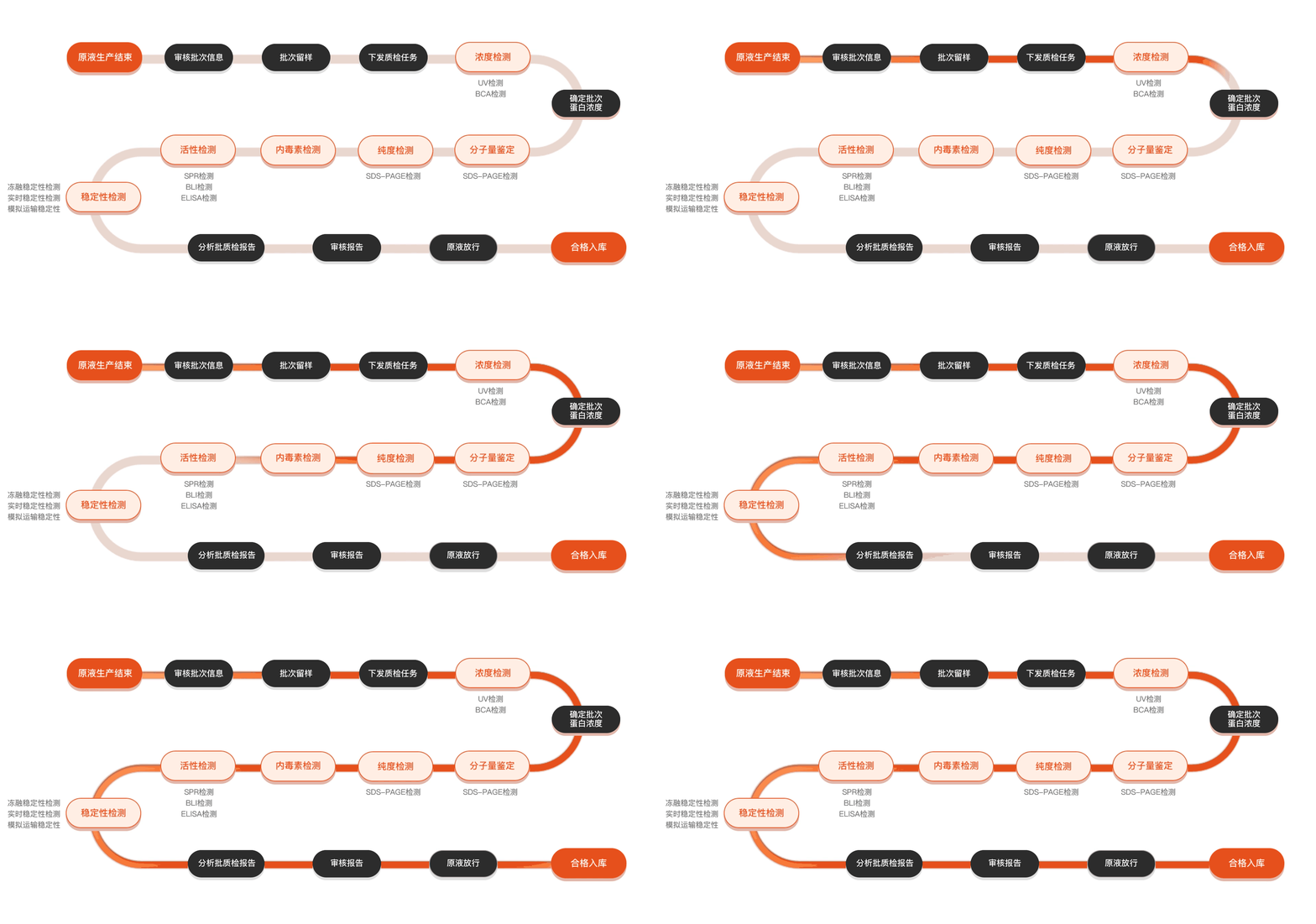
Quality inspection process
Related Products
Identification
Protein Description
The SrtA protein, known as sortase A, is a transpeptidase enzyme found in various Gram-positive bacteria, where it plays a crucial role in anchoring surface proteins to the bacterial cell wall through a process called sortase-mediated protein sorting. This enzyme facilitates the covalent attachment of substrate proteins, which often include virulence factors, to peptidoglycan, thereby influencing bacterial morphology, adherence, and pathogenicity. Understanding the function and mechanism of SrtA is vital for the development of novel antibacterial strategies, especially in the context of rising antibiotic resistance. Research into SrtA often involves the study of its structure-function relationships, enzyme kinetics, and potential inhibitors, aiming to shed light on its role in bacterial infections and providing insights for therapeutic interventions. Additionally, SrtA has garnered interest in biotechnology, particularly in protein engineering and the design of vaccine candidates, due to its ability to customize the presentation of antigens on bacterial surfaces. This multifaceted significance makes SrtA an important target in the fields of microbiology, immunology, and therapeutic development, motivating ongoing investigations into its properties and applications.