Analytical Data
-
Gene name
Claudin-6/CLDN6 Protein-VLP
- Application
-
Alternative Names
Claudin-6; Skullin; CLDN6; Claudin6; Skullin 2
-
Species
Human
-
Source
HEK293
-
Tag
Tag Free
-
Purity
Greater than 90% as determined by SDS-PAGE.
-
Uniprot
P56747
-
Expression Region
M1-V220
-
Protein Length
Full Length
-
Molecular Weight
24.5 kDa
-
Endotoxin
< 1.0 EU per μg protein as determined by the LAL method.
-
Form
Freeze-dried powder
-
Buffer formulation
PBS, pH7.4, containing 0.01% SKL, 1mM DTT, 5% Trehalose and Proclin300.
-
Reconstitution
Reconstitute in ddH2O to a concentration of 0.1-0.5 mg/mL. Do not vortex.
- Customization
-
Stability Test
The thermal stability is described by the loss rate. The loss rate was determined by accelerated thermal degradation test, that is, incubate the protein at 37℃ for 48h, and no obvious degradation and precipitation were observed. The loss rate isless than 8% within the expiration date under appropriate storage condition.
-
Storage & Shelf Life
Samples are stable for up to twelve months from date of receipt at -20℃ to -80℃. Store it under sterile conditions at -20℃ to -80℃. It is recommended that the protein be aliquoted for optimal storage. Avoid repeated freeze-thaw cycles.
-
Shipping
In general, recombinant proteins are supplied as lyophilized powder and shipped at ambient temperature. For bulk packages, the proteins are provided as frozen liquid and shipped with blue ice, unless otherwise requested by the customer.
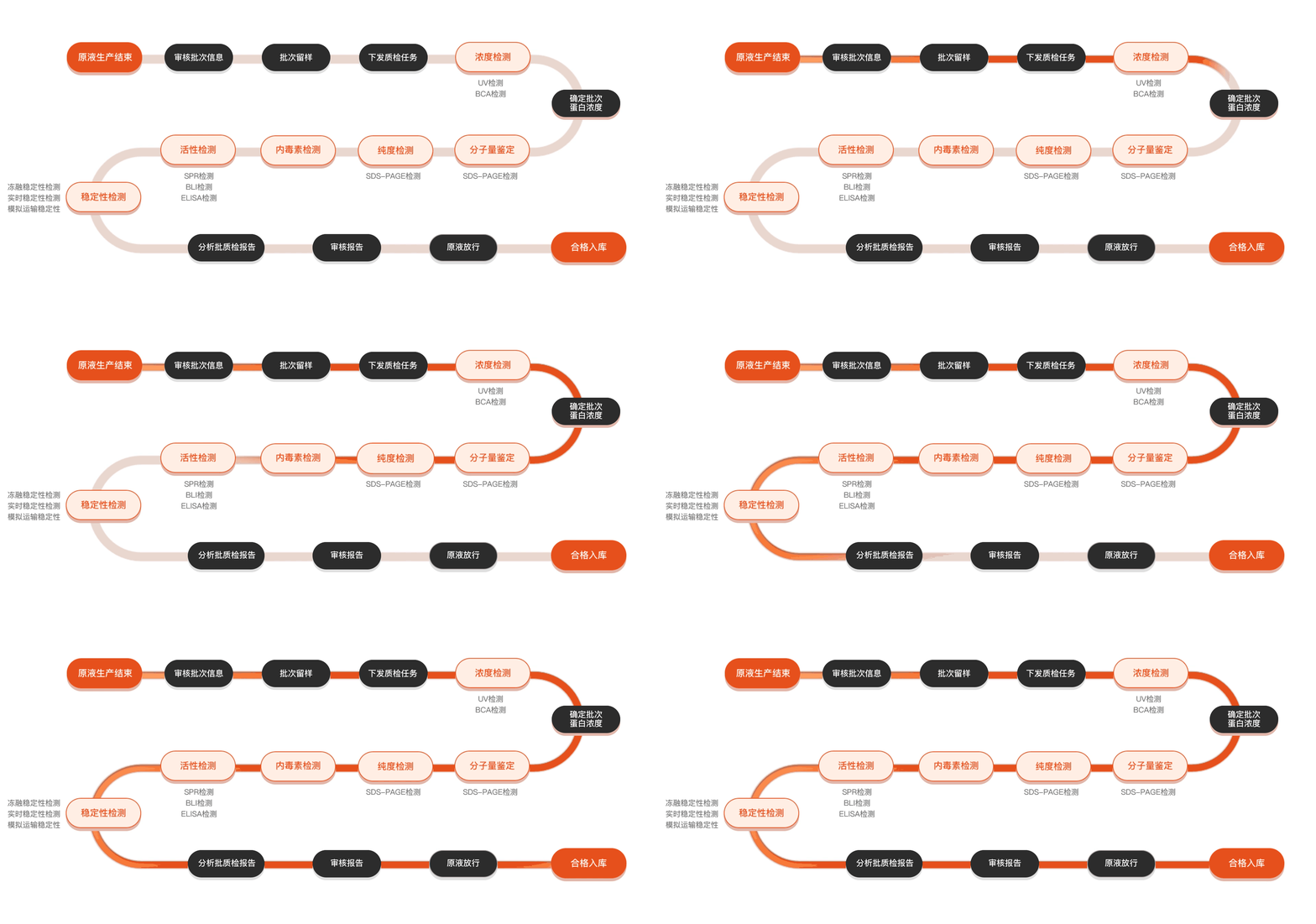
Quality inspection process
Related Products
Protein Description
Claudin-6 (CLDN6) is a member of the claudin family of proteins, which are integral components of tight junctions, playing a critical role in maintaining epithelial barrier integrity. Its expression is particularly notable in various types of cancers, making it a promising target for therapeutic interventions. The development of vaccine-like constructs using virus-like particles (VLPs) presenting CLDN6 has emerged as a novel strategy for cancer immunotherapy. VLPs mimic the structure of viruses but lack viral genetic material, making them safe and effective carriers for antigens. By incorporating CLDN6 into VLPs, researchers aim to elicit a robust immune response that specifically targets cancer cells expressing this protein. This approach not only enhances immune recognition but also improves the stability and delivery of the antigen. The ongoing studies focus on optimizing the VLP-CLDN6 constructs to evaluate their immunogenicity and potential for inducing protective T cell responses against tumors. Such advancements in the field of cancer immunotherapy highlight the significance of CLDN6 as a target for innovative treatment strategies, paving the way for the development of effective vaccines capable of combating cancers that express this protein.