Analytical Data
-
基因名
IL-23R
-
简介
IL-23R Protein, critical in immune response, forms the interleukin-23 receptor by associating with IL12RB1. Binding to IL23, it activates T-cells, NK cells, and potentially macrophage/myeloid cells through Jak-Stat signaling. Associated with autoimmune diseases and tumorigenesis, IL-23R, in the presence of IL12RB1, forms a heterodimeric IL-23 receptor, interacting with JAK2 and activating STAT3. IL-23R Protein, Human (HEK293, Fc) is the recombinant human-derived IL-23R protein, expressed by HEK293 , with C-hFc labeled tag.
- Application
-
生物活性
1. Measured by its binding ability in a functional ELISA. Immobilized human IL23A-His+IL12B-His at 10 μg/mL (100 μl/well) can bind human IL23R-Fc and the EC50 is 0.28-0.66 μg/mL. 2. Measured by its binding ability in a functional ELISA. Immobilized mouse IL12Bh (m)+mIL23Ah at 10 μg/mL (100 μl/well) can bind human IL23R-Fc. The EC50 of human IL23R-Fc is 0.14-0.35 μg/mL. 3.Measured in a cell proliferation assay using M-NFS-60 cells. The ED50 this effect is 0.9517 μg/mL, corresponding to a specific activity is 1.05×10³ units/mg in the presence of 0.125 ng/mL of recombinant human G-CSF. 4. Measured by its ability to inhibit IL-23 induced IL-17 secretion by Jurkat cells. The ED50 for this effect is 0.03289 μg/mL in the presence of 1 ng/mL IL-23, corresponding to a specific activity is 3.04×10⁴ U/mg.
-
别名
Interleukin 23 receptor; IL 23R; IL-23 receptor; IL-23R
-
种属
Human
-
表达系统
HEK293
-
标签
C-hFc
-
纯度
Greater than 90% as determined by reducing SDS-PAGE as determined by SDS-PAGE.
-
蛋白编号
Q5VWK5
-
表达区间
G24-D353
-
氨基酸序列
GITNINCSGHIWVEPATIFKMGMNISIYCQAAIKNCQPRKLHFYKNGIKERFQITRINKTTARLWYKNFLEPHASMYCTAECPKHFQETLICGKDISSGYPPDIPDEVTCVIYEYSGNMTCTWNAGKLTYIDTKYVVHVKSLETEEEQQYLTSSYINISTDSLQGGKKYLVWVQAANALGMEESKQLQIHLDDIVIPSAAVISRAETINATVPKTIIYWDSQTTIEKVSCEMRYKATTNQTWNVKEFDTNFTYVQQSEFYLEPNIKYVFQVRCQETGKRYWQPWSSLFFHKTPETVPQVTSKAFQHDTWNSGLTVASISTGHLTSDNRGD
-
蛋白长度
Extracellular Domain
-
分子量
90-110 kDa
-
内毒素
< 1.0 EU per μg protein as determined by the LAL method.
-
性状
Freeze-dried powder
-
缓冲液
PBS, pH7.4, containing 0.01% SKL, 1mM DTT, 5% Trehalose and Proclin300.
-
复溶方法
Reconstitute in ddH2O to a concentration of 0.1-0.5 mg/mL. Do not vortex.
- 个性化定制
-
稳定性测试
The thermal stability is described by the loss rate. The loss rate was determined by accelerated thermal degradation test, that is, incubate the protein at 37℃ for 48h, and no obvious degradation and precipitation were observed. The loss rate isless than 8% within the expiration date under appropriate storage condition.
-
保存条件 & 期限
Samples are stable for up to twelve months from date of receipt at -20℃ to -80℃. Store it under sterile conditions at -20℃ to -80℃. It is recommended that the protein be aliquoted for optimal storage. Avoid repeated freeze-thaw cycles.
-
运输条件
In general, recombinant proteins are supplied as lyophilized powder and shipped at ambient temperature. For bulk packages, the proteins are provided as frozen liquid and shipped with blue ice, unless otherwise requested by the customer.
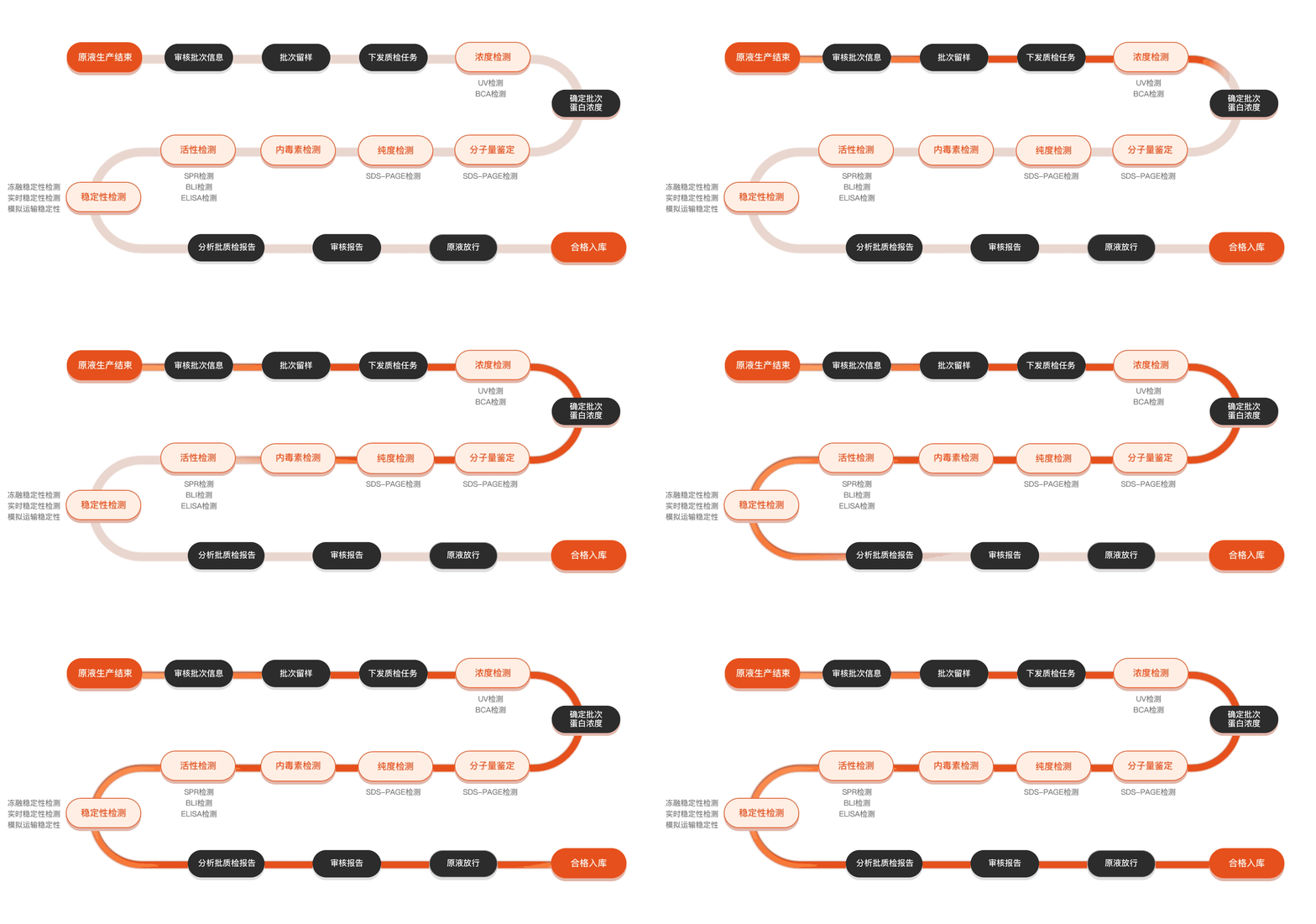
Quality inspection process
Related Products
Protein Description
Interleukin-23 receptor (IL-23R) plays a crucial role in the immunological pathways associated with various inflammatory and autoimmune diseases, including psoriasis, inflammatory bowel disease (IBD), and rheumatoid arthritis. This receptor is a key component of the IL-23 signaling pathway, which is essential for the differentiation and survival of Th17 cells, a subset of T helper cells that produce pro-inflammatory cytokines. Given the importance of IL-23R in mediating inflammatory responses, it has emerged as a significant therapeutic target. Recombinant proteins of IL-23R are employed in research to study its structure, function, and interaction with ligands, as well as to develop potential inhibitors that could lead to novel treatment options for diseases driven by Th17 responses. By utilizing advanced techniques such as protein engineering and cell line production, researchers aim to create recombinant IL-23R that can be used for further biochemical and pharmacological studies. This research not only enhances the understanding of IL-23R signaling mechanisms but also paves the way for the development of biologic therapies that can specifically modulate this pathway, ultimately improving clinical outcomes for patients suffering from autoimmune conditions.