Analytical Data
-
Gene name
CNPY3/PRAT4A
-
简介
The CNPY3/PRAT4A protein is a Toll-like receptor (TLR)-specific co-chaperone of HSP90B1 and is essential for the correct folding and exit of TLRs (excluding TLR3) from the endoplasmic reticulum. CNPY3/PRAT4A is critical for innate and adaptive immune responses, interacts with HSP90B1, and is destroyed in the presence of ATP. CNPY3/PRAT4A Protein, Mouse (HEK293, His) is the recombinant mouse-derived CNPY3/PRAT4A protein, expressed by HEK293 , with C-His labeled tag.
- Application
-
Alternative Names
Protein canopy homolog 3; Protein associated with Tlr4; PRAT4A; TNRC5
-
Species
Mouse
-
Source
HEK293
-
Tag
C-His
-
Purity
Greater than 90% as determined by SDS-PAGE.
-
Uniprot
Q9DAU1-1
-
Expression Region
A27-P272
-
Protein Length
Partial
-
Endotoxin
< 1.0 EU per μg protein as determined by the LAL method.
-
Form
Freeze-dried powder
-
Buffer formulation
PBS, pH7.4, containing 0.01% SKL, 1mM DTT, 5% Trehalose and Proclin300.
-
Reconstitution
Reconstitute in ddH2O to a concentration of 0.1-0.5 mg/mL. Do not vortex.
- Customization
-
Stability Test
The thermal stability is described by the loss rate. The loss rate was determined by accelerated thermal degradation test, that is, incubate the protein at 37℃ for 48h, and no obvious degradation and precipitation were observed. The loss rate isless than 8% within the expiration date under appropriate storage condition.
-
Storage & Shelf Life
Samples are stable for up to twelve months from date of receipt at -20℃ to -80℃. Store it under sterile conditions at -20℃ to -80℃. It is recommended that the protein be aliquoted for optimal storage. Avoid repeated freeze-thaw cycles.
-
Shipping
In general, recombinant proteins are supplied as lyophilized powder and shipped at ambient temperature. For bulk packages, the proteins are provided as frozen liquid and shipped with blue ice, unless otherwise requested by the customer.
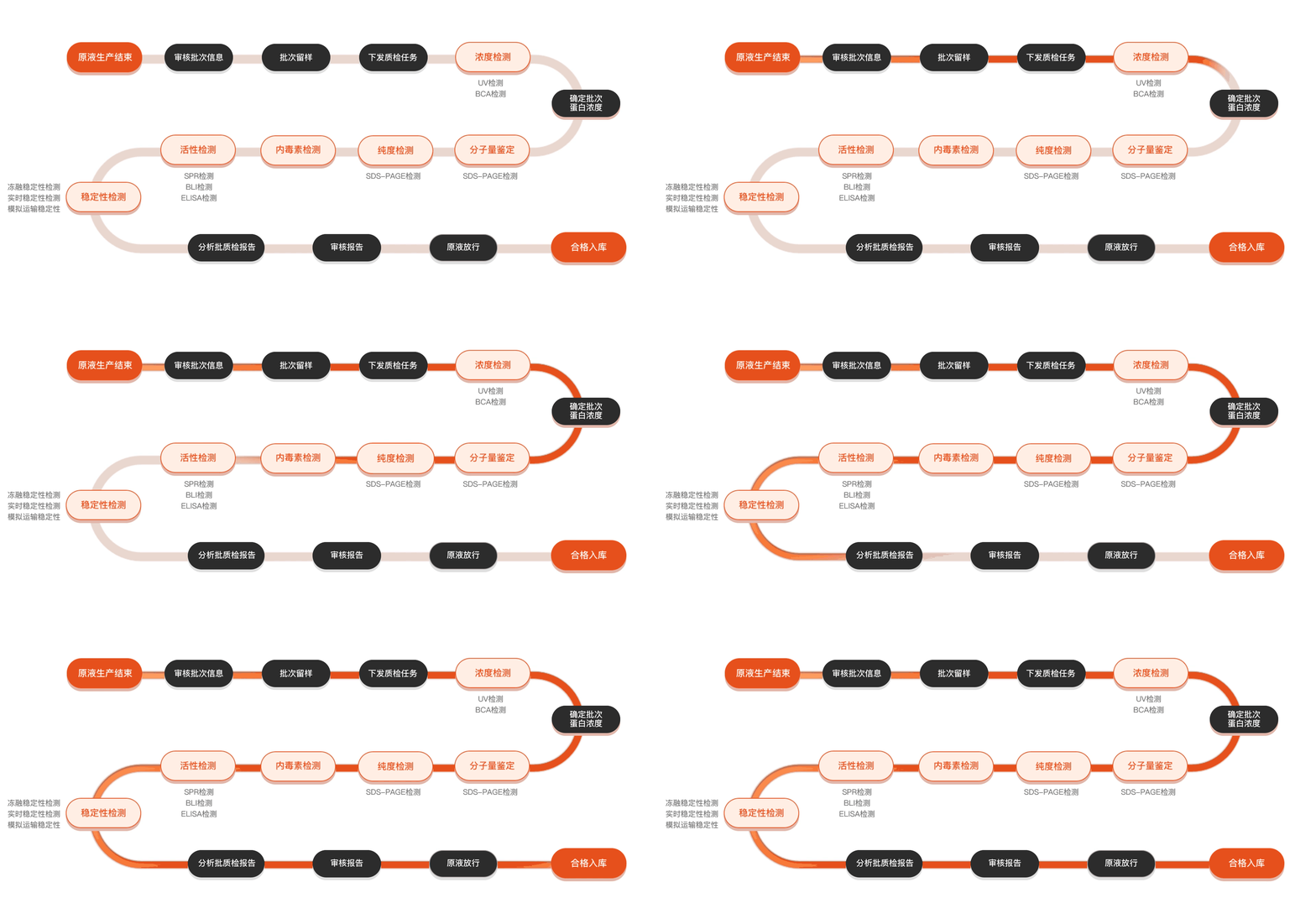
Quality inspection process
Related Products
Protein Description
FACA (Fanconi Anemia Complementation Group A) and FANCA (Fanconi Anemia Complementation Group A protein) are critical components in the Fanconi anemia (FA) pathway, a key mechanism for maintaining genomic stability and DNA repair. Fanconi anemia is a rare genetic disorder characterized by increased cancer susceptibility, aplastic anemia, and physical malformations, resulting from mutations in any of the FA genes. FANCA is the most frequently mutated gene in FA patients, making it a primary focus for understanding the disease's etiology. Research into the structure and function of the FACA/FANCA recombinantly expressed protein has provided significant insights into its role in the DNA damage response, specifically in interstrand cross-link repair and the activation of multiple downstream repair pathways. Recent studies have leveraged advanced biochemical and structural biology techniques to elucidate the molecular mechanisms by which FANCA interacts with other FA proteins and DNA repair factors. Understanding these interactions is essential for developing targeted therapies for FA patients and improving diagnostic methods. Additionally, the successful expression and characterization of recombinant FANCA proteins have paved the way for exploring therapeutic interventions, including gene therapy and small molecule drugs, to correct the underlying defects caused by FANCA mutations. As research progresses, the insights gained from the study of FANCA and its role in the FA pathway continue to uncover potential avenues for therapeutic innovation, aiming to alleviate the clinical manifestations of this debilitating disorder.