Analytical Data
-
Gene name
TCL1A
-
简介
TCL1A protein plays a crucial role in cell signaling by actively enhancing the phosphorylation and activation of AKT1, AKT2, and AKT3 while promoting the nuclear translocation of AKT1. Additionally, it aids cell proliferation, stabilizes mitochondrial membrane potential, and promotes cell survival. TCL1A Protein, Human (His) is the recombinant human-derived TCL1A protein, expressed by E. coli , with N-His labeled tag.
- Application
-
Alternative Names
T-cell leukemia/lymphoma protein 1A; Oncogene TCL-1; TCL1A; TCL1
-
Species
Human
-
Source
E. coli
-
Tag
N-His
-
Purity
Greater than 95% as determined by SDS-PAGE.
-
Uniprot
P56279
-
Expression Region
A2-D114
-
Protein Length
Partial
-
Molecular Weight
14 kDa
-
Endotoxin
< 1.0 EU per μg protein as determined by the LAL method.
-
Form
Freeze-dried powder
-
Buffer formulation
PBS, pH7.4, containing 0.01% SKL, 1mM DTT, 5% Trehalose and Proclin300.
-
Reconstitution
Reconstitute in ddH2O to a concentration of 0.1-0.5 mg/mL. Do not vortex.
- Customization
-
Stability Test
The thermal stability is described by the loss rate. The loss rate was determined by accelerated thermal degradation test, that is, incubate the protein at 37℃ for 48h, and no obvious degradation and precipitation were observed. The loss rate isless than 8% within the expiration date under appropriate storage condition.
-
Storage & Shelf Life
Samples are stable for up to twelve months from date of receipt at -20℃ to -80℃. Store it under sterile conditions at -20℃ to -80℃. It is recommended that the protein be aliquoted for optimal storage. Avoid repeated freeze-thaw cycles.
-
Shipping
In general, recombinant proteins are supplied as lyophilized powder and shipped at ambient temperature. For bulk packages, the proteins are provided as frozen liquid and shipped with blue ice, unless otherwise requested by the customer.
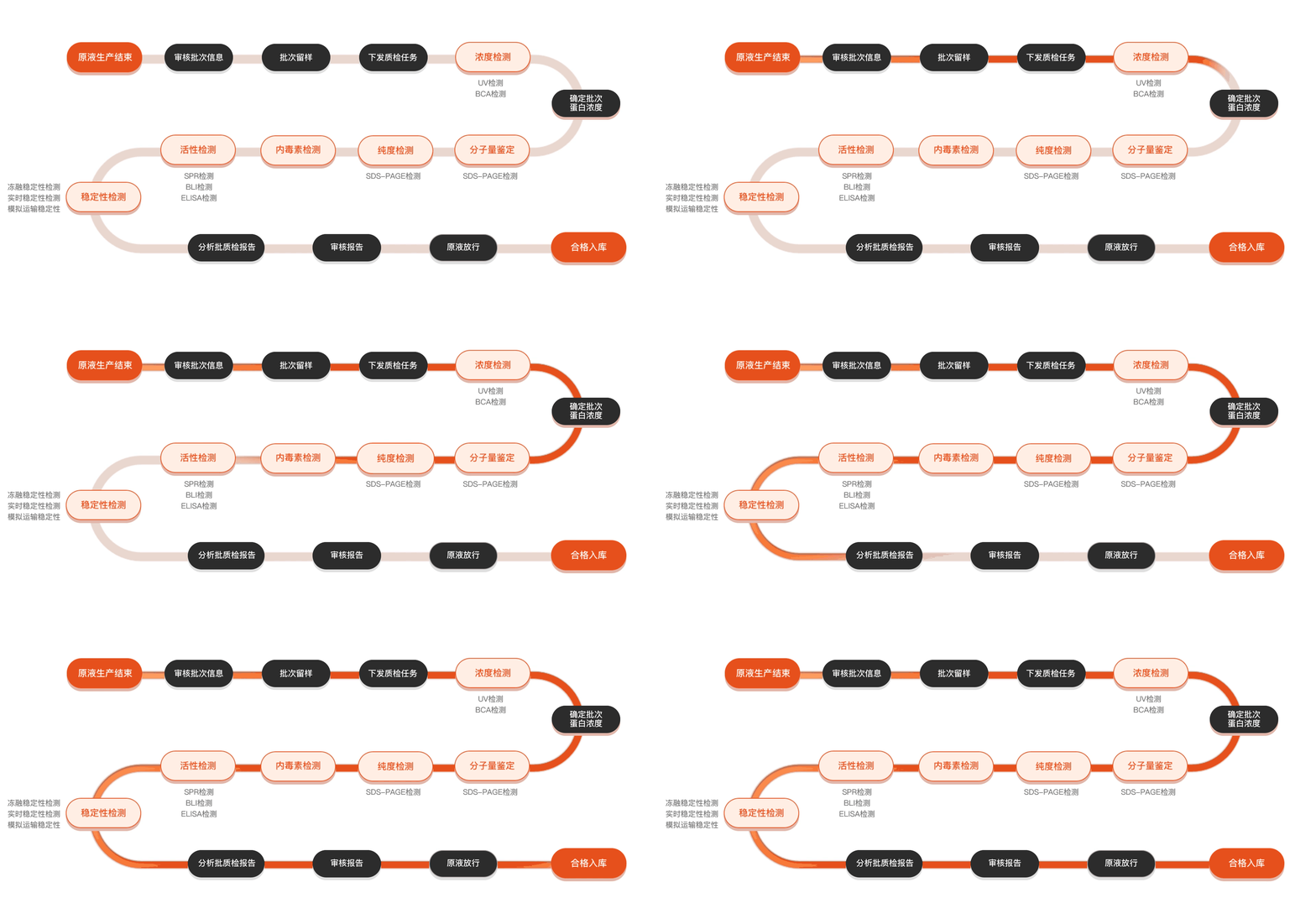
Quality inspection process
Related Products
Protein Description
TCL1A, or T-cell leukemia 1A, is a gene that has garnered significant attention in the field of cancer research, particularly for its role in T-cell malignancies such as T-cell acute lymphoblastic leukemia (T-ALL). The TCL1A protein is known to function as an oncogene, promoting cell survival and proliferation by modulating cellular pathways related to apoptosis and T-cell activation. Research has shown that TCL1A can be upregulated in certain leukemic cells, leading to increased tumorigenicity. This has prompted investigations into the mechanisms behind its overexpression and functional roles in malignant transformation. Studies have utilized recombinant TCL1A proteins to explore their interactions with various cellular partners and signaling pathways, enhancing our understanding of how aberrant TCL1A activity contributes to T-cell leukemogenesis. The development of targeted therapies aimed at inhibiting TCL1A and its downstream effects represents a promising avenue for improving treatment outcomes in patients with TCL1A-related malignancies. Overall, the study of TCL1A and its recombinant forms is vital for uncovering new therapeutic targets and elucidating the complex biology underlying T-cell cancers.