Analytical Data
-
Gene name
GH
- Application
-
Alternative Names
GH1; GH-N; GHN; hGH-N; Somatotropin; Hygetropin; Jintropin; Kigtropin; Pituitary Growth Hormone; Growth Hormone, Normal
-
Species
Human
-
Source
E. coli
-
Tag
N-His
-
Purity
Greater than 90% as determined by SDS-PAGE.
-
Uniprot
P01241
-
Expression Region
Pro28~Phe217
-
Molecular Weight
23kDa
-
Endotoxin
< 1.0 EU per μg protein as determined by the LAL method.
-
Form
Freeze-dried powder
-
Buffer formulation
PBS, pH7.4, containing 0.01% SKL, 1mM DTT, 5% Trehalose and Proclin300.
-
Reconstitution
Reconstitute in ddH2O to a concentration of 0.1-0.5 mg/mL. Do not vortex.
- Customization
-
Stability Test
The thermal stability is described by the loss rate. The loss rate was determined by accelerated thermal degradation test, that is, incubate the protein at 37℃ for 48h, and no obvious degradation and precipitation were observed. The loss rate isless than 8% within the expiration date under appropriate storage condition.
-
Storage & Shelf Life
Samples are stable for up to twelve months from date of receipt at -20℃ to -80℃. Store it under sterile conditions at -20℃ to -80℃. It is recommended that the protein be aliquoted for optimal storage. Avoid repeated freeze-thaw cycles.
-
Shipping
In general, recombinant proteins are supplied as lyophilized powder and shipped at ambient temperature. For bulk packages, the proteins are provided as frozen liquid and shipped with blue ice, unless otherwise requested by the customer.
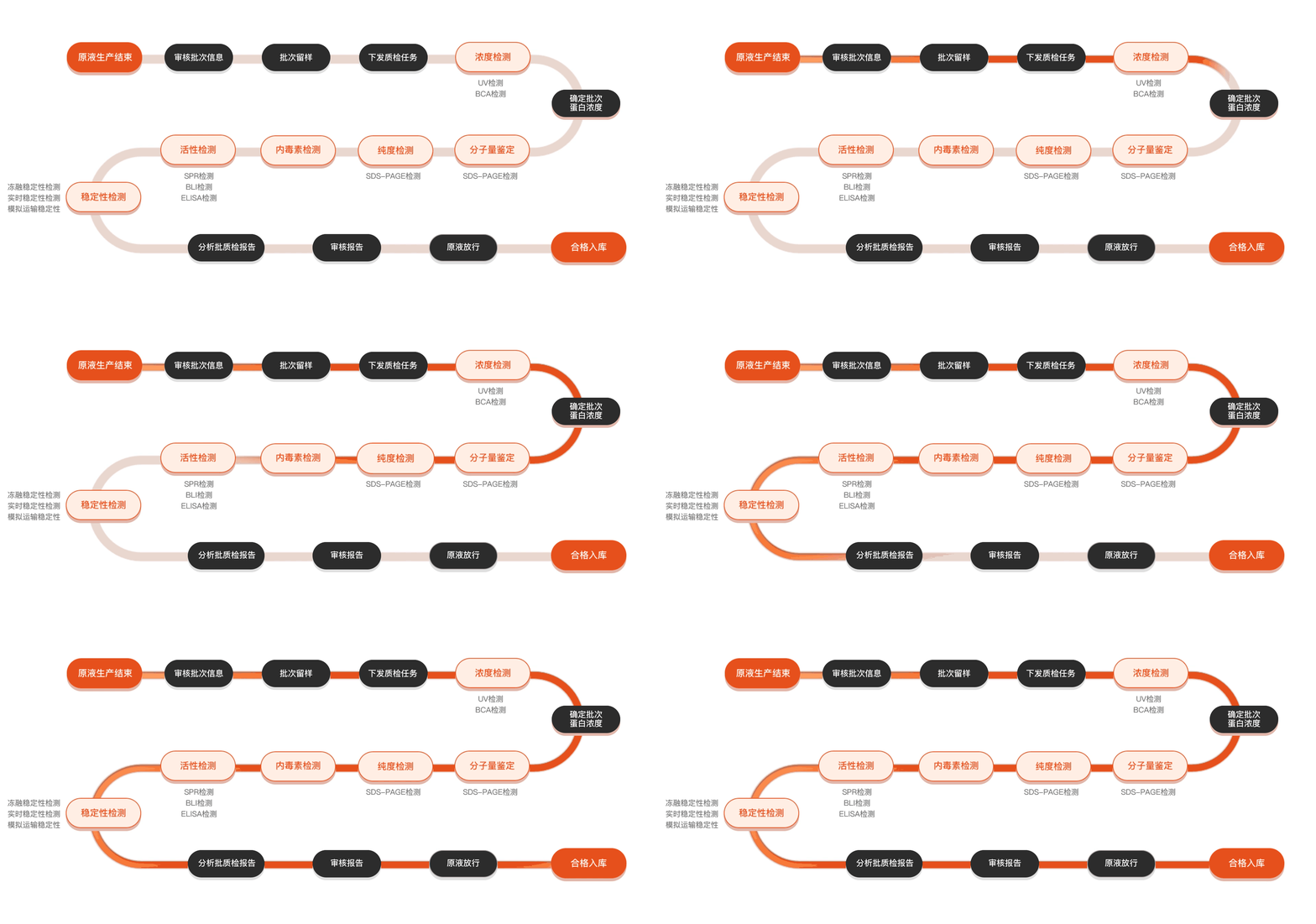
Quality inspection process
Related Products
Protein Description
The research on growth hormone (GH) recombinant proteins has gained significant traction in recent decades due to their crucial role in various physiological processes and therapeutic applications. Growth hormone, a peptide hormone produced by the pituitary gland, is essential for growth, metabolism, and body composition regulation. Disorders related to GH deficiency can lead to short stature and metabolic issues in children and adults. Traditionally, GH was extracted from human cadavers, raising concerns about safety and availability. The advent of recombinant DNA technology revolutionized GH production by enabling the synthesis of biosynthetic GH in bacterial, yeast, and mammalian systems. This method ensures a reliable, safe, and scalable source of GH while mitigating the risk of disease transmission. Research has focused on optimizing expression systems, enhancing yields, characterizing the biochemical properties of recombinant GH, and exploring its potential in treating conditions like GH deficiency, Turner syndrome, and muscle-wasting diseases. Furthermore, the development of modified GH variants with improved pharmacokinetics and reduced immunogenicity represents a significant advancement in therapeutic strategies. The increasing understanding of GH's multifaceted roles in endocrinology and metabolism continues to drive innovative research, ultimately aiming to improve patient outcomes and expand the applications of GH in clinical settings.