Analytical Data
-
Gene name
CTP
- Application
-
Alternative Names
SLC25A1; SLC20A3; Tricarboxylate Transport Protein; Solute Carrier Family 25 Member 1; Tricarboxylate carrier protein; Citrate transport protein
-
Species
Human
-
Source
E. coli
-
Tag
N-His
-
Purity
Greater than 90% as determined by SDS-PAGE.
-
Uniprot
P53007
-
Expression Region
Lys19~Asp311
-
Molecular Weight
36kDa
-
Endotoxin
< 1.0 EU per μg protein as determined by the LAL method.
-
Form
Freeze-dried powder
-
Buffer formulation
PBS, pH7.4, containing 0.01% SKL, 1mM DTT, 5% Trehalose and Proclin300.
-
Reconstitution
Reconstitute in ddH2O to a concentration of 0.1-0.5 mg/mL. Do not vortex.
- Customization
-
Stability Test
The thermal stability is described by the loss rate. The loss rate was determined by accelerated thermal degradation test, that is, incubate the protein at 37℃ for 48h, and no obvious degradation and precipitation were observed. The loss rate isless than 8% within the expiration date under appropriate storage condition.
-
Storage & Shelf Life
Samples are stable for up to twelve months from date of receipt at -20℃ to -80℃. Store it under sterile conditions at -20℃ to -80℃. It is recommended that the protein be aliquoted for optimal storage. Avoid repeated freeze-thaw cycles.
-
Shipping
In general, recombinant proteins are supplied as lyophilized powder and shipped at ambient temperature. For bulk packages, the proteins are provided as frozen liquid and shipped with blue ice, unless otherwise requested by the customer.
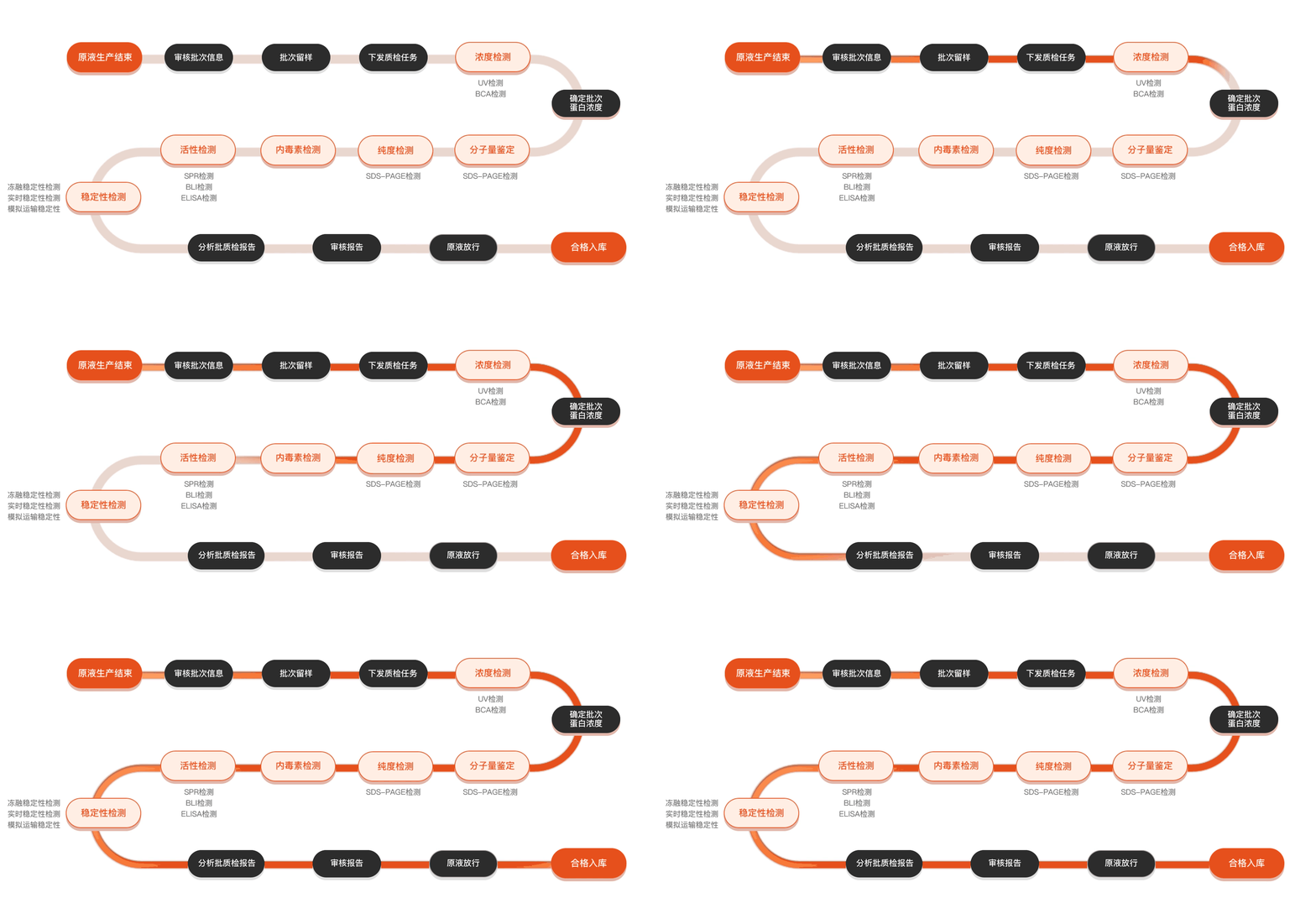
Quality inspection process
Related Products
Protein Description
CTP (Cytosine Triphosphate) recombinant proteins have gained significant attention in the field of molecular biology and biotechnology due to their diverse applications in research and industry. The background of CTP recombinant protein studies can be traced to the need for effective tools in understanding cellular processes, therapeutic development, and vaccine production. By utilizing recombinant DNA technology, scientists can insert the CTP gene into host cells to produce proteins with specific characteristics, enabling the study of their biological functions and facilitating the development of novel therapies. For instance, CTP proteins are essential in nucleotide metabolism and are implicated in various diseases, making them important targets for drug discovery. Furthermore, the ability to produce these proteins in large quantities and with high purity is crucial for both basic research and clinical applications. As research progresses, advancements in expression systems and purification techniques continue to improve the efficiency and efficacy of CTP recombinant protein production. These innovations not only enhance our understanding of fundamental biological mechanisms but also open up new avenues for therapeutic interventions and biotechnological advancements, solidifying the significance of CTP recombinant proteins in contemporary biological research.