Analytical Data
-
Gene name
EsxA
- Application
-
Alternative Names
ESAT-6 (esaT6)
-
Species
Mycobacterium bovis
-
Source
E. coli
-
Tag
N- His & C- Myc
-
Purity
Greater than 90% as determined by SDS-PAGE.
-
Uniprot
P0A565
-
Expression Region
2-95aa
-
Molecular Weight
17.2 kDa
-
Endotoxin
< 1.0 EU per μg protein as determined by the LAL method.
-
Form
Freeze-dried powder
-
Buffer formulation
PBS, pH7.4, containing 0.01% SKL, 1mM DTT, 5% Trehalose and Proclin300.
-
Reconstitution
Reconstitute in ddH2O to a concentration of 0.1-0.5 mg/mL. Do not vortex.
- Customization
-
Stability Test
The thermal stability is described by the loss rate. The loss rate was determined by accelerated thermal degradation test, that is, incubate the protein at 37℃ for 48h, and no obvious degradation and precipitation were observed. The loss rate isless than 8% within the expiration date under appropriate storage condition.
-
Storage & Shelf Life
Samples are stable for up to twelve months from date of receipt at -20℃ to -80℃. Store it under sterile conditions at -20℃ to -80℃. It is recommended that the protein be aliquoted for optimal storage. Avoid repeated freeze-thaw cycles.
-
Shipping
In general, recombinant proteins are supplied as lyophilized powder and shipped at ambient temperature. For bulk packages, the proteins are provided as frozen liquid and shipped with blue ice, unless otherwise requested by the customer.
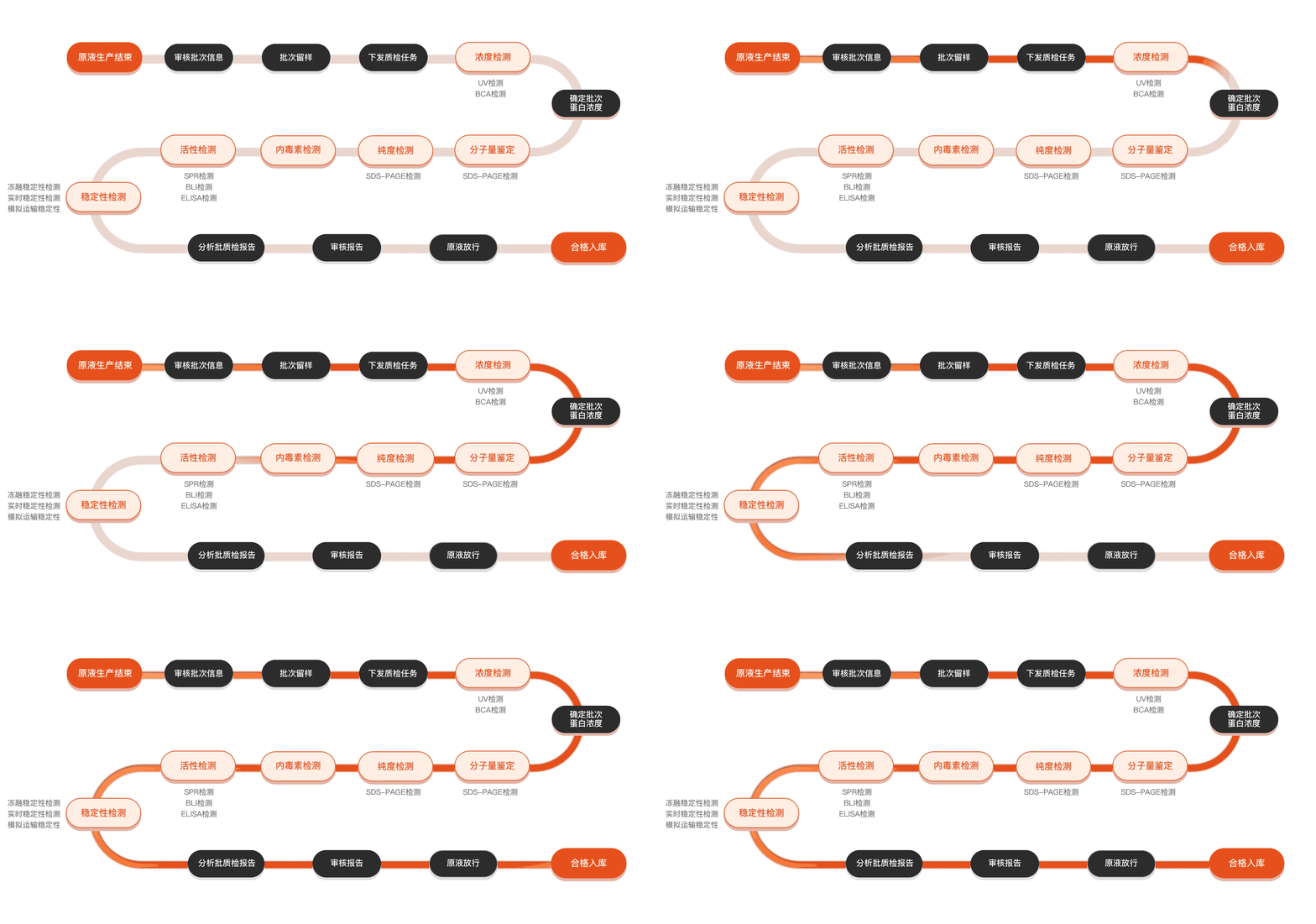
Quality inspection process
Related Products
Protein Description
EsxA, a vital type VII secretion system protein found in mycobacteria, particularly in Mycobacterium tuberculosis, has gained significant attention in the field of microbiology and immunology due to its crucial role in bacterial pathogenicity and immune evasion. This protein is part of a larger family of ESX (Esx-1, Esx-2) secretion systems, which are known to transport effector proteins to the host's immune cells, manipulating host responses to promote bacterial survival and replication. Research on EsxA and its interactions with host immune mechanisms has revealed its potential to modulate immune responses, making it an attractive target for vaccine development and therapeutic interventions. Previous studies highlighted EsxA’s ability to elicit strong T-cell responses, suggesting its role as a promising candidate for subunit vaccines against tuberculosis. Furthermore, understanding the structural and functional characteristics of EsxA is essential for deciphering its mechanism of action and the overall pathogenicity of M. tuberculosis. Investigating EsxA not only enhances our knowledge of mycobacterial virulence factors but also contributes to the broader field of infectious disease research, informing strategies for tackling antibiotic resistance and improving public health outcomes. As the global burden of tuberculosis remains a pressing issue, continued exploration of the EsxA protein is imperative for advancing scientific efforts toward effective prevention and treatment methods.