Analytical Data
-
Gene name
NKTR
- Application
-
Alternative Names
Natural-killer cells cyclophilin-related protein 1 domains:Putative peptidyl-prolyl cis-trans isomerase (EC:5.2.1.8) ;PPIase ;Rotamase
-
Species
Human
-
Source
E. coli
-
Tag
N- His-SUMO
-
Purity
Greater than 90% as determined by SDS-PAGE.
-
Uniprot
P30414
-
Expression Region
10-175aa
-
Molecular Weight
34.4 kDa
-
Endotoxin
< 1.0 EU per μg protein as determined by the LAL method.
-
Form
Freeze-dried powder
-
Buffer formulation
PBS, pH7.4, containing 0.01% SKL, 1mM DTT, 5% Trehalose and Proclin300.
-
Reconstitution
Reconstitute in ddH2O to a concentration of 0.1-0.5 mg/mL. Do not vortex.
- Customization
-
Stability Test
The thermal stability is described by the loss rate. The loss rate was determined by accelerated thermal degradation test, that is, incubate the protein at 37℃ for 48h, and no obvious degradation and precipitation were observed. The loss rate isless than 8% within the expiration date under appropriate storage condition.
-
Storage & Shelf Life
Samples are stable for up to twelve months from date of receipt at -20℃ to -80℃. Store it under sterile conditions at -20℃ to -80℃. It is recommended that the protein be aliquoted for optimal storage. Avoid repeated freeze-thaw cycles.
-
Shipping
In general, recombinant proteins are supplied as lyophilized powder and shipped at ambient temperature. For bulk packages, the proteins are provided as frozen liquid and shipped with blue ice, unless otherwise requested by the customer.
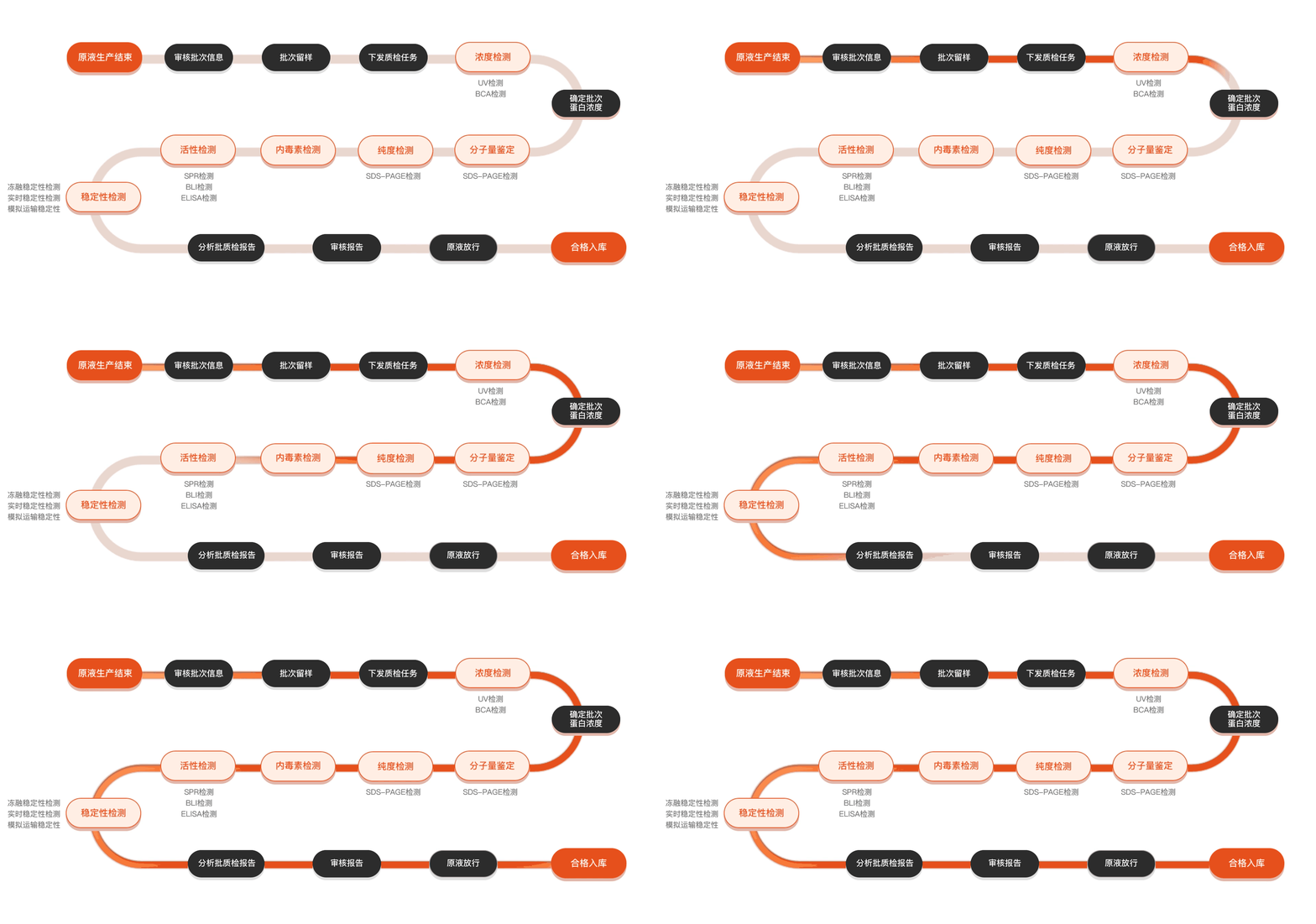
Quality inspection process
Related Products
Protein Description
NKTR-181 is a novel, opioid-based analgesic developed by Nektar Therapeutics, designed to provide effective pain relief while minimizing the risk of abuse and addiction commonly associated with traditional opioids. The rising opioid epidemic has highlighted the urgent need for safer pain management alternatives. NKTR-181 acts as a mu-opioid receptor agonist but features a unique molecular structure that alters its pharmacokinetic properties, leading to a slower onset of action and a lower potential for euphoria compared to conventional opioids. This mechanism aims to reduce cravings and the likelihood of misuse while still delivering adequate analgesia for patients suffering from chronic pain conditions. Preclinical studies have demonstrated its efficacy in pain relief, and ongoing clinical trials are investigating its safety, tolerability, and overall effectiveness in comparison to existing opioid therapies. With the growing prevalence of chronic pain and the corresponding societal burden of opioid misuse, NKTR-181 represents a promising advancement in the search for a safer and more effective pain management solution, aligning with public health initiatives to address the opioid crisis while ensuring patients receive necessary pain care.