Analytical Data
-
基因名
dhaK
- Application
-
别名
Glycerone kinase
-
种属
Citrobacter freundii
-
表达系统
E. coli
-
标签
N- His-SUMO
-
纯度
Greater than 90% as determined by SDS-PAGE.
-
蛋白编号
P45510
-
表达区间
356-548aa
-
分子量
35.9 kDa
-
内毒素
< 1.0 EU per μg protein as determined by the LAL method.
-
性状
Freeze-dried powder
-
缓冲液
PBS, pH7.4, containing 0.01% SKL, 1mM DTT, 5% Trehalose and Proclin300.
-
复溶方法
Reconstitute in ddH2O to a concentration of 0.1-0.5 mg/mL. Do not vortex.
- 个性化定制
-
稳定性测试
The thermal stability is described by the loss rate. The loss rate was determined by accelerated thermal degradation test, that is, incubate the protein at 37℃ for 48h, and no obvious degradation and precipitation were observed. The loss rate isless than 8% within the expiration date under appropriate storage condition.
-
保存条件 & 期限
Samples are stable for up to twelve months from date of receipt at -20℃ to -80℃. Store it under sterile conditions at -20℃ to -80℃. It is recommended that the protein be aliquoted for optimal storage. Avoid repeated freeze-thaw cycles.
-
运输条件
In general, recombinant proteins are supplied as lyophilized powder and shipped at ambient temperature. For bulk packages, the proteins are provided as frozen liquid and shipped with blue ice, unless otherwise requested by the customer.
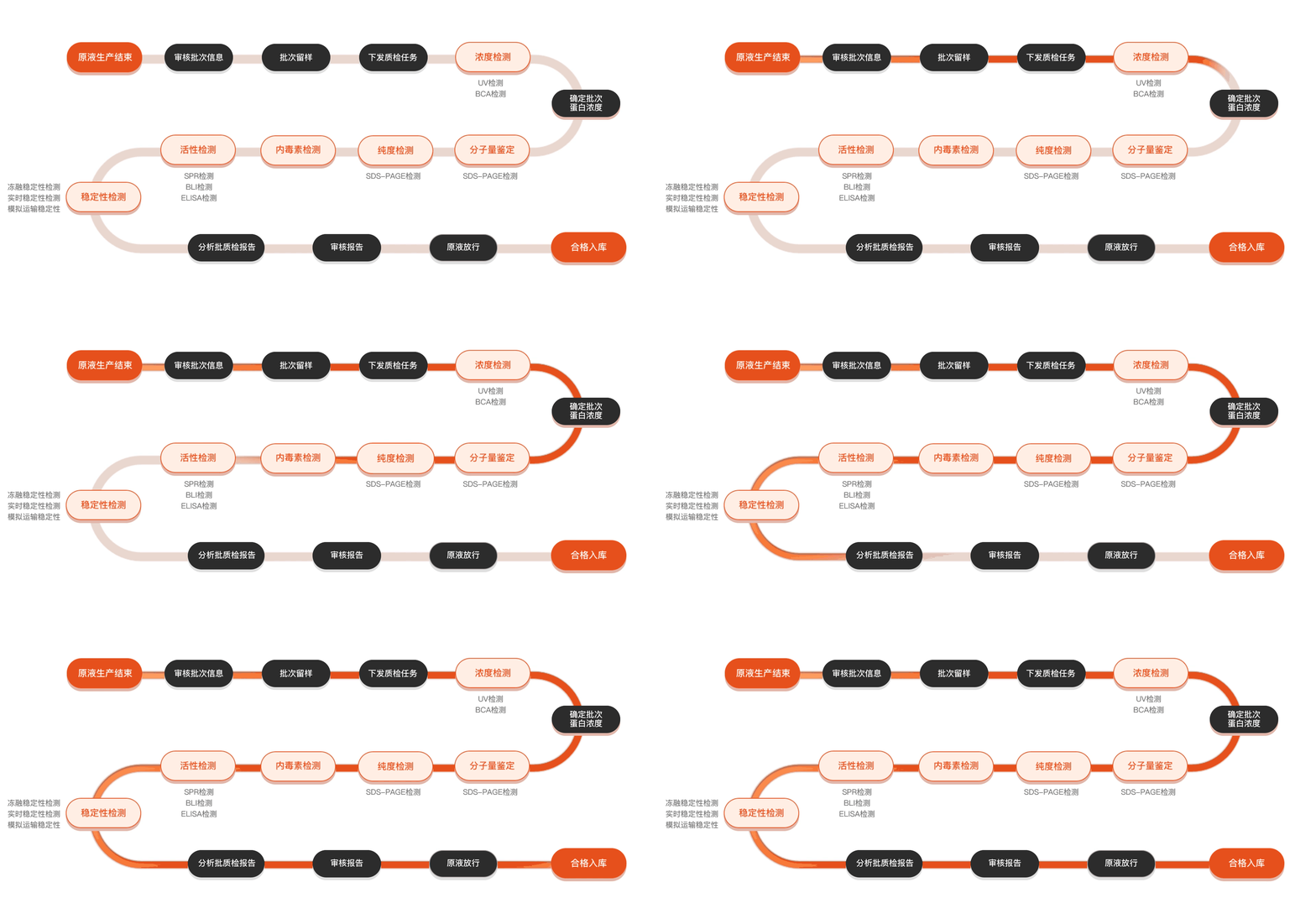
Quality inspection process
Related Products
Protein Description
DhaK is a protein belonging to the family of transport proteins, specifically known as the enzyme involved in the uptake of D-alanine, an amino acid with significant roles in cellular metabolism and bacterial cell wall synthesis. Research into DhaK has garnered interest due to its potential implications in antibiotic resistance, as D-alanine is crucial for the biosynthesis of peptidoglycan, a key component of bacterial cell walls. Understanding the structure and function of DhaK can provide insights into the mechanisms bacteria use to acquire essential nutrients and could lead to the development of novel antimicrobial strategies. Moreover, studies on DhaK's reconstitution allow scientists to explore its transport mechanism in detail and how it interacts with different substrates. By elucidating the molecular basis of DhaK's function, researchers aim to identify potential inhibitors that could disrupt its activity, thereby offering a pathway to combat resistant bacterial strains. Given the rising threat of antibiotic resistance worldwide, focusing on such transport proteins is essential for discovering new therapeutic approaches and enhancing our understanding of bacterial physiology.