Analytical Data
-
Gene name
PL
- Application
-
Alternative Names
PL;ATP-dependent 6-phosphofructokinase. liver type
-
Species
Human
-
Source
E. coli
-
Tag
His tag N-Terminus
-
Purity
Greater than 90% as determined by SDS-PAGE.
-
Uniprot
P16233
-
Expression Region
1-465aa
-
AA Sequence
MLPLWTLSLL LGAVAGKEVC YERLGCFSDD SPWSGITERP LHILPWSPKD VNTRFLLYTN ENPNNFQEVA ADSSSISGSN FKTNRKTRFI IHGFIDKGEE NWLANVCKNL FKVESVNCIC VDWKGGSRTG YTQASQNIRI VGAEVAYFVE FLQSAFGYSP SNVHVIGHSL GAHAAGEAGR RTNGTIGRIT GLDPAEPCFQ GTPELVRLDP SDAKFVDVIH TDGAPIVPNL GFGMSQVVGH LDFFPNGGVE MPGCKKNILS QIVDIDGIWE GTRDFAACNH LRSYKYYTDS IVNPDGFAGF PCASYNVFTA NKCFPCPSGG CPQMGHYADR YPGKTNDVGQ KFYLDTGDAS NFARWRYKVS VTLSGKKVTG HILVSLFGNK GNSKQYEIFK GTLKPDSTHS NEFDSDVDVG DLQMVKFIWY NNVINPTLPR VGASKIIVET NVGKQFNFCS PETVREEVLL TLTPC
-
Molecular Weight
51 kDa
-
Endotoxin
< 1.0 EU per μg protein as determined by the LAL method.
-
Form
Freeze-dried powder
-
Buffer formulation
PBS, pH7.4, containing 0.01% SKL, 1mM DTT, 5% Trehalose and Proclin300.
-
Reconstitution
Reconstitute in ddH2O to a concentration of 0.1-0.5 mg/mL. Do not vortex.
- Customization
-
Stability Test
The thermal stability is described by the loss rate. The loss rate was determined by accelerated thermal degradation test, that is, incubate the protein at 37℃ for 48h, and no obvious degradation and precipitation were observed. The loss rate isless than 8% within the expiration date under appropriate storage condition.
-
Storage & Shelf Life
Samples are stable for up to twelve months from date of receipt at -20℃ to -80℃. Store it under sterile conditions at -20℃ to -80℃. It is recommended that the protein be aliquoted for optimal storage. Avoid repeated freeze-thaw cycles.
-
Shipping
In general, recombinant proteins are supplied as lyophilized powder and shipped at ambient temperature. For bulk packages, the proteins are provided as frozen liquid and shipped with blue ice, unless otherwise requested by the customer.
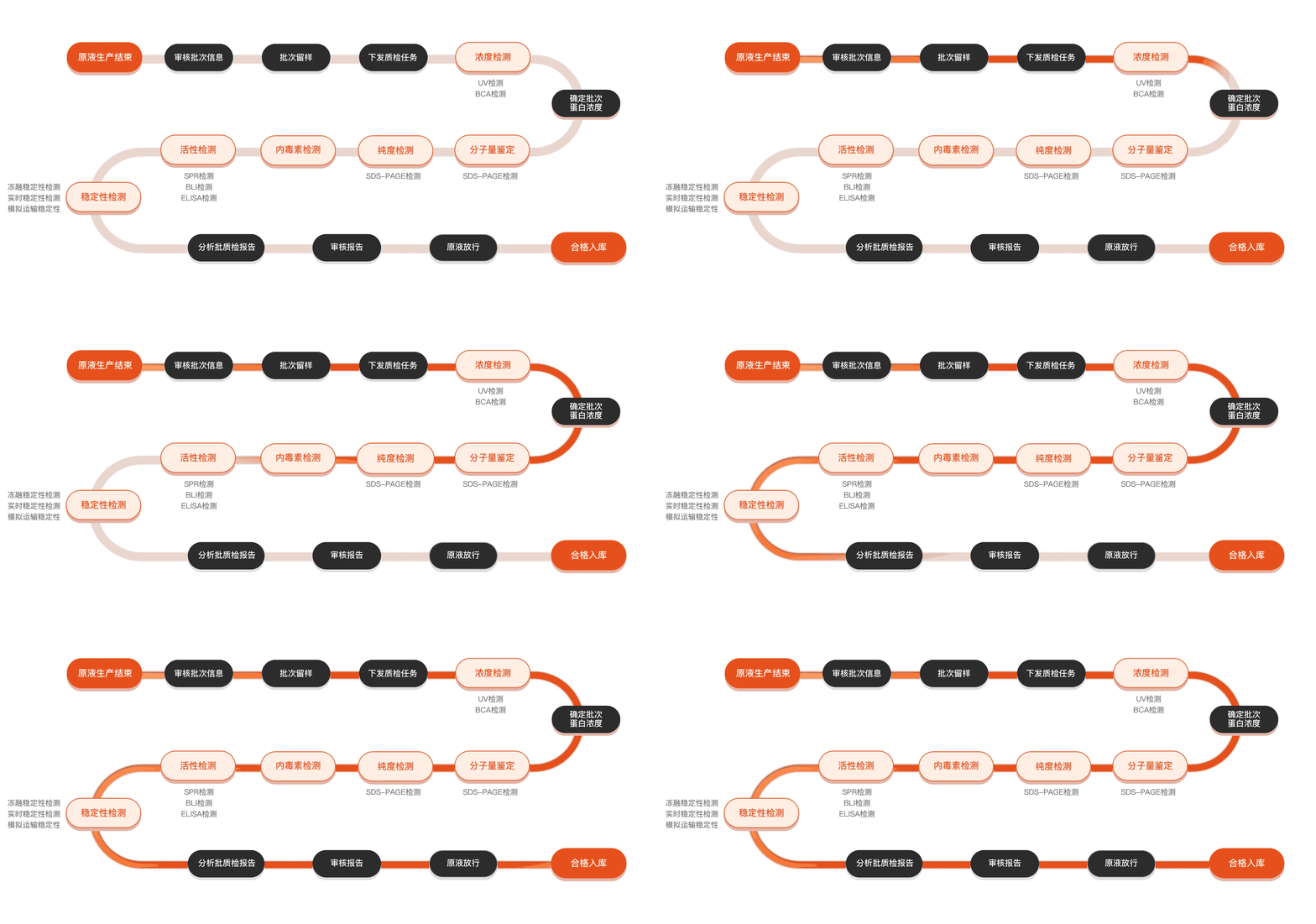
Quality inspection process
Related Products
Protein Description
The study of PL (phospholipase) recombinant proteins has gained significant attention in recent years due to their crucial roles in various biological processes and biotechnological applications. Phospholipases are enzymes that catalyze the hydrolysis of phospholipids, thus playing a vital role in cell membrane dynamics, signaling pathways, and lipid metabolism. Their functions are essential in diverse fields, including pharmacology, food science, and biomedicine. With advancements in genetic engineering, the production of recombinant PL proteins has become feasible, allowing researchers to investigate their structure-function relationships, enzymatic mechanisms, and interactions with other cellular components in greater detail. Moreover, recombinant PL proteins serve as valuable tools in drug delivery systems, vaccine development, and as potential therapeutic agents for diseases such as cancer and inflammation. Understanding the characteristics and applications of these enzymes could lead to innovative solutions to various medical and industrial challenges, highlighting the importance of ongoing research in this area.