Analytical Data
-
Gene name
MrVIB
- Application
-
Alternative Names
(CGX-1002)
-
Species
Conus marmoreus
-
Source
E. coli
-
Tag
N- GST
-
Purity
Greater than 90% as determined by SDS-PAGE.
-
Uniprot
Q26443
-
Expression Region
52-82aa
-
Molecular Weight
30.3 kDa
-
Endotoxin
< 1.0 EU per μg protein as determined by the LAL method.
-
Form
Freeze-dried powder
-
Buffer formulation
PBS, pH7.4, containing 0.01% SKL, 1mM DTT, 5% Trehalose and Proclin300.
-
Reconstitution
Reconstitute in ddH2O to a concentration of 0.1-0.5 mg/mL. Do not vortex.
- Customization
-
Stability Test
The thermal stability is described by the loss rate. The loss rate was determined by accelerated thermal degradation test, that is, incubate the protein at 37℃ for 48h, and no obvious degradation and precipitation were observed. The loss rate isless than 8% within the expiration date under appropriate storage condition.
-
Storage & Shelf Life
Samples are stable for up to twelve months from date of receipt at -20℃ to -80℃. Store it under sterile conditions at -20℃ to -80℃. It is recommended that the protein be aliquoted for optimal storage. Avoid repeated freeze-thaw cycles.
-
Shipping
In general, recombinant proteins are supplied as lyophilized powder and shipped at ambient temperature. For bulk packages, the proteins are provided as frozen liquid and shipped with blue ice, unless otherwise requested by the customer.
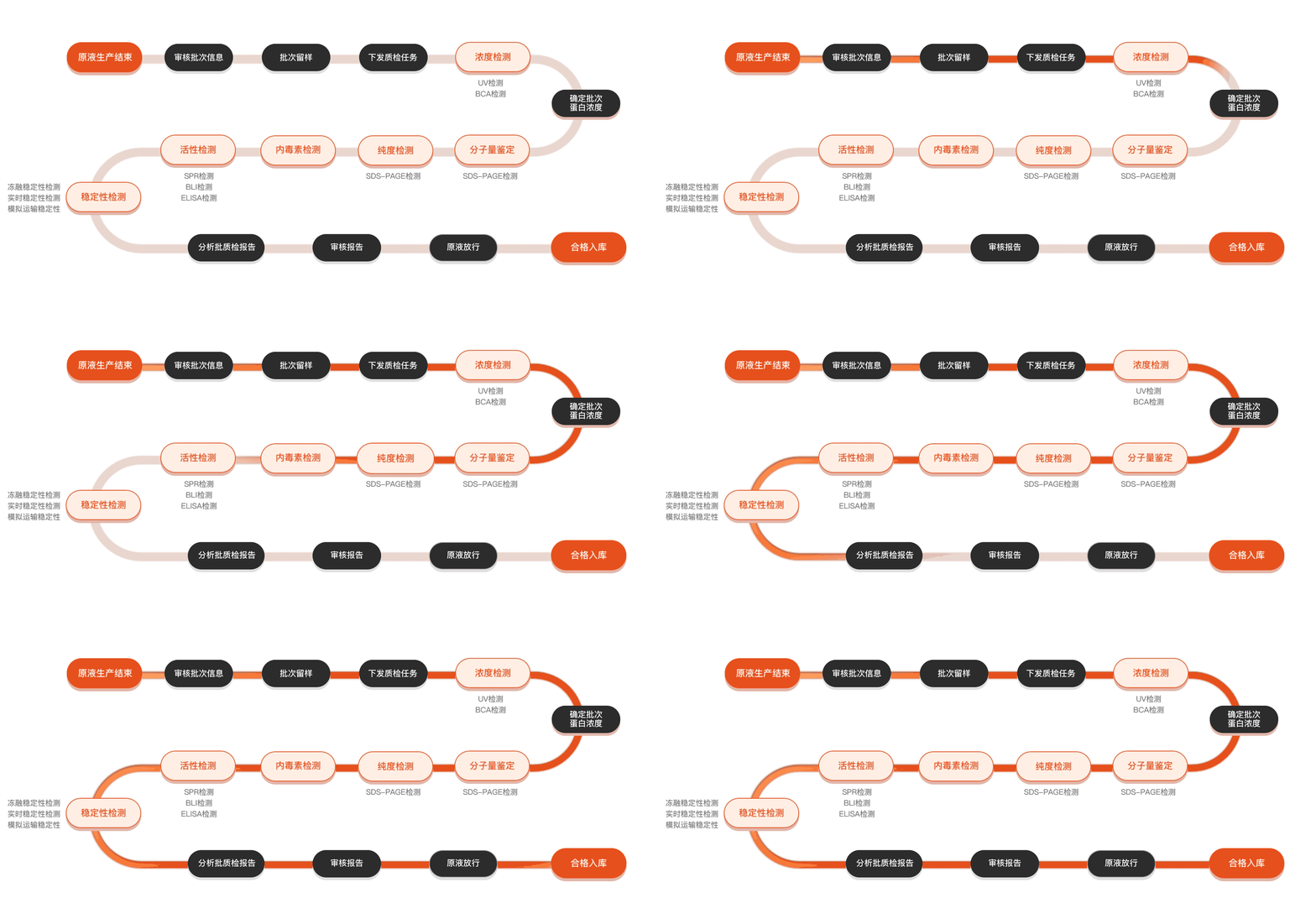
Quality inspection process
Related Products
Protein Description
MrVIB (Mycobacterium tuberculosis Virulence Factors Involved in Biofilm formation) is a recombinant protein derived from Mycobacterium tuberculosis (M. tuberculosis), the causative agent of tuberculosis (TB), a global health concern. The study of MrVIB is grounded in the understanding that M. tuberculosis has evolved sophisticated mechanisms to persist in host environments, including the ability to form biofilms, which contribute to its virulence and resistance to treatment. In recent years, the rising incidence of multidrug-resistant TB has highlighted the urgent need for new therapeutic strategies and vaccines. Research into MrVIB aims to elucidate its role in biofilm formation and its potential as a target for novel anti-TB therapies. By investigating the molecular interactions and pathways involved in biofilm development, scientists hope to uncover insights that could lead to the disruption of these protective structures, enhancing the efficacy of existing medications and improving patient outcomes. Additionally, understanding the immune response to MrVIB can provide valuable information for vaccine development, aiming to stimulate protective immunity against TB. Thus, the MrVIB recombinant protein serves as a critical focal point in the ongoing battle against one of the world's deadliest infectious diseases, with implications for both public health and the advancement of medical science.