Analytical Data
-
Gene name
VP
- Application
-
Alternative Names
VP;Vacuolar Protein sorting-associated Protein 33A
-
Species
Human
-
Source
E. coli
-
Tag
His tag N-Terminus
-
Purity
Greater than 90% as determined by SDS-PAGE.
-
Uniprot
Q96AX1
-
Expression Region
1-596aa
-
AA Sequence
MAAHLSYGRVNLNVLREAVRRELREFLDKCAGSKAIVWDEYLTGPFGLIAQYSLLKEHEVEKMFTLKGNRLPAADVKNIIFFVRPRLELMDIIAENVLSEDRRGPTRDFHILFVPRRSLLCEQRLKDLGVLGSFIHREEYSLDLIPFDGDLLSMESEGAFKECYLEGDQTSLYHAAKGLMTLQALYGTIPQIFGKGECARQVANMMIRMKREFTGSQNSIFPVFDNLLLLDRNVDLLTPLATQLTYEGLIDEIYGIQNSYVKLPPEKFAPKKQGDGGKDLPTEAKKLQLNSAEELYAEIRDKNFNAVGSVLSKKAKIISAAFEERHNAKTVGEIKQFVSQLPHMQAARGSLANHTSIAELIKDVTTSEDFFDKLTVEQEFMSGIDTDKVNNYIEDCIAQKHSLIKVLRLVCLQSVCNSGLKQKVLDYYKREILQTYGYEHILTLHNLEKAGLLKPQTGGRNNYPTIRKTLRLWMDDVNEQNPTDISYVYSGYAPLSVRLAQLLSRPGWRSIEEVLRILPGPHFEERQPLPTGLQKKRQPGENRVTLIFFLGGVTFAEIAALRFLSQLEDGGTEYVIATTKLMNGTSWIEALMEKPF
-
Molecular Weight
67.6 kDa
-
Endotoxin
< 1.0 EU per μg protein as determined by the LAL method.
-
Form
Freeze-dried powder
-
Buffer formulation
PBS, pH7.4, containing 0.01% SKL, 1mM DTT, 5% Trehalose and Proclin300.
-
Reconstitution
Reconstitute in ddH2O to a concentration of 0.1-0.5 mg/mL. Do not vortex.
- Customization
-
Stability Test
The thermal stability is described by the loss rate. The loss rate was determined by accelerated thermal degradation test, that is, incubate the protein at 37℃ for 48h, and no obvious degradation and precipitation were observed. The loss rate isless than 8% within the expiration date under appropriate storage condition.
-
Storage & Shelf Life
Samples are stable for up to twelve months from date of receipt at -20℃ to -80℃. Store it under sterile conditions at -20℃ to -80℃. It is recommended that the protein be aliquoted for optimal storage. Avoid repeated freeze-thaw cycles.
-
Shipping
In general, recombinant proteins are supplied as lyophilized powder and shipped at ambient temperature. For bulk packages, the proteins are provided as frozen liquid and shipped with blue ice, unless otherwise requested by the customer.
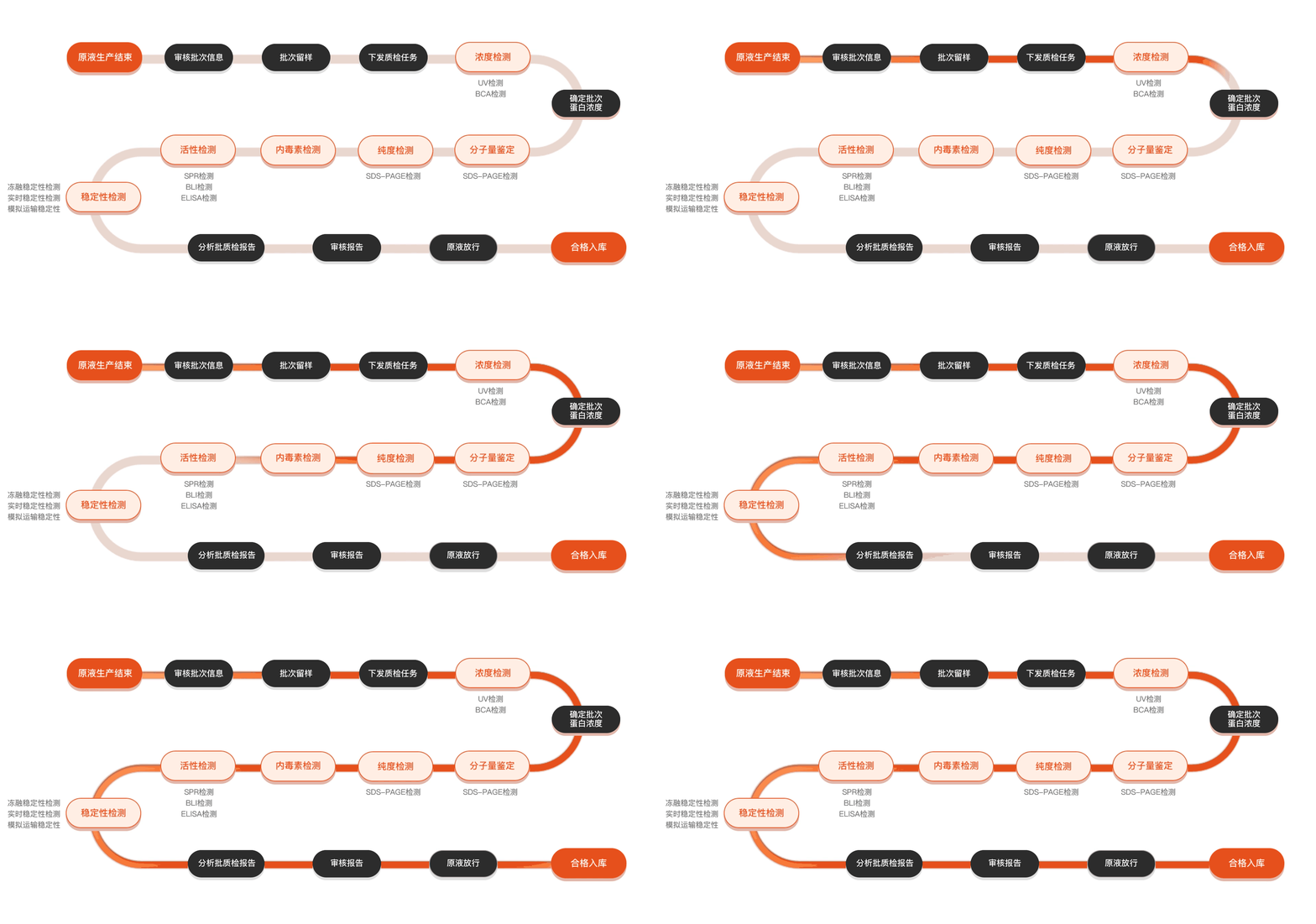
Quality inspection process
Related Products
Protein Description
VP proteins, particularly VP1, VP2, and VP3, are key components of various viruses, especially within the Picornaviridae family. These proteins play crucial roles in viral assembly, encapsidation, and host cell interaction. Research on VP proteins has gained momentum due to their significant implications in virus infection mechanisms, vaccine development, and therapeutic interventions. For instance, VP1 is involved in receptor recognition, making it a potential target for drug design and vaccine formulation. Understanding the structural and functional characteristics of VP proteins can shed light on viral pathogenicity and immune response. The rise of emerging viral diseases has increased the urgency for detailed studies on VP proteins, as they may help identify novel strategies to combat viral outbreaks. Advances in techniques such as cryo-electron microscopy and X-ray crystallography have provided insights into the three-dimensional structures of these proteins, facilitating a deeper understanding of their roles in the viral life cycle. Therefore, ongoing research in this area is crucial not only for virology but also for public health and vaccine efficacy against viral infections.