Analytical Data
-
Gene name
AGC
- Application
-
Alternative Names
AGC;ADRBK2;BARK2;G Protein-coupled receptor kinase 3
-
Species
Human
-
Source
E. coli
-
Tag
His tag N-Terminus
-
Purity
Greater than 90% as determined by SDS-PAGE.
-
Uniprot
P35626
-
Expression Region
1-688aa
-
AA Sequence
MADLEAVLAD VSYLMAMEKS KATPAARASK RIVLPEPSIR SVMQKYLAER NEITFDKIFN QKIGFLLFKD FCLNEINEAV PQVKFYEEIK EYEKLDNEED RLCRSRQIYD AYIMKELLSC SHPFSKQAVE HVQSHLSKKQ VTSTLFQPYI EEICESLRGD IFQKFMESDK FTRFCQWKNV ELNIHLTMNE FSVHRIIGRG GFGEVYGCRK ADTGKMYAMK CLDKKRIKMK QGETLALNER IMLSLVSTGD CPFIVCMTYA FHTPDKLCFI LDLMNGGDLH YHLSQHGVFS EKEMRFYATE IILGLEHMHN RFVVYRDLKP ANILLDEHGH ARISDLGLAC DFSKKKPHAS VGTHGYMAPE VLQKGTAYDS SADWFSLGCM LFKLLRGHSP FRQHKTKDKH EIDRMTLTVN VELPDTFSPE LKSLLEGLLQ RDVSKRLGCH GGGSQEVKEH SFFKGVDWQH VYLQKYPPPL IPPRGEVNAA DAFDIGSFDE EDTKGIKLLD CDQELYKNFP LVISERWQQE VTETVYEAVN ADTDKIEARK RAKNKQLGHE EDYALGKDCI MHGYMLKLGN PFLTQWQRRY FYLFPNRLEW RGEGESRQNL LTMEQILSVE ETQIKDKKCI LFRIKGGKQF VLQCESDPEF VQWKKELNET FKEAQRLLRR APKFLNKPRS GTVELPKPSL CHRNSNGL
-
Molecular Weight
79.7 kDa
-
Endotoxin
< 1.0 EU per μg protein as determined by the LAL method.
-
Form
Freeze-dried powder
-
Buffer formulation
PBS, pH7.4, containing 0.01% SKL, 1mM DTT, 5% Trehalose and Proclin300.
-
Reconstitution
Reconstitute in ddH2O to a concentration of 0.1-0.5 mg/mL. Do not vortex.
- Customization
-
Stability Test
The thermal stability is described by the loss rate. The loss rate was determined by accelerated thermal degradation test, that is, incubate the protein at 37℃ for 48h, and no obvious degradation and precipitation were observed. The loss rate isless than 8% within the expiration date under appropriate storage condition.
-
Storage & Shelf Life
Samples are stable for up to twelve months from date of receipt at -20℃ to -80℃. Store it under sterile conditions at -20℃ to -80℃. It is recommended that the protein be aliquoted for optimal storage. Avoid repeated freeze-thaw cycles.
-
Shipping
In general, recombinant proteins are supplied as lyophilized powder and shipped at ambient temperature. For bulk packages, the proteins are provided as frozen liquid and shipped with blue ice, unless otherwise requested by the customer.
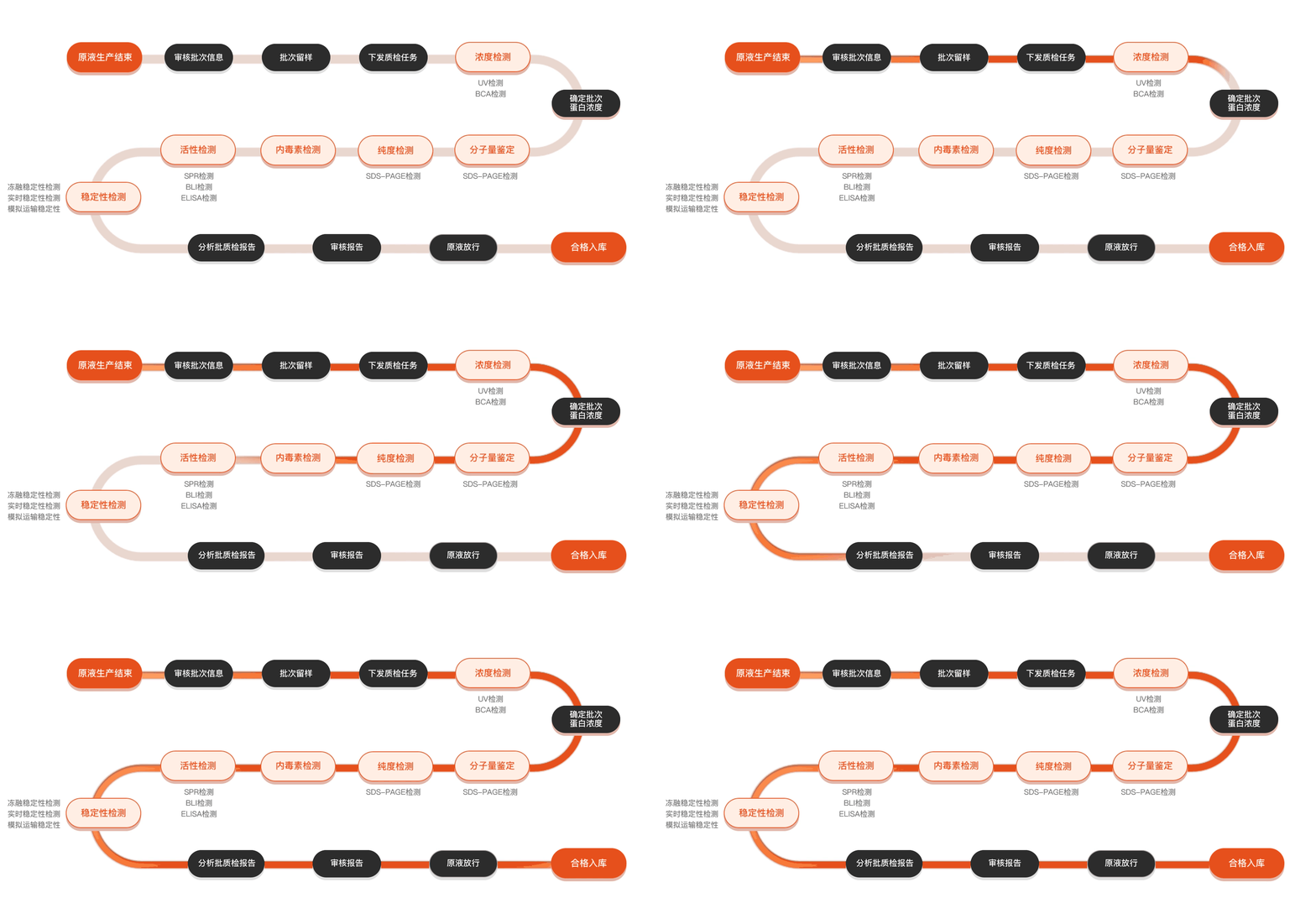
Quality inspection process
Related Products
Protein Description
AGC proteins, a significant family of serine/threonine kinases, play crucial roles in various cellular processes, including growth, proliferation, and apoptosis. Their name derives from three prominent members: Protein Kinase A (PKA), Protein Kinase G (PKG), and Protein Kinase C (PKC). The study of AGC proteins has gained momentum due to their involvement in key signaling pathways that regulate vital cellular functions. Aberrations in AGC protein signaling have been implicated in numerous diseases, particularly cancer, cardiovascular disorders, and metabolic syndromes. The understanding of their structure and function has been enhanced through advanced techniques such as X-ray crystallography and cryo-electron microscopy, enabling researchers to unravel the intricate regulatory mechanisms that govern their activity. Additionally, the development of specific inhibitors targeting AGC kinases has opened new avenues for therapeutic interventions. The exploration of AGC protein interactions and post-translational modifications, such as phosphorylation, provides further insight into their functional diversity and regulatory complexity. As researchers continue to probe the roles of AGC proteins in cellular signaling, these studies hold promise for identifying novel biomarkers and potential therapeutic targets, leading to improved treatment strategies for diseases associated with dysregulated AGC signaling.