Analytical Data
-
基因名
FABP3
- Application
-
别名
FABP3;CARK;Serine/threonine-Protein kinase TNNI3K
-
种属
Human
-
表达系统
E. coli
-
标签
His tag N-Terminus
-
纯度
Greater than 90% as determined by SDS-PAGE.
-
蛋白编号
P05413
-
表达区间
1-133aa
-
氨基酸序列
MVDAFLGTWKLVDSKNFDDYMKSLGVGFATRQVASMTKPTTIIEKNGDILTLKTHSTFKNTEISFKLGVEFDETTADDRKVKSIVTLDGGKLVHLQKWDGQETTLVRELIDGKLILTLTHGTAVCTRTYEKEA
-
内毒素
< 1.0 EU per μg protein as determined by the LAL method.
-
性状
Freeze-dried powder
-
缓冲液
PBS, pH7.4, containing 0.01% SKL, 1mM DTT, 5% Trehalose and Proclin300.
-
复溶方法
Reconstitute in ddH2O to a concentration of 0.1-0.5 mg/mL. Do not vortex.
- 个性化定制
-
稳定性测试
The thermal stability is described by the loss rate. The loss rate was determined by accelerated thermal degradation test, that is, incubate the protein at 37℃ for 48h, and no obvious degradation and precipitation were observed. The loss rate isless than 8% within the expiration date under appropriate storage condition.
-
保存条件 & 期限
Samples are stable for up to twelve months from date of receipt at -20℃ to -80℃. Store it under sterile conditions at -20℃ to -80℃. It is recommended that the protein be aliquoted for optimal storage. Avoid repeated freeze-thaw cycles.
-
运输条件
In general, recombinant proteins are supplied as lyophilized powder and shipped at ambient temperature. For bulk packages, the proteins are provided as frozen liquid and shipped with blue ice, unless otherwise requested by the customer.
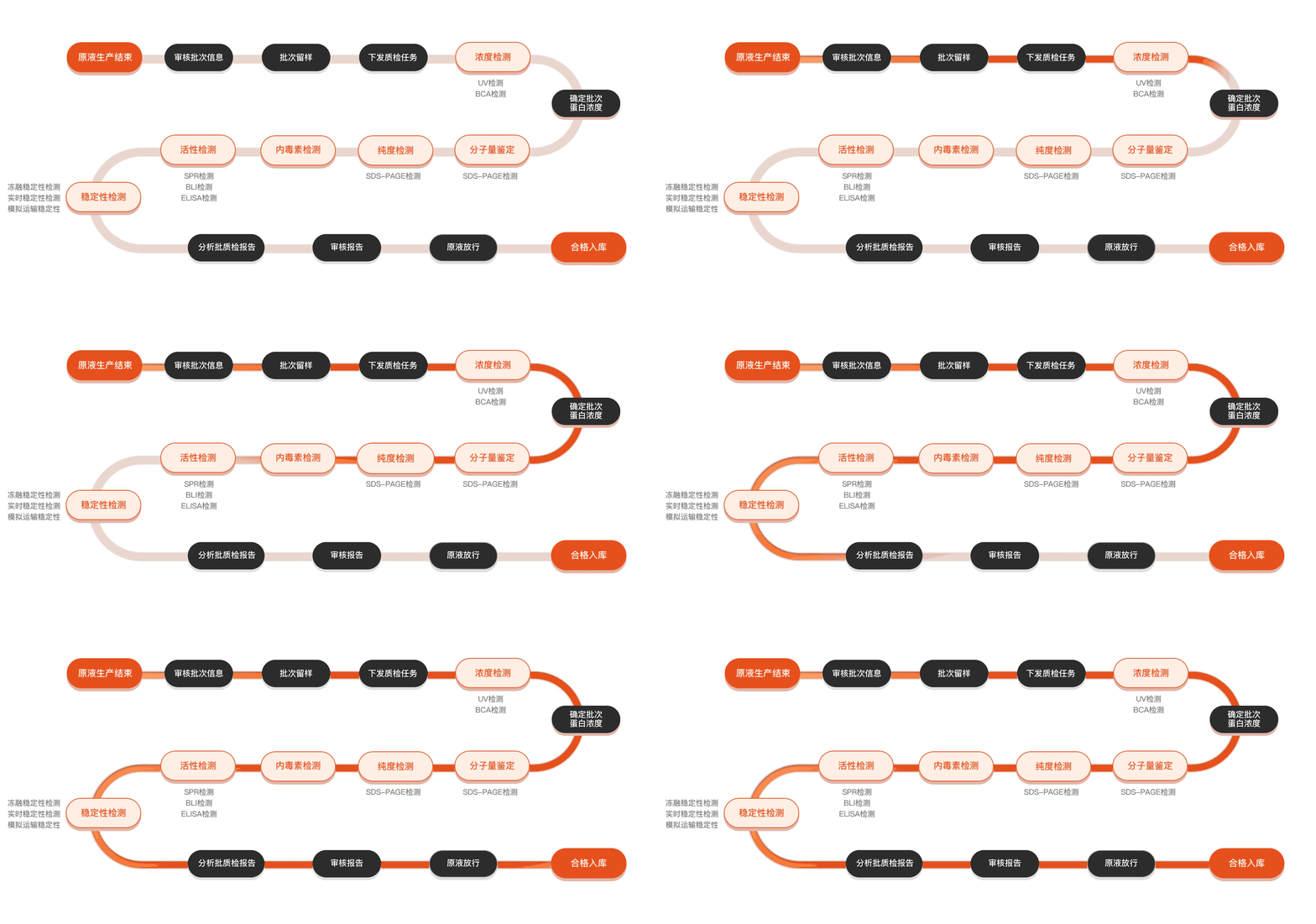
Quality inspection process
Related Products
Protein Description
Fatty acid binding proteins (FABPs) are a family of intracellular lipid-binding proteins that play critical roles in fatty acid transport, metabolism, and signaling pathways. Among these, FABP3 (also known as heart-type FABP) is predominantly expressed in cardiac and skeletal muscle tissues, where it is essential for fatty acid uptake and utilization. Research into FABP3 has gained momentum due to its implications in various physiological and pathological conditions, including metabolic syndromes, cardiovascular diseases, and obesity. The protein's ability to bind long-chain fatty acids influences energy homeostasis and insulin sensitivity, making it a potential biomarker for metabolic disorders. Moreover, FABP3 is associated with cardioprotective functions, highlighting its relevance in heart health. Recent studies have focused on recombinant FABP3 proteins to explore their structural and functional characteristics, facilitating the understanding of fatty acid transport mechanisms at a molecular level. By producing and analyzing recombinant FABP3, researchers aim to elucidate its binding properties, interaction with different lipid molecules, and potential therapeutic applications, especially in targeting metabolic diseases and improving cardiac function.