Analytical Data
-
Gene name
KRT3
- Application
-
Alternative Names
KRT3;KRTHB3;Keratin. type II cuticular Hb3
-
Species
Human
-
Source
E. coli
-
Tag
His tag N-Terminus
-
Purity
Greater than 90% as determined by SDS-PAGE.
-
Uniprot
P12035
-
Expression Region
1-628aa
-
AA Sequence
MSRQASKTSG GGSQGFSGRS AVVSGSSRMS CVAHSGGAGG GAYGFRSGAG GFGSRSLYNL GGNKSISISV AAGGSRAGGF GGGRSSCAFA GGYGGGFGSG YGGGFGGGFG GGRGMGGGFG GAGGFGGAGG FGGAGGFGGP GGFGGSGGFG GPGSLGSPGG FGPGGFPGGI QEVTINQSLL QPLNVEIDPQ IGQVKAQERE QIKTLNNKFA SFIDKVRFLE QQNKVLETKW NLLQQQGTSS ISGTNNLEPL FENHINYLRS YLDNILGERG RLDSELKNME DLVEDFKKKY EDEINKRTAA ENEFVTLKKD VDSAYMNKVE LQAKVDALID EIDFLRTLYD AELSQMQSHI SDTSVVLSMD NNRSLDLDSI IAEVRAQYED IAQRSKAEAE ALYQTKLGEL QTTAGRHGDD LRNTKSEIIE LNRMIQRLRA EIEGVKKQNA NLQTAIAEAE QHGEMALKDA NAKLQELQAA LQQAKDDLAR LLRDYQELMN VKLALDVEIA TYRKLLEGEE YRMSGECPSA VSISVVSSST TSASAGGYGG GYGGGMGGGL GGGFSAGGGS GSGFGRGGGG GIGGGFGGGS SGFSGGSGFG SISGARYGVS GGGFSSASNR GGSIKFSQSS QSSQRYSR
-
Molecular Weight
64.4 kDa
-
Endotoxin
< 1.0 EU per μg protein as determined by the LAL method.
-
Form
Freeze-dried powder
-
Buffer formulation
PBS, pH7.4, containing 0.01% SKL, 1mM DTT, 5% Trehalose and Proclin300.
-
Reconstitution
Reconstitute in ddH2O to a concentration of 0.1-0.5 mg/mL. Do not vortex.
- Customization
-
Stability Test
The thermal stability is described by the loss rate. The loss rate was determined by accelerated thermal degradation test, that is, incubate the protein at 37℃ for 48h, and no obvious degradation and precipitation were observed. The loss rate isless than 8% within the expiration date under appropriate storage condition.
-
Storage & Shelf Life
Samples are stable for up to twelve months from date of receipt at -20℃ to -80℃. Store it under sterile conditions at -20℃ to -80℃. It is recommended that the protein be aliquoted for optimal storage. Avoid repeated freeze-thaw cycles.
-
Shipping
In general, recombinant proteins are supplied as lyophilized powder and shipped at ambient temperature. For bulk packages, the proteins are provided as frozen liquid and shipped with blue ice, unless otherwise requested by the customer.
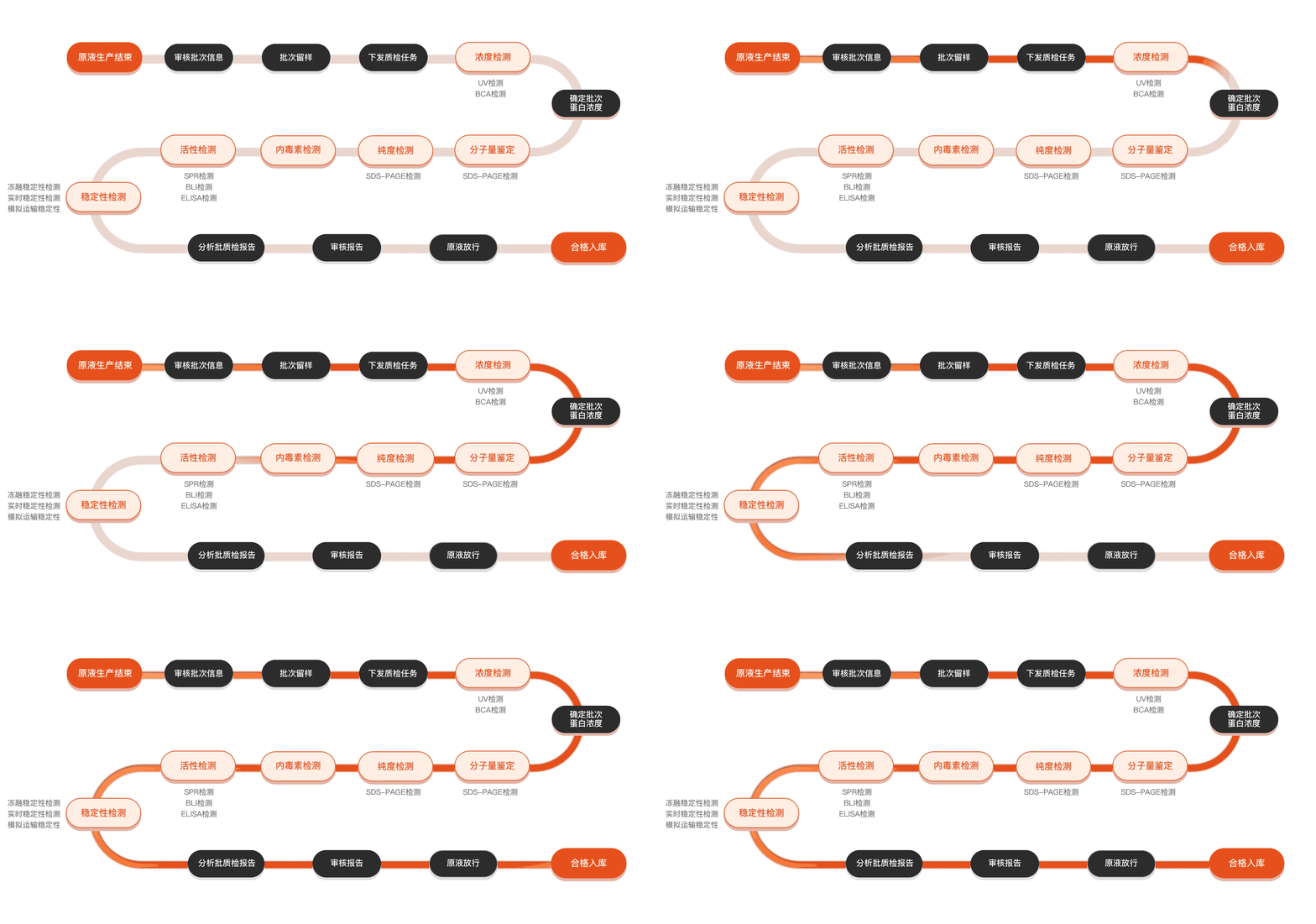
Quality inspection process
Related Products
Protein Description
KRT3 (Keratin 3) is a type of keratin primarily expressed in the epithelial cells of the cornea, playing a crucial role in maintaining the structural integrity and transparency of the ocular surface. Research on KRT3 recombinant proteins has gained significant attention due to their potential applications in regenerative medicine and ocular therapeutics. Keratins, including KRT3, are essential for cellular functions such as proliferation, differentiation, and apoptosis, and their abnormal expression has been linked to various ocular pathologies, including corneal diseases and disorders. The production of recombinant KRT3 offers an innovative approach to studying its functional properties in vitro and in vivo, facilitating a better understanding of its role in corneal health and disease. Furthermore, the ability to produce KRT3 in large quantities allows researchers to explore its use in tissue engineering and as a biomarker for corneal diseases. Investigations into the therapeutic applications of KRT3 recombinants could lead to novel treatments for corneal injuries, dry eye syndrome, and other related conditions, consequently improving patient outcomes and advancing ocular health research. Through continued exploration of KRT3 and its recombinant forms, scientists aim to elucidate its mechanisms of action and harness its potential for various biomedical applications.