Analytical Data
-
基因名
CSN1S2
- Application
-
别名
CSN1S2;Alpha-S2-casein
-
种属
Human
-
表达系统
E. coli
-
标签
His tag N-Terminus
-
纯度
Greater than 90% as determined by SDS-PAGE.
-
蛋白编号
P02663
-
表达区间
1-222aa
-
氨基酸序列
MKFFIFTCLLAVALAKNTMEHVSSSEESIISQETYKQEKNMAINPSKENLCSTFCKEVVRNANEEEYSIGSSSEESAEVATEEVKITVDDKHYQKALNEINQFYQKFPQYLQYLYQGPIVLNPWDQVKRNAVPITPTLNREQLSTSEENSKKTVDMESTEVFTKKTKLTEEEKNRLNFLKKISQRYQKFALPQYLKTVYQHQKAMKPWIQPKTKVIPYVRYL
-
分子量
26.0 kDa
-
内毒素
< 1.0 EU per μg protein as determined by the LAL method.
-
性状
Freeze-dried powder
-
缓冲液
PBS, pH7.4, containing 0.01% SKL, 1mM DTT, 5% Trehalose and Proclin300.
-
复溶方法
Reconstitute in ddH2O to a concentration of 0.1-0.5 mg/mL. Do not vortex.
- 个性化定制
-
稳定性测试
The thermal stability is described by the loss rate. The loss rate was determined by accelerated thermal degradation test, that is, incubate the protein at 37℃ for 48h, and no obvious degradation and precipitation were observed. The loss rate isless than 8% within the expiration date under appropriate storage condition.
-
保存条件 & 期限
Samples are stable for up to twelve months from date of receipt at -20℃ to -80℃. Store it under sterile conditions at -20℃ to -80℃. It is recommended that the protein be aliquoted for optimal storage. Avoid repeated freeze-thaw cycles.
-
运输条件
In general, recombinant proteins are supplied as lyophilized powder and shipped at ambient temperature. For bulk packages, the proteins are provided as frozen liquid and shipped with blue ice, unless otherwise requested by the customer.
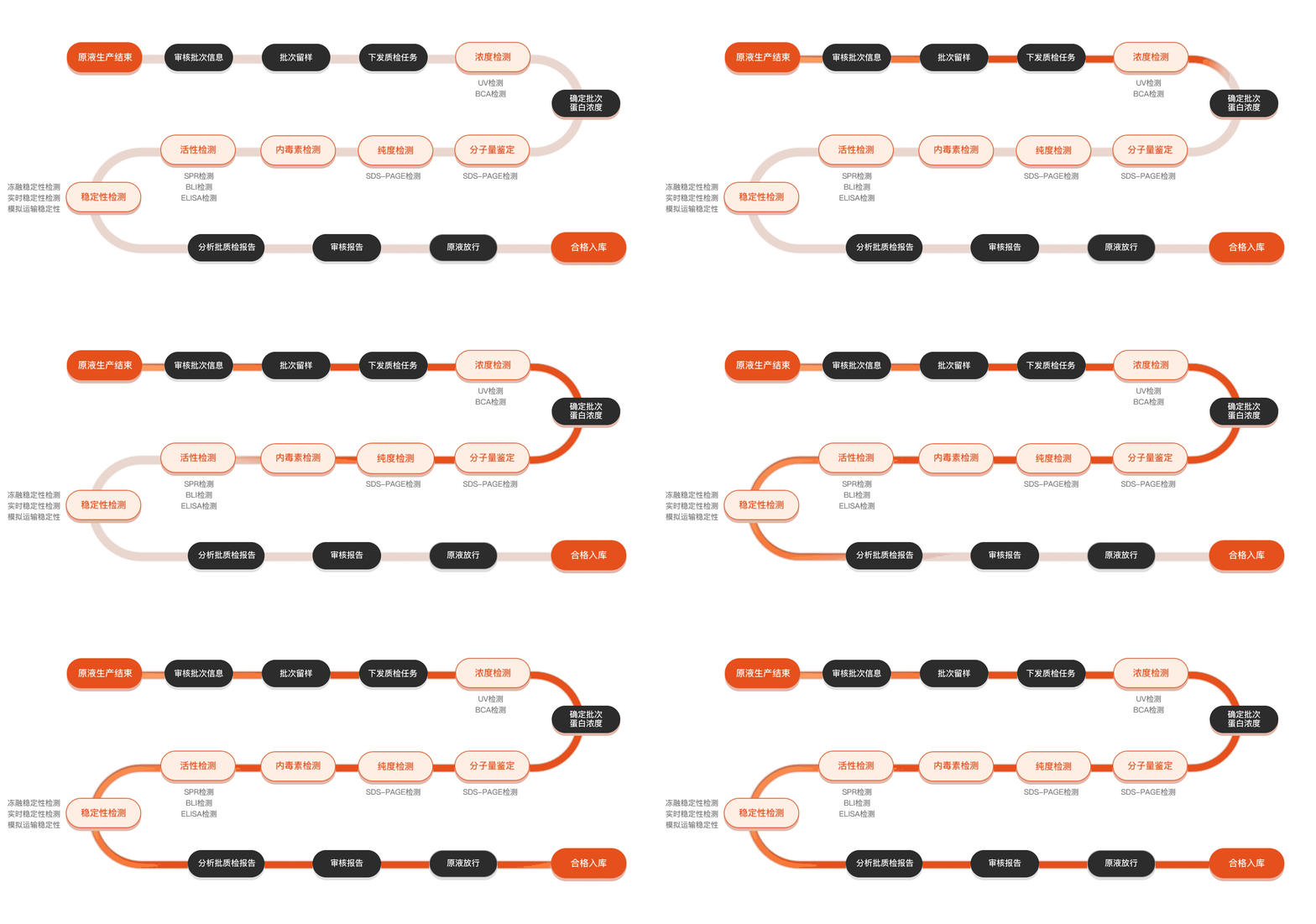
Quality inspection process
Related Products
Protein Description
CSN1S2 (Casein Alpha S1) is a significant member of the casein protein family, primarily found in bovine milk, and plays a crucial role in various biological functions, including nutritional value and potential health benefits for humans. Research into CSN1S2 has garnered attention due to its implications in dairy science, food technology, and nutrition. The gene encoding CSN1S2 exhibits extensive polymorphism, influencing milk composition and properties, which can affect cheese production and dairy product quality. Understanding the molecular structure and function of CSN1S2 can provide insights into protein functionality, allergenicity, and interactions with other biomolecules. Recent studies have focused on its potential applications in developing functional foods, as well as in biotechnology for enhancing dairy products. Moreover, recombinant techniques have enabled the production of CSN1S2 in controlled environments, facilitating detailed investigations into its biochemical properties and cardiovascular effects. As consumer interest in health-oriented foods rises, the continuous exploration of CSN1S2 not only contributes to the dairy industry but also enhances our understanding of its role in human nutrition, potentially leading to innovations in dietary recommendations and therapeutic strategies.