Analytical Data
-
Gene name
IFRD2
- Application
-
Alternative Names
FLJ40446; IFNRP; IFRD 2; IFRD2; IFRD2_HUMAN; Interferon related developmental regulator 2; Interferon related protein; Interferon-related developmental regulator 2; Protein SKMC15; SKMc 15; SKMc15; SKMC15 protein; SM 15; SM15
-
Species
Human
-
Source
E. coli
-
Tag
His tag N-Terminus
-
Purity
Greater than 90% as determined by SDS-PAGE.
-
Uniprot
Q12894
-
Expression Region
1-506aa
-
AA Sequence
MAWNSPSRRP VWQGGAPRED GGARGVWLPS SGQVSAQRTG RRLVGLEPTP TGSLTPRPPR PVPGMPRARK GNTLRKGGQR RGGGARSSAQ ADSGSSDDEA ASEARSTASE CPSLLSTTAE DSLGGDVVDE QGQQEDLEEK LKEYVDCLTD KSAKTRQGAL ESLRLALASR LLPDFLLERR LTLADALEKC LKKGKGEEQA LAAAVLGLLC VQLGPGPKGE ELFHSLQPLL VSVLSDSTAS PAARLHCASA LGLGCYVAAA DIQDLVSCLA CLESVFSRFY GLGGSSTSPV VPASLHGLLS AALQAWALLL TICPSTQISH ILDRQLPRLP QLLSSESVNL RIAAGETIAL LFELARDLEE EFVYEDMEAL CSVLRTLATD SNKYRAKADR RRQRSTFRAV LHSVEGGECE EEIVRFGFEV LYMDSWARHR IYAAFKEVLG SGMHHHLQNN ELLRDIFGLG PVLLLDATAL KACKVPRFEK HLYNAAAFKA RTKARSRVRD KRADIL
-
Molecular Weight
48.0 kDa
-
Endotoxin
< 1.0 EU per μg protein as determined by the LAL method.
-
Form
Freeze-dried powder
-
Buffer formulation
PBS, pH7.4, containing 0.01% SKL, 1mM DTT, 5% Trehalose and Proclin300.
-
Reconstitution
Reconstitute in ddH2O to a concentration of 0.1-0.5 mg/mL. Do not vortex.
- Customization
-
Stability Test
The thermal stability is described by the loss rate. The loss rate was determined by accelerated thermal degradation test, that is, incubate the protein at 37℃ for 48h, and no obvious degradation and precipitation were observed. The loss rate isless than 8% within the expiration date under appropriate storage condition.
-
Storage & Shelf Life
Samples are stable for up to twelve months from date of receipt at -20℃ to -80℃. Store it under sterile conditions at -20℃ to -80℃. It is recommended that the protein be aliquoted for optimal storage. Avoid repeated freeze-thaw cycles.
-
Shipping
In general, recombinant proteins are supplied as lyophilized powder and shipped at ambient temperature. For bulk packages, the proteins are provided as frozen liquid and shipped with blue ice, unless otherwise requested by the customer.
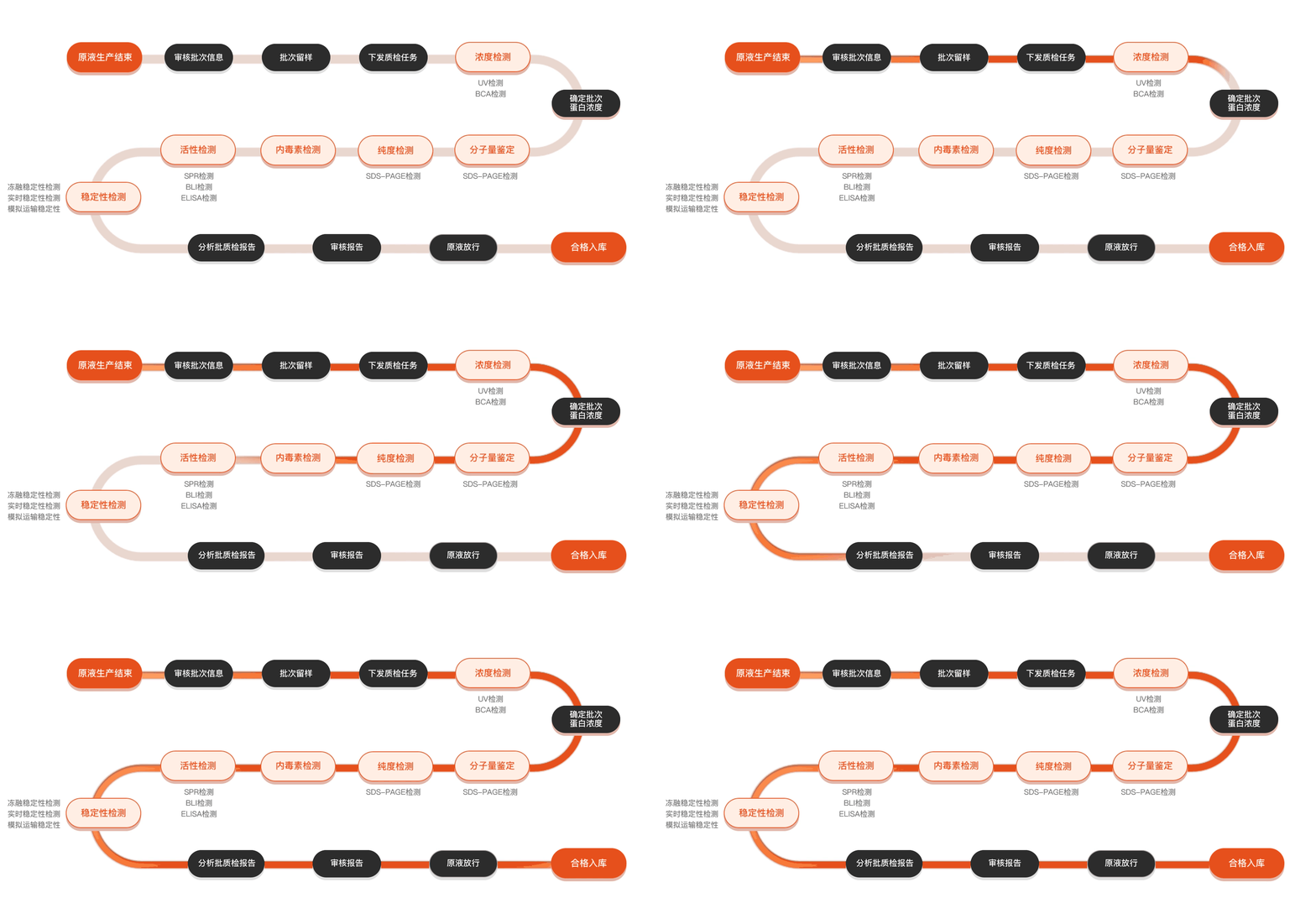
Quality inspection process
Related Products
Protein Description
IFRD2 (Interferon Regulatory Factor Domain 2) is a member of the interferon regulatory factor family, which plays a crucial role in regulating immune responses and cellular processes. Recent research has highlighted the importance of IFRD2 in various biological functions, including its involvement in inflammatory responses, transcriptional regulation, and tumorigenesis. Studies have shown that IFRD2 can act as a modulator of immune cell activity, influencing the differentiation and activation of T cells and macrophages. Additionally, alterations in IFRD2 expression levels have been linked to several diseases, including cancer and autoimmune disorders, making it a potential biomarker for disease progression and a target for therapeutic intervention. Given its significant role in immune regulation, the characterization and study of IFRD2, especially in the context of recombinant protein production, have garnered attention in the scientific community. The generation of recombinant IFRD2 protein allows researchers to further explore its functional properties and interactions within the immune system, paving the way for potential clinical applications in the treatment of diseases where immune dysregulation is a key factor. Understanding the structural and functional aspects of IFRD2 can aid in the development of targeted therapies and may contribute to advancing precision medicine strategies aimed at modulating immune responses more effectively.