Analytical Data
-
Gene name
NOV
- Application
-
Alternative Names
NOV;IGFBP9;NOV;NOVH;CCN family member 3
-
Species
Human
-
Source
E. coli
-
Tag
His tag N-Terminus
-
Purity
Greater than 90% as determined by SDS-PAGE.
-
Uniprot
P48745
-
Expression Region
28-357aa
-
AA Sequence
M+QVAATQRCP PQCPGRCPAT PPTCAPGVRA VLDGCSCCLV CARQRGESCS DLEPCDESSG LYCDRSADPS NQTGICTAVE GDNCVFDGVI YRSGEKFQPS CKFQCTCRDG QIGCVPRCQL DVLLPEPNCP APRKVEVPGE CCEKWICGPD EEDSLGGLTL AAYRPEATLG VEVSDSSVNC IEQTTEWTAC SKSCGMGFST RVTNRNRQCE MLKQTRLCMV RPCEQEPEQP TDKKGKKCLR TKKSLKAIHL QFKNCTSLHT YKPRFCGVCS DGRCCTPHNT KTIQAEFQCS PGQIVKKPVM VIGTCTCHTN CPKNNEAFLQ ELELKTTRGK M
-
Molecular Weight
36.2 kDa
-
Endotoxin
< 1.0 EU per μg protein as determined by the LAL method.
-
Form
Freeze-dried powder
-
Buffer formulation
PBS, pH7.4, containing 0.01% SKL, 1mM DTT, 5% Trehalose and Proclin300.
-
Reconstitution
Reconstitute in ddH2O to a concentration of 0.1-0.5 mg/mL. Do not vortex.
- Customization
-
Stability Test
The thermal stability is described by the loss rate. The loss rate was determined by accelerated thermal degradation test, that is, incubate the protein at 37℃ for 48h, and no obvious degradation and precipitation were observed. The loss rate isless than 8% within the expiration date under appropriate storage condition.
-
Storage & Shelf Life
Samples are stable for up to twelve months from date of receipt at -20℃ to -80℃. Store it under sterile conditions at -20℃ to -80℃. It is recommended that the protein be aliquoted for optimal storage. Avoid repeated freeze-thaw cycles.
-
Shipping
In general, recombinant proteins are supplied as lyophilized powder and shipped at ambient temperature. For bulk packages, the proteins are provided as frozen liquid and shipped with blue ice, unless otherwise requested by the customer.
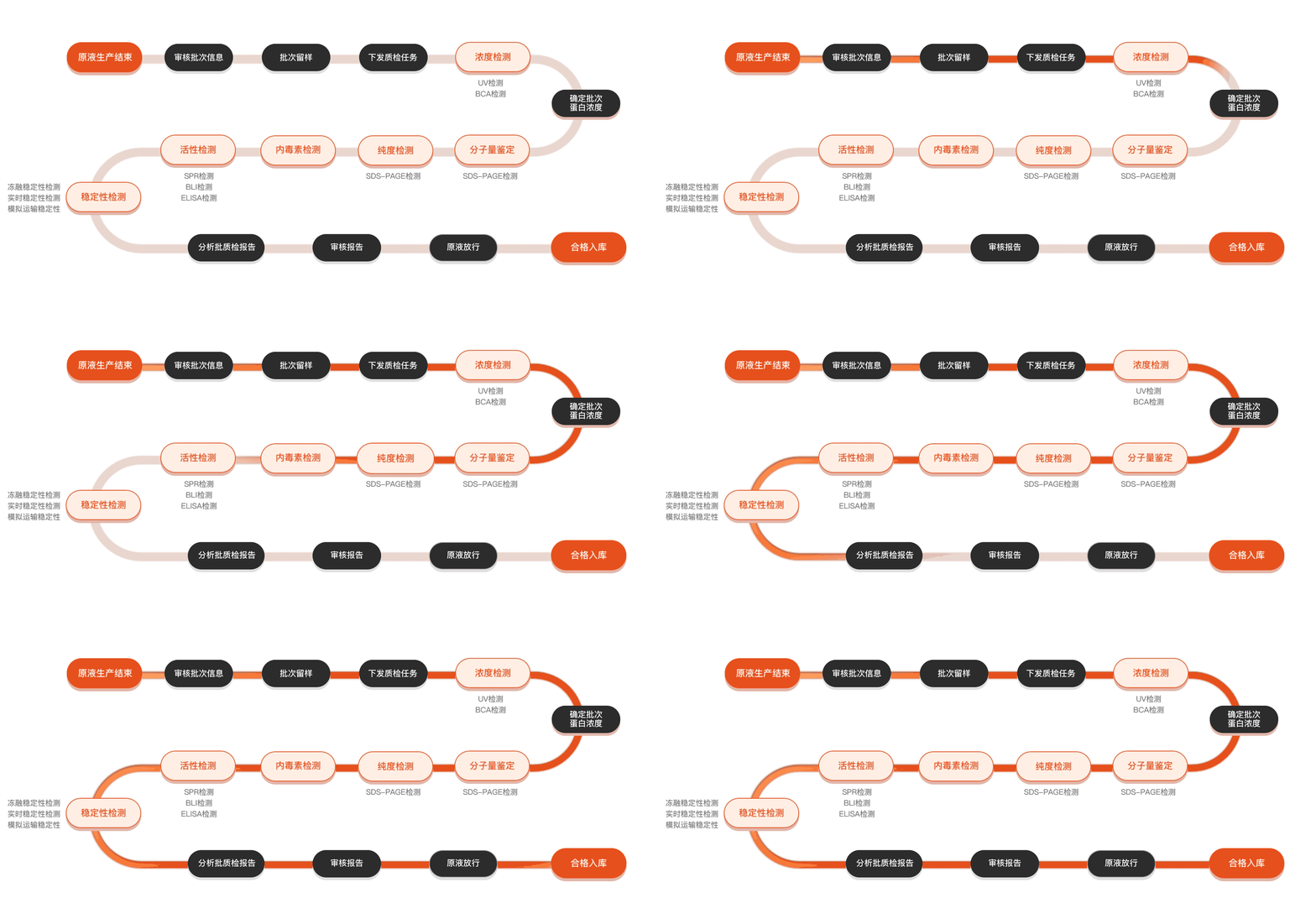
Quality inspection process
Related Products
Protein Description
NOV (Nephroblastoma Overexpressed) is a member of the CCN protein family, which is known for its roles in cell proliferation, differentiation, and extracellular matrix remodeling. Originally identified as an oncogene implicated in nephroblastoma, research has demonstrated that NOV plays significant roles in various physiological and pathological processes, including tissue repair, fibrosis, and tumorigenesis. It is characterized by its cysteine-rich domains and the ability to interact with a variety of growth factors and receptors, influencing signaling pathways critical for cell adhesion and migration. Studies have indicated that altered expression levels of NOV are associated with several diseases, particularly cancers, making it a potential biomarker and therapeutic target. Recent advances in recombinant protein technology have allowed for the production of NOV in functional forms, facilitating the investigation of its biological activities. This has led to a deeper understanding of its mechanisms of action and interactions within the cellular microenvironment. Additionally, research into NOV's roles in cardiovascular diseases and its involvement in stem cell biology highlights its versatility and importance in both health and disease. As a result, NOV recombinant proteins are being explored for potential therapeutic applications, including tissue engineering and regenerative medicine. Understanding the full scope of NOV’s functions could lead to innovative strategies for diagnosing and treating various conditions, underscoring its relevance in both basic and applied biomedical research.