Analytical Data
-
基因名
KRT14
- Application
-
别名
KRT14;Keratin. type I cytoskeletal 14
-
种属
Human
-
表达系统
E. coli
-
标签
His tag N-Terminus
-
纯度
Greater than 90% as determined by SDS-PAGE.
-
蛋白编号
P02533
-
表达区间
1-472aa
-
氨基酸序列
MGSSHHHHHH SSGLVPRGSH MTTCSRQFTS SSSMKGSCGI GGGIGGGSSR ISSVLAGGSC RAPSTYGGGL SVSSSRFSSG GAYGLGGGYG GGFSSSSSSF GSGFGGGYGG GLGTGLGGGF GGGFAGGDGL LVGSEKVTMQ NLNDRLASYL DKVRALEEAN ADLEVKIRDW YQRQRPAEIK DYSPYFKTIE DLRNKILTAT VDNANVLLQI DNARLAADDF RTKYETELNL RMSVEADING LRRVLDELTL ARADLEMQIE SLKEELAYLK KNHEEEMNAL RGQVGGDVNV EMDAAPGVDL SRILNEMRDQ YEKMAEKNRK DAEEWFFTKT EELNREVATN SELVQSGKSE ISELRRTMQN LEIELQSQLS MKASLENSLE ETKGRYCMQL AQIQEMIGSV EEQLAQLRCE MEQQNQEYKI LLDVKTRLEQ EIATYRRLLE GEDAHLSSSQ FSSGSQSSRD VTSSSRQIRT KVMDVHDGKV VSTHEQVLRT KN
-
分子量
54 kDa
-
内毒素
< 1.0 EU per μg protein as determined by the LAL method.
-
性状
Freeze-dried powder
-
缓冲液
PBS, pH7.4, containing 0.01% SKL, 1mM DTT, 5% Trehalose and Proclin300.
-
复溶方法
Reconstitute in ddH2O to a concentration of 0.1-0.5 mg/mL. Do not vortex.
- 个性化定制
-
稳定性测试
The thermal stability is described by the loss rate. The loss rate was determined by accelerated thermal degradation test, that is, incubate the protein at 37℃ for 48h, and no obvious degradation and precipitation were observed. The loss rate isless than 8% within the expiration date under appropriate storage condition.
-
保存条件 & 期限
Samples are stable for up to twelve months from date of receipt at -20℃ to -80℃. Store it under sterile conditions at -20℃ to -80℃. It is recommended that the protein be aliquoted for optimal storage. Avoid repeated freeze-thaw cycles.
-
运输条件
In general, recombinant proteins are supplied as lyophilized powder and shipped at ambient temperature. For bulk packages, the proteins are provided as frozen liquid and shipped with blue ice, unless otherwise requested by the customer.
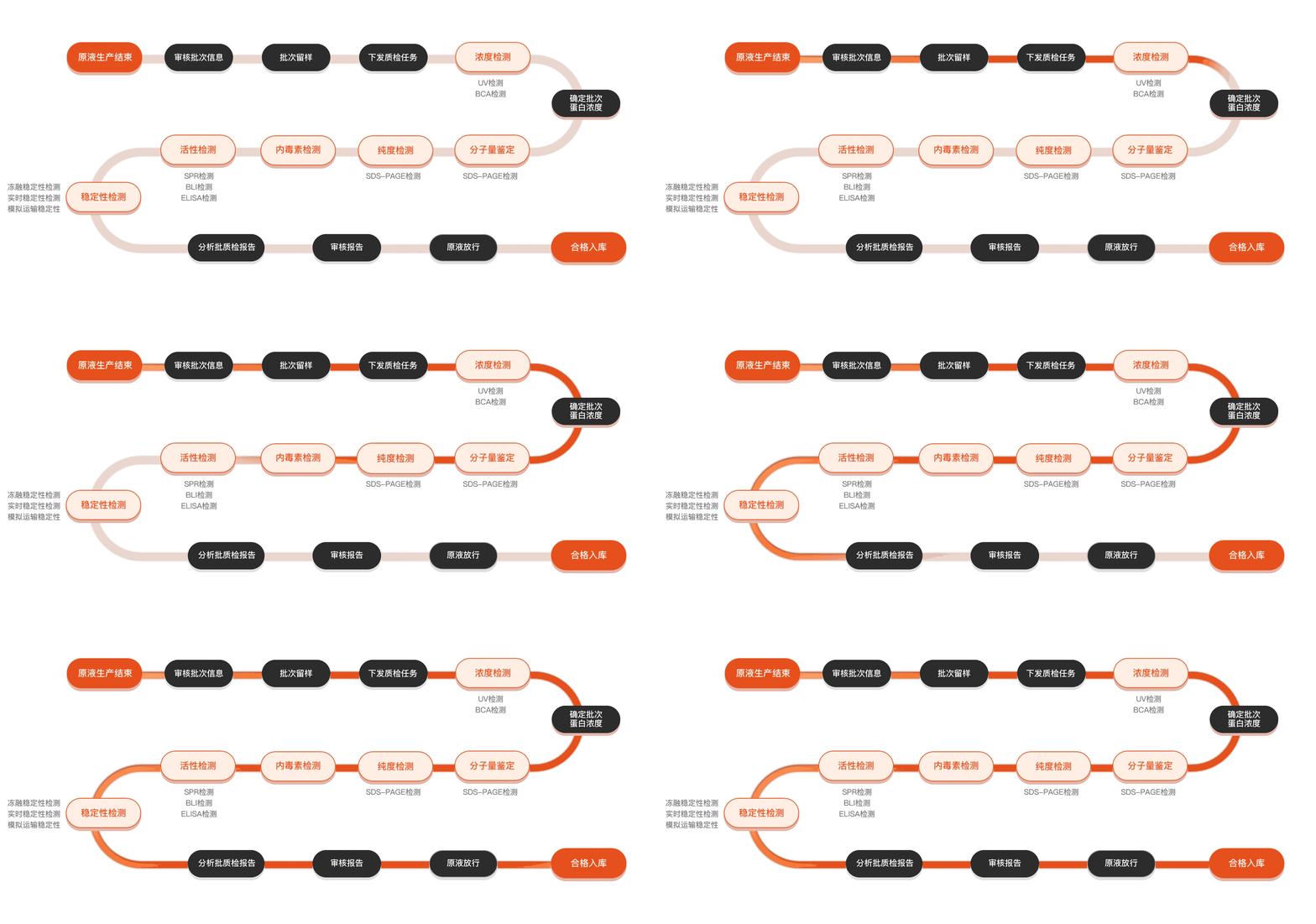
Quality inspection process
Related Products
Protein Description
Keratin 14 (KRT14) is a type of intermediate filament protein primarily expressed in the basal layer of stratified epithelial tissues, including the skin and mucous membranes. Its critical role in providing structural integrity and mechanical resilience has made it a focal point of research, especially in understanding skin diseases and disorders. Mutations in the KRT14 gene are associated with various keratinization disorders, such as epidermolysis bullosa simplex, which is characterized by skin fragility and blister formation. The recombinant expression of KRT14 protein serves as a valuable tool for studying its biochemical properties and interactions in vitro. Additionally, it aids in the development of potential therapeutic strategies, including gene therapy and tissue engineering, to treat skin-related conditions. By generating recombinant KRT14, researchers can investigate its role in cellular mechanisms, adhesion, and signaling pathways, thereby contributing to the overall understanding of epithelial biology and advancing the field of regenerative medicine. Thus, the study of KRT14 recombinant protein is pivotal not only for elucidating the molecular underpinnings of skin diseases but also for paving the way towards innovative treatment modalities.