Analytical Data
-
Gene name
MAGEA6
- Application
-
Alternative Names
MAGEA6;MAGE6;Melanoma-associated antigen 6
-
Species
Human
-
Source
E. coli
-
Tag
His tag N-Terminus
-
Purity
Greater than 90% as determined by SDS-PAGE.
-
Uniprot
P43360
-
Expression Region
1-314aa
-
AA Sequence
MPLEQRSQHC KPEEGLEARG EALGLVGAQA PATEEQEAAS SSSTLVEVTL GEVPAAESPD PPQSPQGASS LPTTMNYPLW SQSYEDSSNQ EEEGPSTFPD LESEFQAALS RKVAKLVHFL LLKYRAREPV TKAEMLGSVV GNWQYFFPVI FSKASDSLQL VFGIELMEVD PIGHVYIFAT CLGLSYDGLL GDNQIMPKTG FLIIILAIIA KEGDCAPEEK IWEELSVLEV FEGREDSIFG DPKKLLTQYF VQENYLEYRQ VPGSDPACYE FLWGPRALIE TSYVKVLHHM VKISGGPRIS YPLLHEWALR EGEELEHHHH HH
-
Molecular Weight
36 kDa
-
Endotoxin
< 1.0 EU per μg protein as determined by the LAL method.
-
Form
Freeze-dried powder
-
Buffer formulation
PBS, pH7.4, containing 0.01% SKL, 1mM DTT, 5% Trehalose and Proclin300.
-
Reconstitution
Reconstitute in ddH2O to a concentration of 0.1-0.5 mg/mL. Do not vortex.
- Customization
-
Stability Test
The thermal stability is described by the loss rate. The loss rate was determined by accelerated thermal degradation test, that is, incubate the protein at 37℃ for 48h, and no obvious degradation and precipitation were observed. The loss rate isless than 8% within the expiration date under appropriate storage condition.
-
Storage & Shelf Life
Samples are stable for up to twelve months from date of receipt at -20℃ to -80℃. Store it under sterile conditions at -20℃ to -80℃. It is recommended that the protein be aliquoted for optimal storage. Avoid repeated freeze-thaw cycles.
-
Shipping
In general, recombinant proteins are supplied as lyophilized powder and shipped at ambient temperature. For bulk packages, the proteins are provided as frozen liquid and shipped with blue ice, unless otherwise requested by the customer.
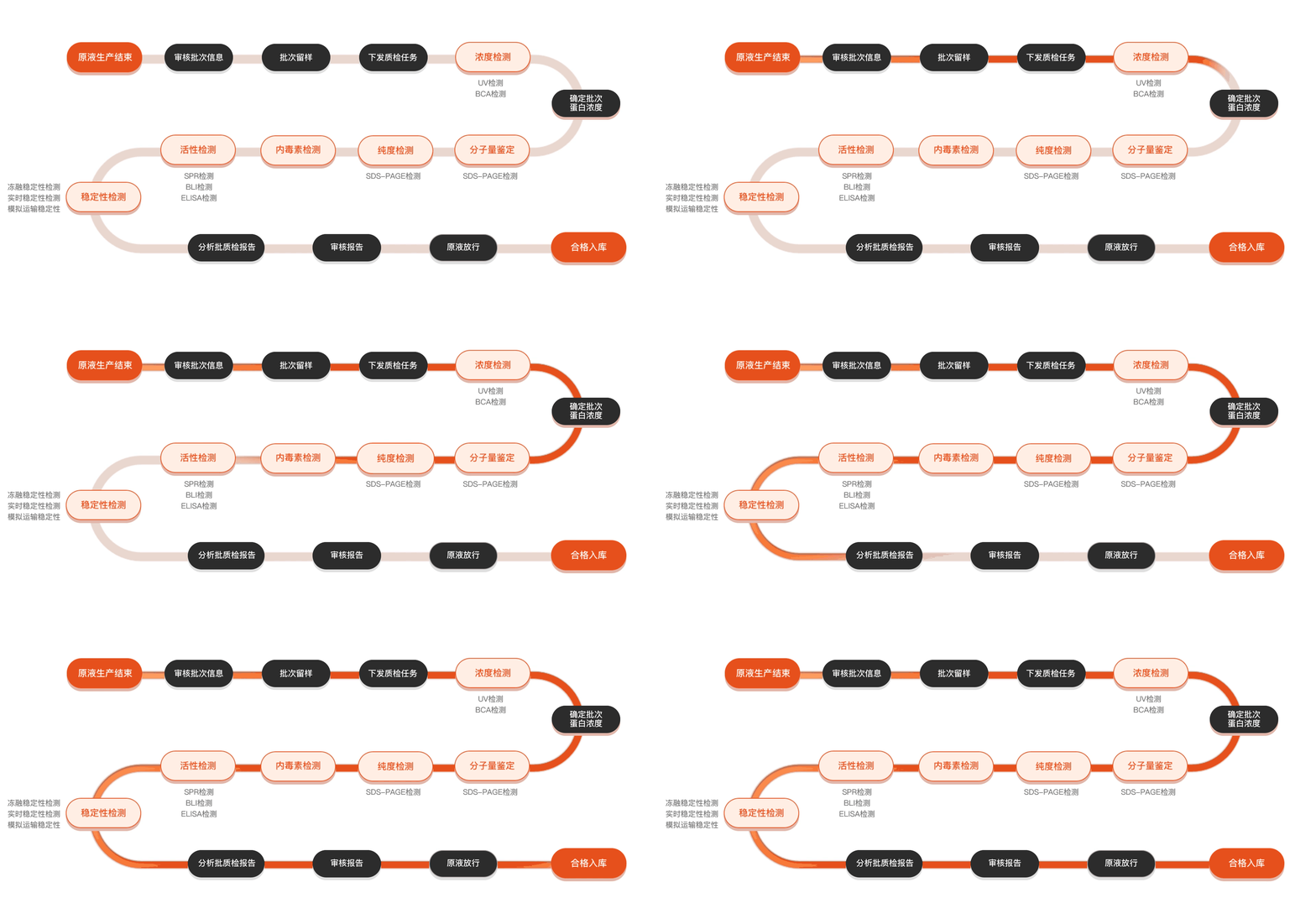
Quality inspection process
Related Products
Protein Description
MAGEA6 (Melanoma Antigen Gene A6) is a member of the MAGE gene family, which encodes proteins typically expressed in various tumors but not in normal tissues, making them attractive targets for cancer immunotherapy. The unique expression profile of MAGEA6, particularly in melanoma and other cancers, has prompted extensive investigation into its functional roles and potential as a biomarker for tumor diagnosis and prognosis. Researchers have focused on the recombinant production of MAGEA6 protein to facilitate the study of its biological functions and interactions with the immune system. This recombinant protein serves as a crucial tool for developing MAGEA6-targeted immunotherapies, including peptide-based vaccines and adoptive T cell therapies. Additionally, understanding the mechanism of MAGEA6 in tumorigenesis and immune evasion can provide insights into novel therapeutic strategies and enhance our understanding of tumor biology. Overall, the study of MAGEA6 recombinant protein is pivotal in advancing personalized cancer treatments and improving clinical outcomes for patients with malignancies expressing this antigen.