Analytical Data
-
Gene name
NKAPL
- Application
-
Alternative Names
NKAPL; C6orf194; NKAP-like protein
-
Species
Human
-
Source
E. coli
-
Tag
His tag N-Terminus
-
Purity
Greater than 90% as determined by SDS-PAGE.
-
Uniprot
Q5M9Q1
-
Expression Region
1-402 aa
-
AA Sequence
MPPVSRSSYS EDIVGSRRRR RSSSGSPPSP QSRCSSWDGC SRSHSRGREG LRPPWSELDV GALYPFSRSG SRGRLPRFRN YAFASSWSTS YSGYRYHRHC YAEERQSAED YEKEESHRQR RLKERERIGE LGAPEVWGPS PKFPQLDSDE HTPVEDEEEV THQKSSSSDS NSEEHRKKKT SRSRNKKKRK NKSSKRKHRK YSDSDSNSES DTNSDSDDDK KRVKAKKKKK KKKHKTKKKK NKKTKKESSD SSCKDSEEDL SEATWMEQPN VADTMDLIGP EAPIIHTSQD EKPLKYGHAL LPGEGAAMAE YVKAGKRIPR RGEIGLTSEE IGSFECSGYV MSGSRHRRME AVRLRKENQI YSADEKRALA SFNQEERRKR ESKILASFRE MVHKKTKEKD DK
-
Molecular Weight
46.3 kDa
-
Endotoxin
< 1.0 EU per μg protein as determined by the LAL method.
-
Form
Freeze-dried powder
-
Buffer formulation
PBS, pH7.4, containing 0.01% SKL, 1mM DTT, 5% Trehalose and Proclin300.
-
Reconstitution
Reconstitute in ddH2O to a concentration of 0.1-0.5 mg/mL. Do not vortex.
- Customization
-
Stability Test
The thermal stability is described by the loss rate. The loss rate was determined by accelerated thermal degradation test, that is, incubate the protein at 37℃ for 48h, and no obvious degradation and precipitation were observed. The loss rate isless than 8% within the expiration date under appropriate storage condition.
-
Storage & Shelf Life
Samples are stable for up to twelve months from date of receipt at -20℃ to -80℃. Store it under sterile conditions at -20℃ to -80℃. It is recommended that the protein be aliquoted for optimal storage. Avoid repeated freeze-thaw cycles.
-
Shipping
In general, recombinant proteins are supplied as lyophilized powder and shipped at ambient temperature. For bulk packages, the proteins are provided as frozen liquid and shipped with blue ice, unless otherwise requested by the customer.
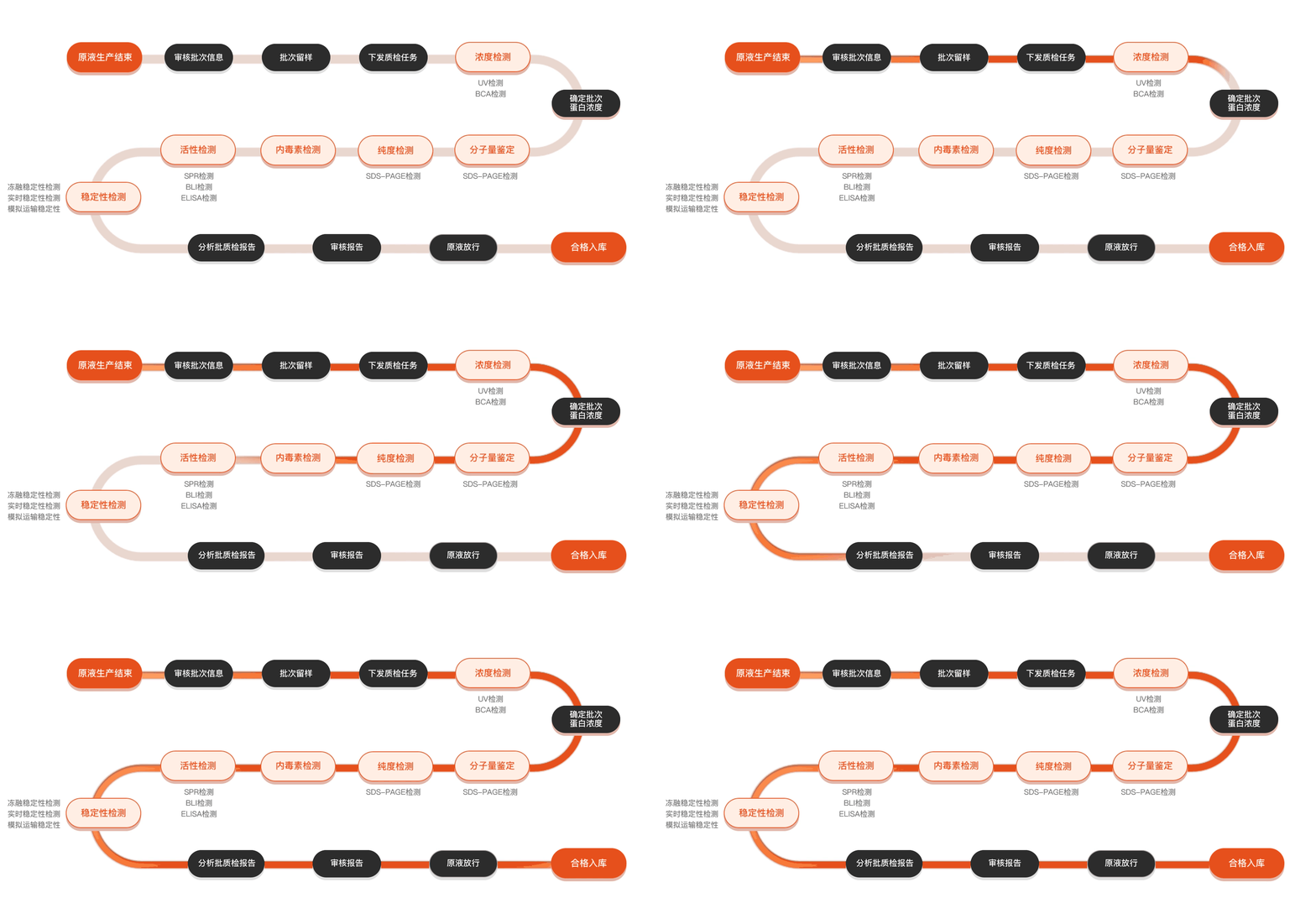
Quality inspection process
Related Products
Protein Description
NKAPL (Natural Killer Cell Activating Protein-Like) is a recently identified member of the immune system that plays a crucial role in regulating natural killer (NK) cell functions. Research on NKAPL has gained significant attention due to its potential implications in immunotherapy and cancer treatment. NK cells are essential components of the innate immune response, known for their ability to recognize and kill tumor cells and virally infected cells. The modulation of NK cell activity is vital for developing effective immunotherapies, particularly in the context of malignancies where tumors can evade immune detection. Understanding the structure and function of NKAPL can provide insights into the mechanisms by which NK cells are activated and regulated. Preliminary studies suggest that NKAPL may enhance NK cell cytotoxicity and promote the secretion of various cytokines, thereby amplifying the immune response. Further research on NKAPL, including the characterization of its signaling pathways and interactions with other immune molecules, is crucial for harnessing its therapeutic potential. This line of investigation could lead to novel strategies for augmenting the immune response against cancer and improving patient outcomes in immunotherapy. The exploration of NKAPL as a recombinant protein offers a promising approach to elucidate its functional roles and potential applications in designing innovative therapies that leverage the power of the immune system.