Analytical Data
-
Gene name
NIT1
- Application
-
Alternative Names
MGC57670 ; NIT1; NIT1_HUMAN; Nitrilase 1; Nitrilase homolog 1
-
Species
Human
-
Source
E. coli
-
Tag
His tag N-Terminus
-
Purity
Greater than 90% as determined by SDS-PAGE.
-
Uniprot
Q86X76
-
Expression Region
1-327 aa
-
AA Sequence
MLGFITRPPH RFLSLLCPGL RIPQLSVLCA QPRPRAMAIS SSSCELPLVA VCQVTSTPDK QQNFKTCAEL VREAARLGAC LAFLPEAFDF IARDPAETLH LSEPLGGKLL EEYTQLAREC GLWLSLGGFH ERGQDWEQTQ KIYNCHVLLN SKGAVVATYR KTHLCDVEIP GQGPMCESNS TMPGPSLESP VSTPAGKIGL AVCYDMRFPE LSLALAQAGA EILTYPSAFG SITGPAHWEV LLRARAIETQ CYVVAAAQCG RHHEKRASYG HSMVVDPWGT VVARCSEGPG LCLARIDLNY LRQLRRHLPV FQHRRPDLYG NLGHPLS
-
Molecular Weight
35.8 kDa
-
Endotoxin
< 1.0 EU per μg protein as determined by the LAL method.
-
Form
Freeze-dried powder
-
Buffer formulation
PBS, pH7.4, containing 0.01% SKL, 1mM DTT, 5% Trehalose and Proclin300.
-
Reconstitution
Reconstitute in ddH2O to a concentration of 0.1-0.5 mg/mL. Do not vortex.
- Customization
-
Stability Test
The thermal stability is described by the loss rate. The loss rate was determined by accelerated thermal degradation test, that is, incubate the protein at 37℃ for 48h, and no obvious degradation and precipitation were observed. The loss rate isless than 8% within the expiration date under appropriate storage condition.
-
Storage & Shelf Life
Samples are stable for up to twelve months from date of receipt at -20℃ to -80℃. Store it under sterile conditions at -20℃ to -80℃. It is recommended that the protein be aliquoted for optimal storage. Avoid repeated freeze-thaw cycles.
-
Shipping
In general, recombinant proteins are supplied as lyophilized powder and shipped at ambient temperature. For bulk packages, the proteins are provided as frozen liquid and shipped with blue ice, unless otherwise requested by the customer.
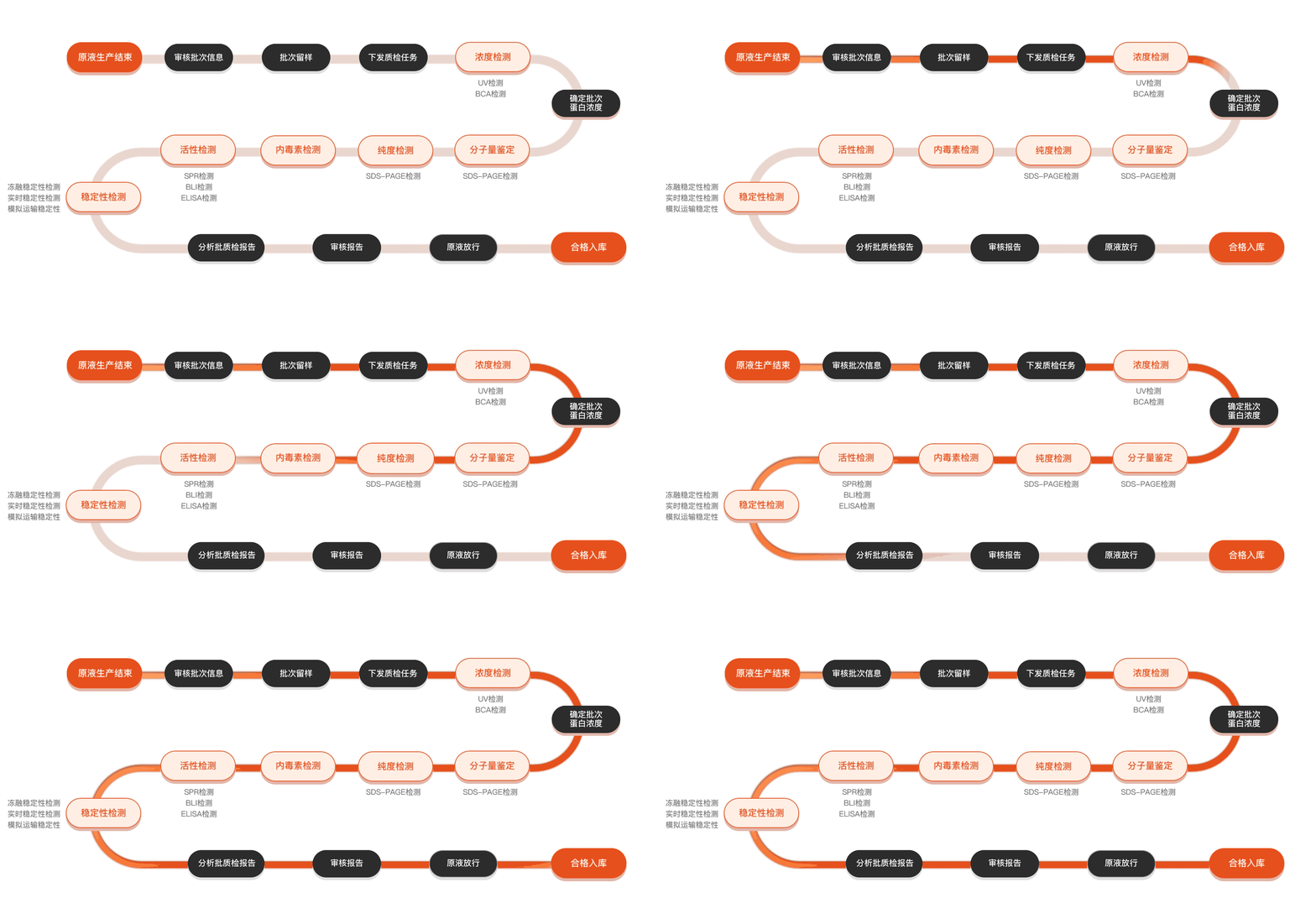
Quality inspection process
Related Products
Protein Description
NIT1, a protein derived from the parasitic organism *Sarcocystis neurona*, has gained significant attention in biomedical research due to its potential implications in the study of infectious diseases and immune responses. This protein is particularly interesting because of its ability to elicit strong immune responses, which may be crucial in understanding how the host's immune system interacts with parasitic infections. Research on NIT1 focuses on its recombinant form to explore its structural properties, immunogenicity, and possible applications in vaccine development. Given the rising incidence of parasitic diseases globally, understanding NIT1 could pave the way for innovative therapeutic strategies. Additionally, the study of NIT1 aligns with broader research efforts aimed at harnessing recombinant proteins for diagnostic and therapeutic purposes. As scientists continue to elucidate the functional mechanisms of NIT1, its role may expand beyond parasitology, possibly impacting areas such as autoimmune diseases and cancer immunotherapy, thereby highlighting the importance of interdisciplinary approaches in modern biomedical research.