Analytical Data
-
基因名
ADCK1
- Application
-
别名
ADCK1; AarF domain-containing Protein kinase 1
-
种属
Human
-
表达系统
E. coli
-
标签
His tag N-Terminus
-
纯度
Greater than 90% as determined by SDS-PAGE.
-
蛋白编号
Q86TW2
-
表达区间
18-530aa
-
氨基酸序列
ASG IYFYSNKYLD PNDFGAVRVG RAVATTAVIS YDYLTSLKSV PYGSEEYLQL RSKSWPVFLQ VHLRSARRLC ELCCANRGTF IKVGQHLGAL DYLLPEEYTS TLKVLHSQAP QSSMQEIRQV IREDLGKEIH DLFQSFDDTP LGTASLAQVH KAVLHDGRTV AVKVQHPKVR AQSSKDILLM EVLVLAVKQL FPEFEFMWLV DEAKKNLPLE LDFLNEGRNA EKVSQMLRHF DFLKVPRIHW DLSTERVLLM EFVDGGQVND RDYMERNKID VNEISRHLGK MYSEMIFVNG FVHCDPHPGN VLVRKHPGTG KAEIVLLDHG LYQMLTEEFR LNYCHLWQSL IWTDMKRVKE YSQRLGAGDL YPLFACMLTA RSWDSVNRGI SQAPVTATED LEIRNNAANY LPQISHLLNH VPRQMLLILK TNDLLRGIEA ALGTRASASS FLNMSRCCIR ALAEHKKKNT CSFFRRTQIS FSEAFNLWQI NLHELILRVK GLKLADRVLA LICWLFPAPL
-
分子量
60.5 kDa
-
内毒素
< 1.0 EU per μg protein as determined by the LAL method.
-
性状
Freeze-dried powder
-
缓冲液
PBS, pH7.4, containing 0.01% SKL, 1mM DTT, 5% Trehalose and Proclin300.
-
复溶方法
Reconstitute in ddH2O to a concentration of 0.1-0.5 mg/mL. Do not vortex.
- 个性化定制
-
稳定性测试
The thermal stability is described by the loss rate. The loss rate was determined by accelerated thermal degradation test, that is, incubate the protein at 37℃ for 48h, and no obvious degradation and precipitation were observed. The loss rate isless than 8% within the expiration date under appropriate storage condition.
-
保存条件 & 期限
Samples are stable for up to twelve months from date of receipt at -20℃ to -80℃. Store it under sterile conditions at -20℃ to -80℃. It is recommended that the protein be aliquoted for optimal storage. Avoid repeated freeze-thaw cycles.
-
运输条件
In general, recombinant proteins are supplied as lyophilized powder and shipped at ambient temperature. For bulk packages, the proteins are provided as frozen liquid and shipped with blue ice, unless otherwise requested by the customer.
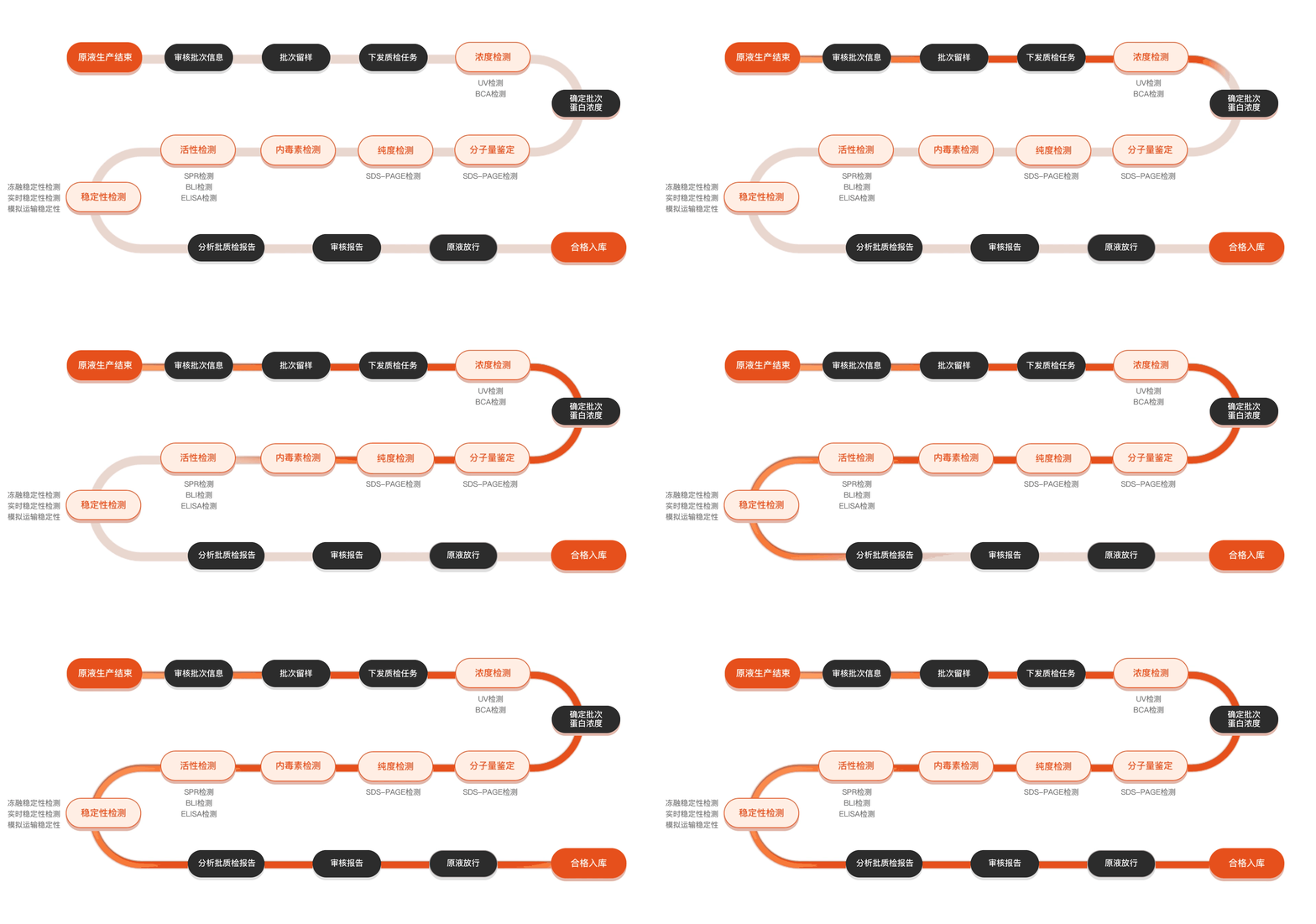
Quality inspection process
Related Products
Protein Description
ADCK1 (Archaea-Dependent Cytidine Kinase 1) is a critical enzyme implicated in mitochondrial function and energy metabolism. Mutations in the ADCK1 gene are associated with various mitochondrial diseases, particularly those affecting muscle and brain tissues. Research into ADCK1 recombinant proteins has gained traction due to the importance of understanding its structure, function, and regulatory mechanisms to better comprehend its role in cellular metabolism and pathophysiology of diseases. By producing recombinant ADCK1, researchers can elucidate its enzymatic activity, substrate specificity, and interaction with other mitochondrial proteins. This work is fundamental to deciphering the biochemical pathways that ADCK1 participates in and how its dysfunction leads to clinical symptoms. Furthermore, recombinant ADCK1 can be utilized to develop potential therapeutic approaches, including gene therapy or targeted small molecules that restore its normal function. The study of ADCK1 serves not only to provide insights into mitochondrial biology but also contributes to the broader understanding of metabolic diseases, highlighting the necessity for further investigation into the intricate roles of mitochondrial enzymes in human health. As the field progresses, the ultimate goal is to leverage this knowledge for the development of innovative strategies that can mitigate the impact of ADCK1-associated disorders.