Analytical Data
-
Gene name
AP4m1
- Application
-
Alternative Names
AP4m1;MUARP2;AP-4 complex subunit mu-1
-
Species
Human
-
Source
E. coli
-
Tag
His tag N-Terminus
-
Purity
Greater than 90% as determined by SDS-PAGE.
-
Uniprot
O00189
-
Expression Region
1-453aa
-
AA Sequence
MISQFFILSS KGDPLIYKDF RGDSGGRDVA ELFYRKLTGL PGDESPVVMH HHGRHFIHIR HSGLYLVVTT SENVSPFSLL ELLSRLATLL GDYCGSLGEG TISRNVALVY ELLDEVLDYG YVQTTSTEML RNFIQTEAVV SKPFSLFDLS SVGLFGAETQ QSKVAPSSAA SRPVLSSRSD QSQKNEVFLD VVERLSVLIA SNGSLLKVDV QGEIRLKSFL PSGSEMRIGL TEEFCVGKSE LRGYGPGIRV DEVSFHSSVN LDEFESHRIL RLQPPQGELT VMRYQLSDDL PSPLPFRLFP SVQWDRGSGR LQVYLKLRCD LLSKSQALNV RLHLPLPRGV VSLSQELSSP EQKAELAEGA LRWDLPRVQG GSQLSGLFQM DVPGPPGPPS HGLSTSASPL GLGPASLSFE LPRHTCSGLQ VRFLRLAFRP CGNANPHKWV RHLSHSDAYV IRI
-
Molecular Weight
49.9 kDa
-
Endotoxin
< 1.0 EU per μg protein as determined by the LAL method.
-
Form
Freeze-dried powder
-
Buffer formulation
PBS, pH7.4, containing 0.01% SKL, 1mM DTT, 5% Trehalose and Proclin300.
-
Reconstitution
Reconstitute in ddH2O to a concentration of 0.1-0.5 mg/mL. Do not vortex.
- Customization
-
Stability Test
The thermal stability is described by the loss rate. The loss rate was determined by accelerated thermal degradation test, that is, incubate the protein at 37℃ for 48h, and no obvious degradation and precipitation were observed. The loss rate isless than 8% within the expiration date under appropriate storage condition.
-
Storage & Shelf Life
Samples are stable for up to twelve months from date of receipt at -20℃ to -80℃. Store it under sterile conditions at -20℃ to -80℃. It is recommended that the protein be aliquoted for optimal storage. Avoid repeated freeze-thaw cycles.
-
Shipping
In general, recombinant proteins are supplied as lyophilized powder and shipped at ambient temperature. For bulk packages, the proteins are provided as frozen liquid and shipped with blue ice, unless otherwise requested by the customer.
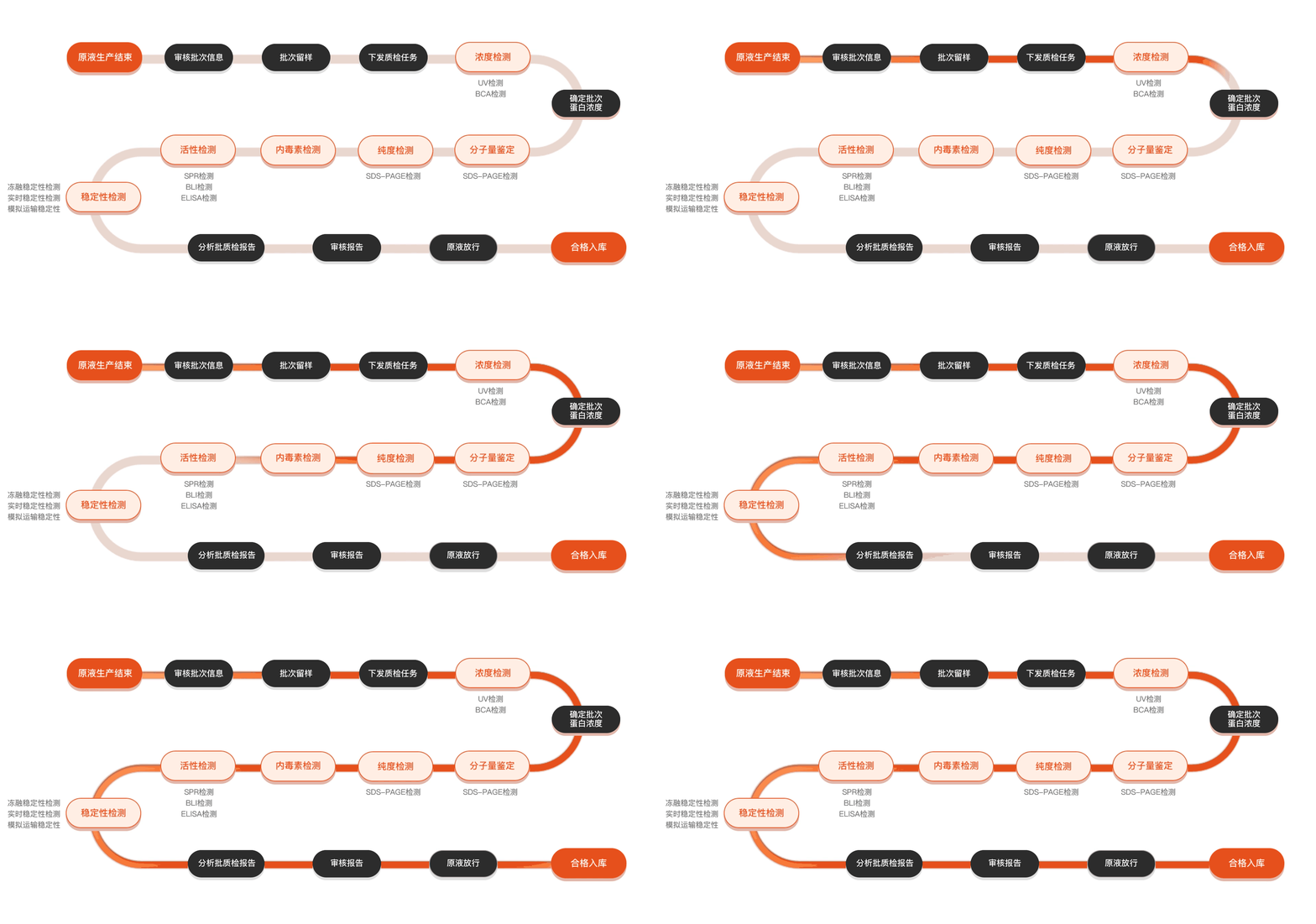
Quality inspection process
Related Products
Protein Description
AP4M1 (adaptor protein complex 4 mu 1) is a crucial component of the adaptor protein complex responsible for intracellular transport, particularly within the endosomal-lysosomal pathway. This protein plays a significant role in clathrin-mediated endocytosis and is involved in the sorting and transport of various membrane proteins and lipids. Mutations or deficiencies in AP4M1 have been associated with neurological disorders, highlighting its importance in maintaining cellular function and integrity. Recent studies have focused on understanding the molecular mechanisms by which AP4M1 contributes to the trafficking of cargo proteins, as well as its potential implications in disease. Recombination techniques have allowed researchers to produce AP4M1 recombinant proteins, facilitating a deeper exploration of its structure and function. These studies aim to elucidate the interactions between AP4M1 and its partner proteins, providing insights into how disruptions in this system may lead to pathologies. Given the rising interest in the role of endosomal trafficking in various diseases, including neurodegenerative conditions, ongoing research on AP4M1 may pave the way for novel therapeutic approaches targeting these critical pathways. Understanding the nuances of AP4M1 interactions and functions could ultimately contribute to the development of strategies to mitigate the effects of its dysfunction in health and disease.