Analytical Data
-
Gene name
PAK6
- Application
-
Alternative Names
CDKN1A activated kinase 6; EC 2.7.1.37; p21 activated protein kinase 6; p21 protein (Cdc42/Rac)-activated kinase 6; p21(CDKN1A) activated kinase 6; p21-activated kinase 6; p21activated kinase 6; PAK 5; PAK 6; PAK-5; PAK-6; PAK5; Pak6; PAK6_HUMAN; Serine threonine protein kinase PAK 6; Serine/threonine protein kinase PAK 6; Serine/threonine protein kinase PAK6; Serine/threonine-protein kinase PAK 6
-
Species
Human
-
Source
E. coli
-
Tag
His tag N-Terminus
-
Purity
Greater than 90% as determined by SDS-PAGE.
-
Uniprot
Q9NQU5
-
Expression Region
1-681 aa
-
AA Sequence
MFRKKKKKRP EISAPQNFQH RVHTSFDPKE GKFVGLPPQW QNILDTLRRP KPVVDPSRIT RVQLQPMKTV VRGSAMPVDG YISGLLNDIQ KLSVISSNTL RGRSPTSRRR AQSLGLLGDE HWATDPDMYL QSPQSERTDP HGLYLSCNGG TPAGHKQMPW PEPQSPRVLP NGLAAKAQSL GPAEFQGASQ RCLQLGACLQ SSPPGASPPT GTNRHGMKAA KHGSEEARPQ SCLVGSATGR PGGEGSPSPK TRESSLKRRL FRSMFLSTAA TAPPSSSKPG PPPQSKPNSS FRPPQKDNPP SLVAKAQSLP SDQPVGTFSP LTTSDTSSPQ KSLRTAPATG QLPGRSSPAG SPRTWHAQIS TSNLYLPQDP TVAKGALAGE DTGVVTHEQF KAALRMVVDQ GDPRLLLDSY VKIGEGSTGI VCLAREKHSG RQVAVKMMDL RKQQRRELLF NEVVIMRDYQ HFNVVEMYKS YLVGEELWVL MEFLQGGALT DIVSQVRLNE EQIATVCEAV LQALAYLHAQ GVIHRDIKSD SILLTLDGRV KLSDFGFCAQ ISKDVPKRKS LVGTPYWMAP EVISRSLYAT EVDIWSLGIM VIEMVDGEPP YFSDSPVQAM KRLRDSPPPK LKNSHKVSPV LRDFLERMLV RDPQERATAQ ELLDHPFLLQ TGLPECLVPL IQLYRKQTST C
-
Molecular Weight
74.8 kDa
-
Endotoxin
< 1.0 EU per μg protein as determined by the LAL method.
-
Form
Freeze-dried powder
-
Buffer formulation
PBS, pH7.4, containing 0.01% SKL, 1mM DTT, 5% Trehalose and Proclin300.
-
Reconstitution
Reconstitute in ddH2O to a concentration of 0.1-0.5 mg/mL. Do not vortex.
- Customization
-
Stability Test
The thermal stability is described by the loss rate. The loss rate was determined by accelerated thermal degradation test, that is, incubate the protein at 37℃ for 48h, and no obvious degradation and precipitation were observed. The loss rate isless than 8% within the expiration date under appropriate storage condition.
-
Storage & Shelf Life
Samples are stable for up to twelve months from date of receipt at -20℃ to -80℃. Store it under sterile conditions at -20℃ to -80℃. It is recommended that the protein be aliquoted for optimal storage. Avoid repeated freeze-thaw cycles.
-
Shipping
In general, recombinant proteins are supplied as lyophilized powder and shipped at ambient temperature. For bulk packages, the proteins are provided as frozen liquid and shipped with blue ice, unless otherwise requested by the customer.
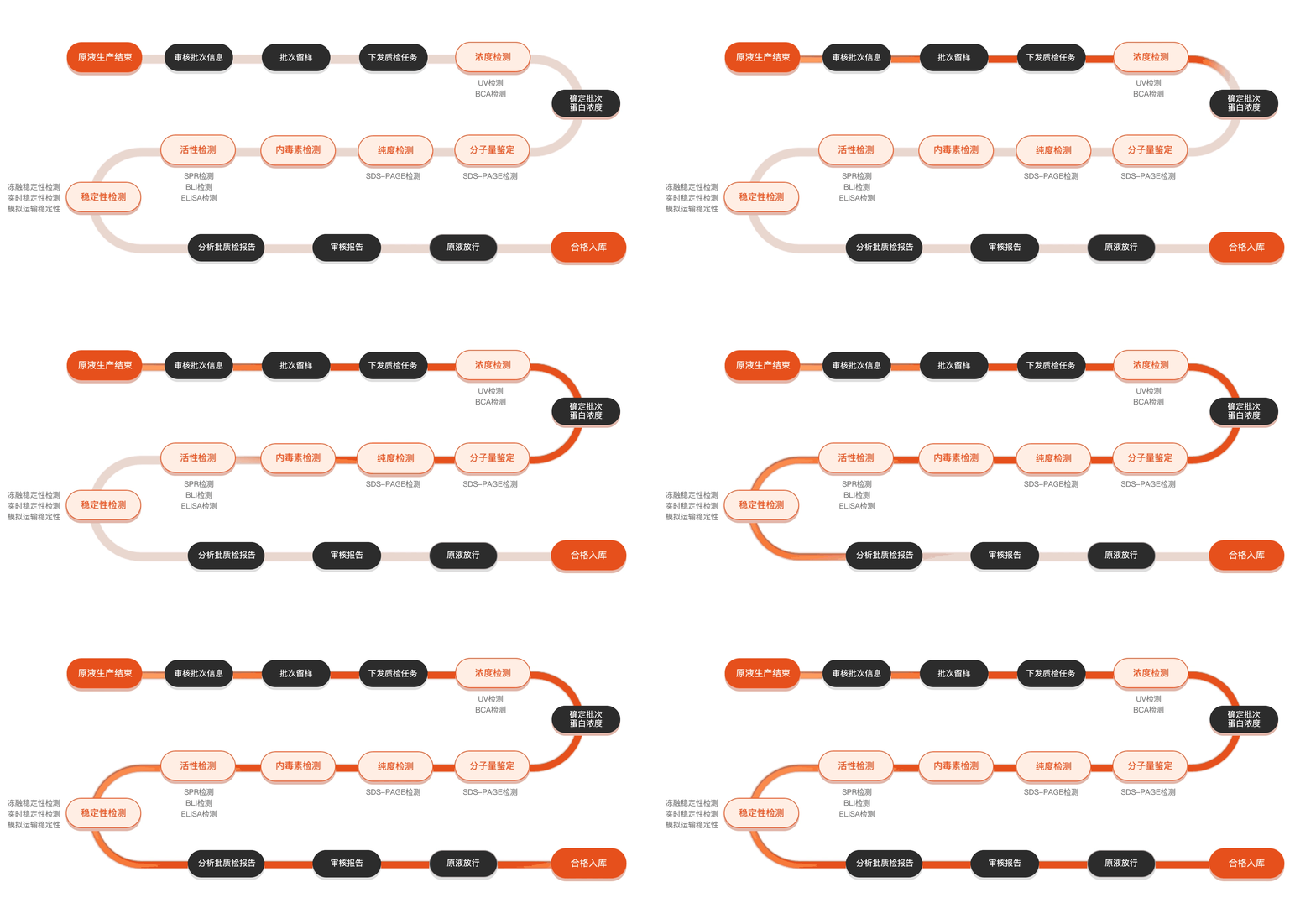
Quality inspection process
Related Products
Protein Description
PAK6 (p21-activated kinase 6) is a member of the PAK family of serine/threonine kinases, which play critical roles in various cellular processes, including cell motility, proliferation, and survival. It is known to be involved in signaling pathways regulated by small GTPases such as Rac1 and Cdc42, which are essential for cytoskeletal dynamics and cellular morphology. Emerging research indicates that PAK6 may have implications in neurodevelopment and cognitive functions, as well as in the pathogenesis of certain neurodegenerative diseases and cancers. The interest in PAK6 as a therapeutic target has grown, particularly due to its potential role in modulating neuronal signaling and its impact on tumorigenesis. However, the functional characterization of PAK6 is still limited, which underscores the need for studying its recombinant protein. Producing and characterizing PAK6 recombinant protein can help in elucidating its biochemical properties, physiological roles, and interactions with other cellular components. Additionally, understanding the post-translational modifications and activity of PAK6 is crucial for exploring its regulatory mechanisms in health and disease. Overall, research on PAK6 recombinant protein holds promise for providing insights that can lead to innovative therapeutic strategies targeting PAK6-related pathways in various diseases.