Analytical Data
-
Gene name
PEX14
- Application
-
Alternative Names
PEX14;Peroxisomal membrane Protein PEX14
-
Species
Human
-
Source
E. coli
-
Tag
His tag N-Terminus
-
Purity
Greater than 90% as determined by SDS-PAGE.
-
Uniprot
O75381
-
Expression Region
2-377aa
-
AA Sequence
ASSEQAEQP SQPSSTPGSE NVLPREPLIA TAVKFLQNSR VRQSPLATRR AFLKKKGLTD EEIDMAFQQS GTAADEPSSL GPATQVVPVQ PPHLISQPYS PAGSRWRDYG ALAIIMAGIA FGFHQLYKKY LLPLILGGRE DRKQLERMEA GLSELSGSVA QTVTQLQTTL ASVQELLIQQ QQKIQELAHE LAAAKATTST NWILESQNIN ELKSEINSLK GLLLNRRQFP PSPSAPKIPS WQIPVKSPSP SSPAAVNHHS SSDISPVSNE STSSSPGKEG HSPEGSTVTY HLLGPQEEGE GVVDVKGQVR MEVQGEEEKR EDKEDEEDEE DDDVSHVDEE DCLGVQREDR RGGDGQINEQ VEKLRRPEGA SNESERD
-
Molecular Weight
41.2 kDa
-
Endotoxin
< 1.0 EU per μg protein as determined by the LAL method.
-
Form
Freeze-dried powder
-
Buffer formulation
PBS, pH7.4, containing 0.01% SKL, 1mM DTT, 5% Trehalose and Proclin300.
-
Reconstitution
Reconstitute in ddH2O to a concentration of 0.1-0.5 mg/mL. Do not vortex.
- Customization
-
Stability Test
The thermal stability is described by the loss rate. The loss rate was determined by accelerated thermal degradation test, that is, incubate the protein at 37℃ for 48h, and no obvious degradation and precipitation were observed. The loss rate isless than 8% within the expiration date under appropriate storage condition.
-
Storage & Shelf Life
Samples are stable for up to twelve months from date of receipt at -20℃ to -80℃. Store it under sterile conditions at -20℃ to -80℃. It is recommended that the protein be aliquoted for optimal storage. Avoid repeated freeze-thaw cycles.
-
Shipping
In general, recombinant proteins are supplied as lyophilized powder and shipped at ambient temperature. For bulk packages, the proteins are provided as frozen liquid and shipped with blue ice, unless otherwise requested by the customer.
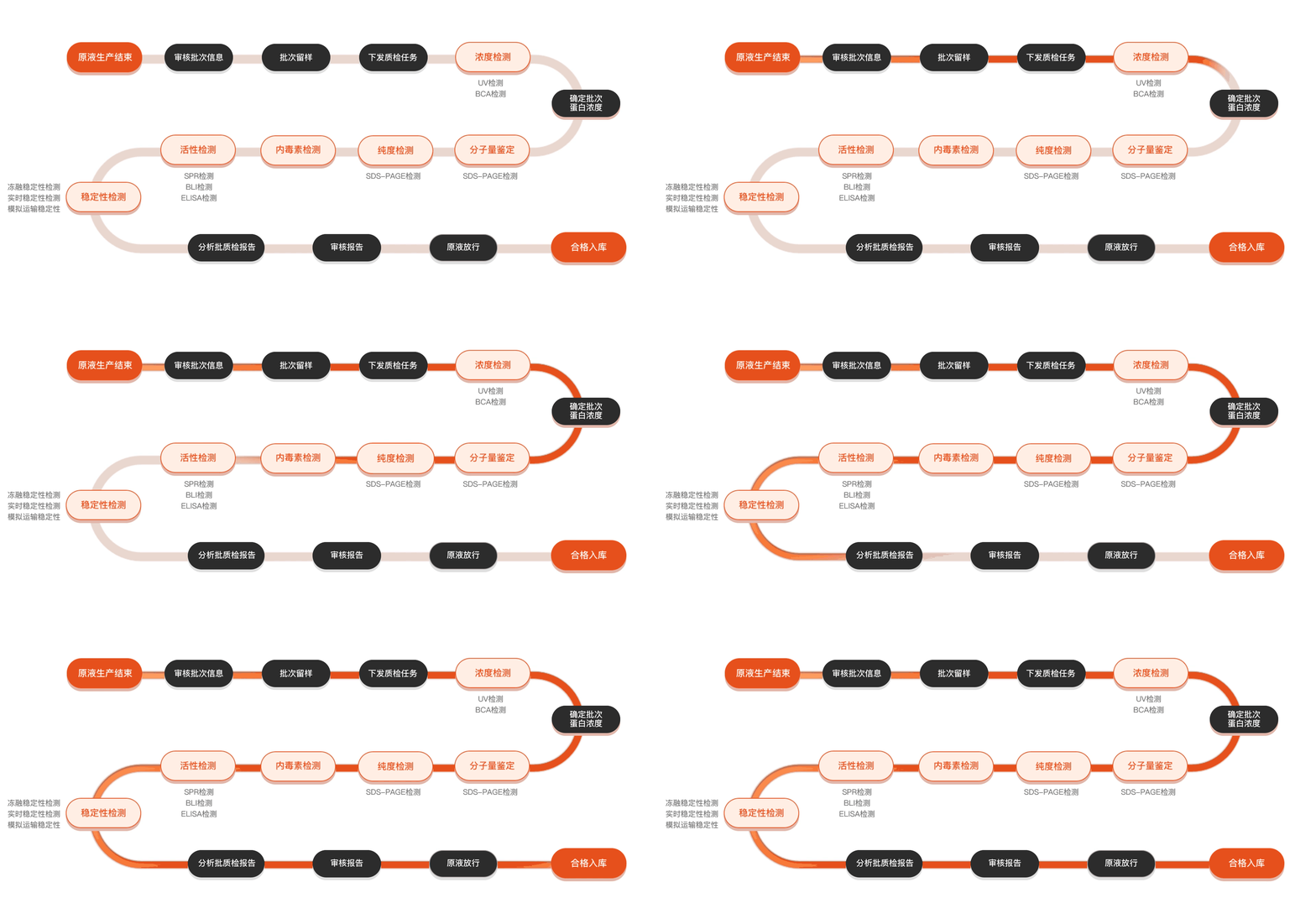
Quality inspection process
Related Products
Protein Description
PEX14, a critical component of peroxisomal import machinery, plays a pivotal role in facilitating the transport of peroxisomal matrix proteins, which are essential for various cellular functions including fatty acid oxidation and reactive oxygen species detoxification. Defects in peroxisomal biogenesis, often associated with mutations in PEX genes like PEX14, can lead to severe metabolic disorders known as peroxisome biogenesis disorders (PBDs), characterized by neurological impairment and other systemic issues. The study of PEX14 and its associated pathways has garnered significant attention in molecular biology and biochemistry, primarily due to its implications in understanding the etiology of PBDs. Researchers have focused on elucidating the structural and functional properties of PEX14 to uncover the molecular mechanisms underlying its role in protein import and peroxisome assembly. Advanced techniques, such as X-ray crystallography and cryo-electron microscopy, have been employed to visualize PEX14 interactions with its partner proteins, enhancing our comprehension of the peroxisomal import process. Additionally, investigating PEX14's interactions with various substrates and cofactors may reveal potential therapeutic targets for the treatment of disorders linked to peroxisomal dysfunction. As PEX14 continues to be a focal point of genetic and biochemical research, its exploration holds the promise of unlocking new insights into both fundamental cell biology and the development of targeted interventions for metabolic disorders.