Analytical Data
-
Gene name
PMF1
- Application
-
Alternative Names
NNF1R; PMF 1; PMF-1; Pmf1; PMF1_HUMAN; Polyamine modulated factor 1; Polyamine-modulated factor 1
-
Species
Human
-
Source
E. coli
-
Tag
His tag N-Terminus
-
Purity
Greater than 90% as determined by SDS-PAGE.
-
Uniprot
Q6P1K2
-
Expression Region
2-205 aa
-
AA Sequence
AEASSANLG SGCEEKRHEG SSSESVPPGT TISRVKLLDT MVDTFLQKLV AAGSYQRFTD CYKCFYQLQP AMTQQIYDKF IAQLQTSIRE EISDIKEEGN LEAVLNALDK IVEEGKVRKE PAWRPSGIPE KDLHSVMAPY FLQQRDTLRR HVQKQEAENQ QLADAVLAGR RQVEELQLQV QAQQQAWQAL HREQRELVAV LREPE
-
Molecular Weight
23.3 kDa
-
Endotoxin
< 1.0 EU per μg protein as determined by the LAL method.
-
Form
Freeze-dried powder
-
Buffer formulation
PBS, pH7.4, containing 0.01% SKL, 1mM DTT, 5% Trehalose and Proclin300.
-
Reconstitution
Reconstitute in ddH2O to a concentration of 0.1-0.5 mg/mL. Do not vortex.
- Customization
-
Stability Test
The thermal stability is described by the loss rate. The loss rate was determined by accelerated thermal degradation test, that is, incubate the protein at 37℃ for 48h, and no obvious degradation and precipitation were observed. The loss rate isless than 8% within the expiration date under appropriate storage condition.
-
Storage & Shelf Life
Samples are stable for up to twelve months from date of receipt at -20℃ to -80℃. Store it under sterile conditions at -20℃ to -80℃. It is recommended that the protein be aliquoted for optimal storage. Avoid repeated freeze-thaw cycles.
-
Shipping
In general, recombinant proteins are supplied as lyophilized powder and shipped at ambient temperature. For bulk packages, the proteins are provided as frozen liquid and shipped with blue ice, unless otherwise requested by the customer.
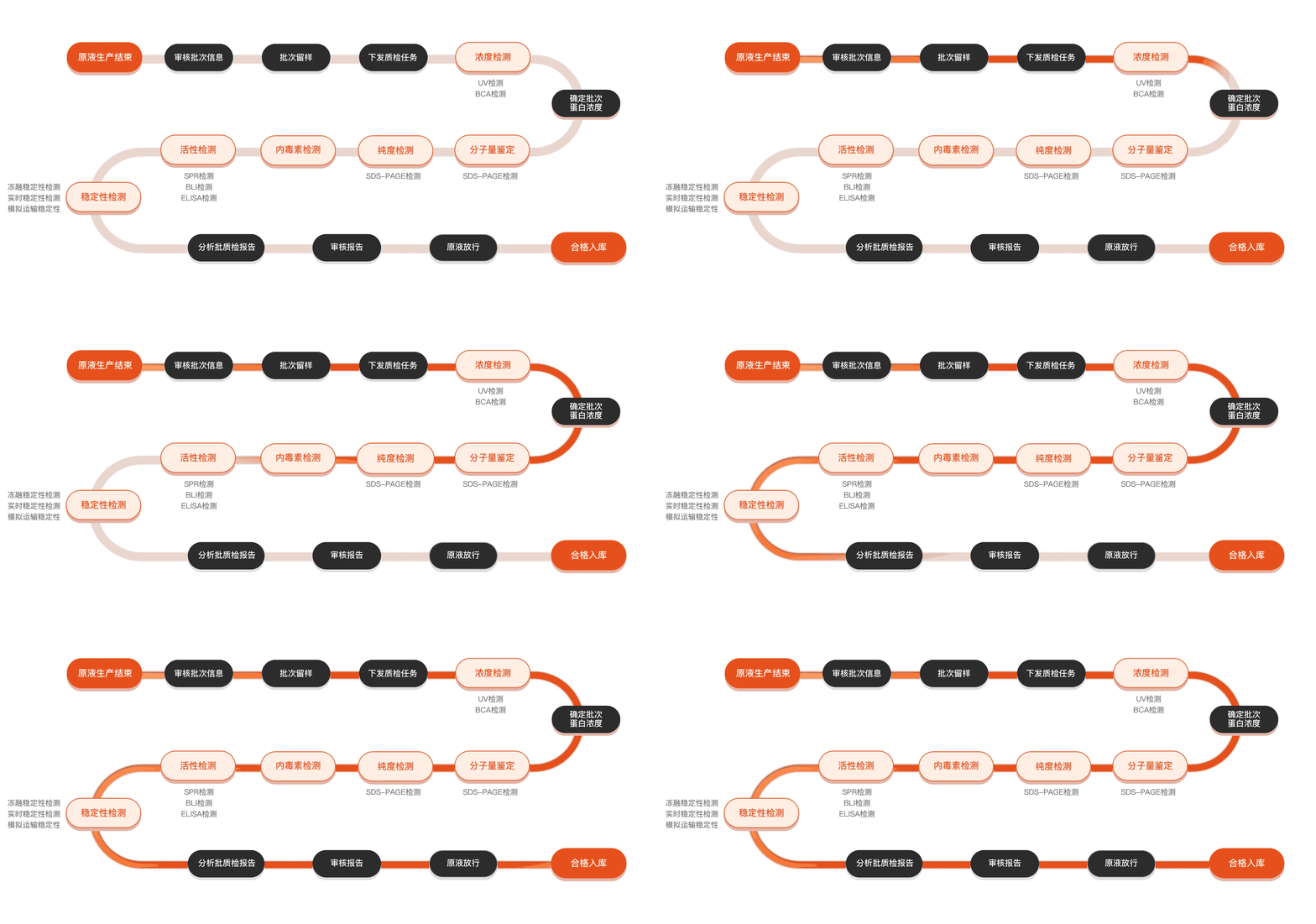
Quality inspection process
Related Products
Protein Description
PMF1 (Polymyxin B resistance gene) recombinant protein research has garnered attention due to its potential applications in antibiotic resistance and microbial genetics. As the global health community grapples with the rise of multidrug-resistant bacteria, understanding the mechanisms by which pathogens evade antibiotic treatment is critical. PMF1, which encodes a protein involved in bacterial membrane integrity and function, has been implicated in polymyxin resistance, a last-resort antibiotic for treating Gram-negative infections. Studies have shown that PMF1 expression can lead to changes in membrane permeability and surface charge, enhancing bacterial survival in the presence of antibiotics. Furthermore, the recombinant expression of PMF1 provides an essential tool for probing its function and interactions within microbial systems. By producing PMF1 as a recombinant protein, researchers can investigate its structural properties, enzymatic activities, and potential role in the development of new therapeutic strategies. Additionally, the elucidation of PMF1’s mechanism may offer insights into developing inhibitors that can circumvent resistance in clinically significant pathogens. This area of research not only contributes to our fundamental understanding of bacterial physiology but also aids in the fight against antibiotic-resistant infections, making it an important focus in contemporary microbiological research.