Analytical Data
-
Gene name
IFNA4
- Application
-
Alternative Names
IFNA4;Interferon alpha-4
-
Species
Human
-
Source
E. coli
-
Tag
His tag N-Terminus
-
Purity
Greater than 90% as determined by SDS-PAGE.
-
Uniprot
P05014
-
Expression Region
23-189aa
-
AA Sequence
GCDLPQTHSL GNRRALILLA QMGRISHFSC LKDRHDFGFP EEEFDGHQFQ KAQAISVLHE MIQQTFNLFS TEDSSAAWEQ SLLEKFSTEL YQQLNDLEAC VIQEVGVEET PLMNEDSILA VRKYFQRITL YLTEKKYSPC AWEVVRAEIM RSLSFSTNLQ KRLRRKD
-
Molecular Weight
46 kDa
-
Endotoxin
< 1.0 EU per μg protein as determined by the LAL method.
-
Form
Freeze-dried powder
-
Buffer formulation
PBS, pH7.4, containing 0.01% SKL, 1mM DTT, 5% Trehalose and Proclin300.
-
Reconstitution
Reconstitute in ddH2O to a concentration of 0.1-0.5 mg/mL. Do not vortex.
- Customization
-
Stability Test
The thermal stability is described by the loss rate. The loss rate was determined by accelerated thermal degradation test, that is, incubate the protein at 37℃ for 48h, and no obvious degradation and precipitation were observed. The loss rate isless than 8% within the expiration date under appropriate storage condition.
-
Storage & Shelf Life
Samples are stable for up to twelve months from date of receipt at -20℃ to -80℃. Store it under sterile conditions at -20℃ to -80℃. It is recommended that the protein be aliquoted for optimal storage. Avoid repeated freeze-thaw cycles.
-
Shipping
In general, recombinant proteins are supplied as lyophilized powder and shipped at ambient temperature. For bulk packages, the proteins are provided as frozen liquid and shipped with blue ice, unless otherwise requested by the customer.
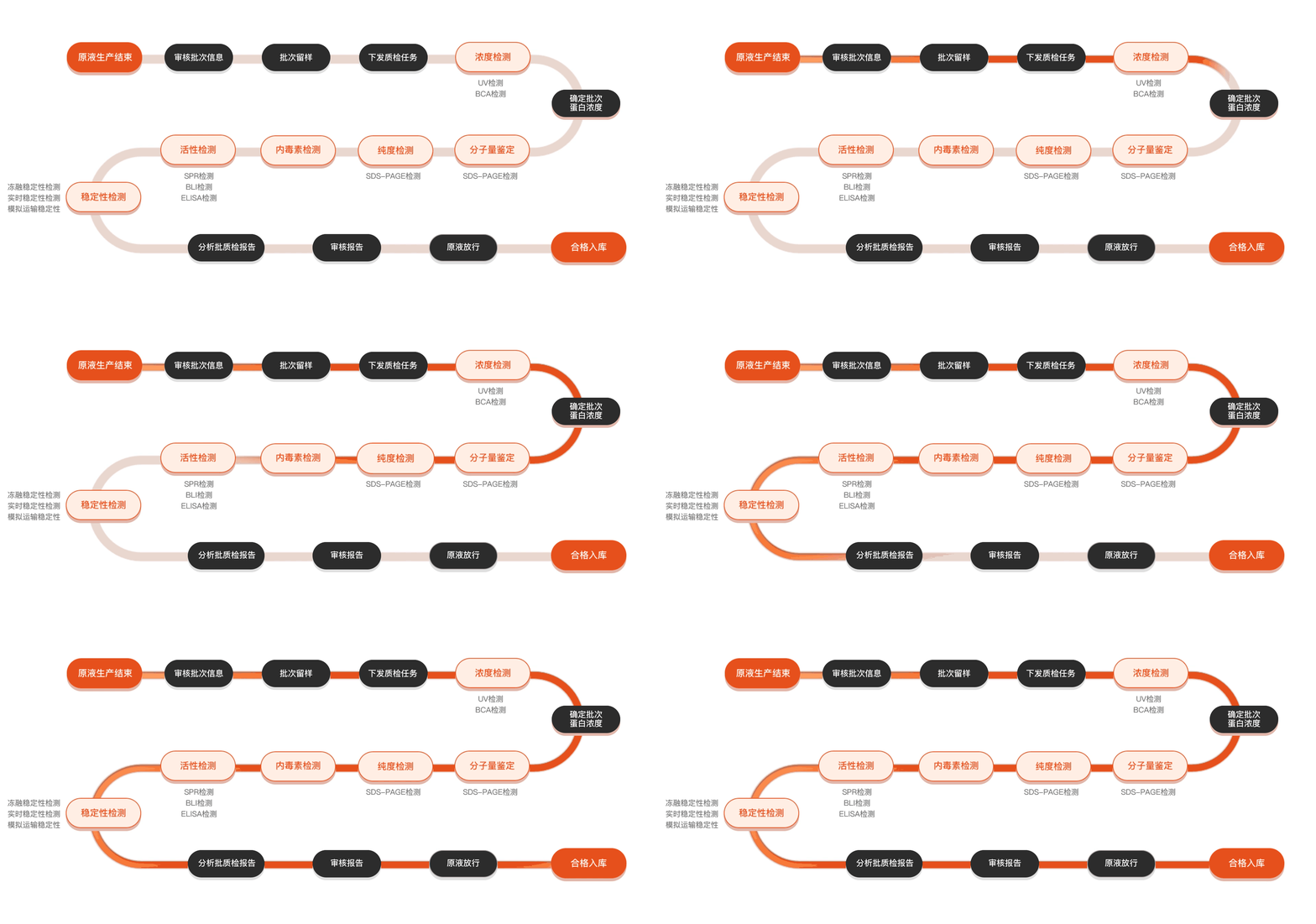
Quality inspection process
Related Products
Protein Description
IFNA4, a member of the interferon alpha (IFN-α) family, plays a crucial role in the immune response, particularly in antiviral defense mechanisms. It is produced by various cell types, including leukocytes, in response to viral infections and serves as a signaling molecule, binding to specific receptors to activate a cascade of immune responses. The unique structure of IFNA4, along with its binding affinity and activity, makes it an important subject of research for therapeutic applications, particularly in the treatment of viral infections and cancer. Recent studies have focused on the recombinant expression of IFNA4 to produce it in larger quantities for detailed functional analyses and potential therapeutic uses. Advances in molecular biology techniques, such as genetic engineering and recombinant DNA technology, have enabled the efficient production of IFNA4 in host systems like bacteria or yeast. This allows for the investigation of its biological properties, including its efficacy in enhancing the immune response and its potential as an adjuvant in vaccine development. Additionally, understanding the mechanisms by which IFNA4 exerts its effects may help in the design of novel antiviral and anticancer therapies, taking advantage of its immunomodulatory functions. Overall, the ongoing research on IFNA4, with a focus on its recombinant protein forms, aims to illuminate its roles in immune regulation and unlock new avenues for clinical interventions.