Analytical Data
-
Gene name
C16orf86
- Application
-
Alternative Names
C16orf86; CP086_HUMAN; Uncharacterized Protein C16orf86
-
Species
Human
-
Source
E. coli
-
Tag
GST-tag at N-terminal
-
Purity
Greater than 90% as determined by SDS-PAGE.
-
Uniprot
Q6ZW13
-
Expression Region
1-317aa
-
AA Sequence
MASAGAERRP GVQEATVVGQ GQLTEEPGSA QTSECPVAGD QFLVPAHEAR GTQSEDQRPA GAASESELQE EGPKLGEERP KPHAGALEER GPRPVVSIVR PRHGPKRKPV KSLSLPGLRA HLKAEAELPP KLPLQEEEPE DSQSEPSPSA KQHKKAKKRK SLGAPVLHAV ASMVSAPLET LRLERKAQRL RPLYQYVNYC NPELNQAGKG DGEAEVEAEA ELAPVPEEGG VEQLQALLPL AGELGPGLAL PCPSPLVTPT HALAPLGEEA GEEPGGLPSL GVSDHKAEVD KSTQVDIDKM LSVCTAPLVP PLSPQYK
-
Molecular Weight
33.5 kDa
-
Endotoxin
< 1.0 EU per μg protein as determined by the LAL method.
-
Form
Freeze-dried powder
-
Buffer formulation
PBS, pH7.4, containing 0.01% SKL, 1mM DTT, 5% Trehalose and Proclin300.
-
Reconstitution
Reconstitute in ddH2O to a concentration of 0.1-0.5 mg/mL. Do not vortex.
- Customization
-
Stability Test
The thermal stability is described by the loss rate. The loss rate was determined by accelerated thermal degradation test, that is, incubate the protein at 37℃ for 48h, and no obvious degradation and precipitation were observed. The loss rate isless than 8% within the expiration date under appropriate storage condition.
-
Storage & Shelf Life
Samples are stable for up to twelve months from date of receipt at -20℃ to -80℃. Store it under sterile conditions at -20℃ to -80℃. It is recommended that the protein be aliquoted for optimal storage. Avoid repeated freeze-thaw cycles.
-
Shipping
In general, recombinant proteins are supplied as lyophilized powder and shipped at ambient temperature. For bulk packages, the proteins are provided as frozen liquid and shipped with blue ice, unless otherwise requested by the customer.
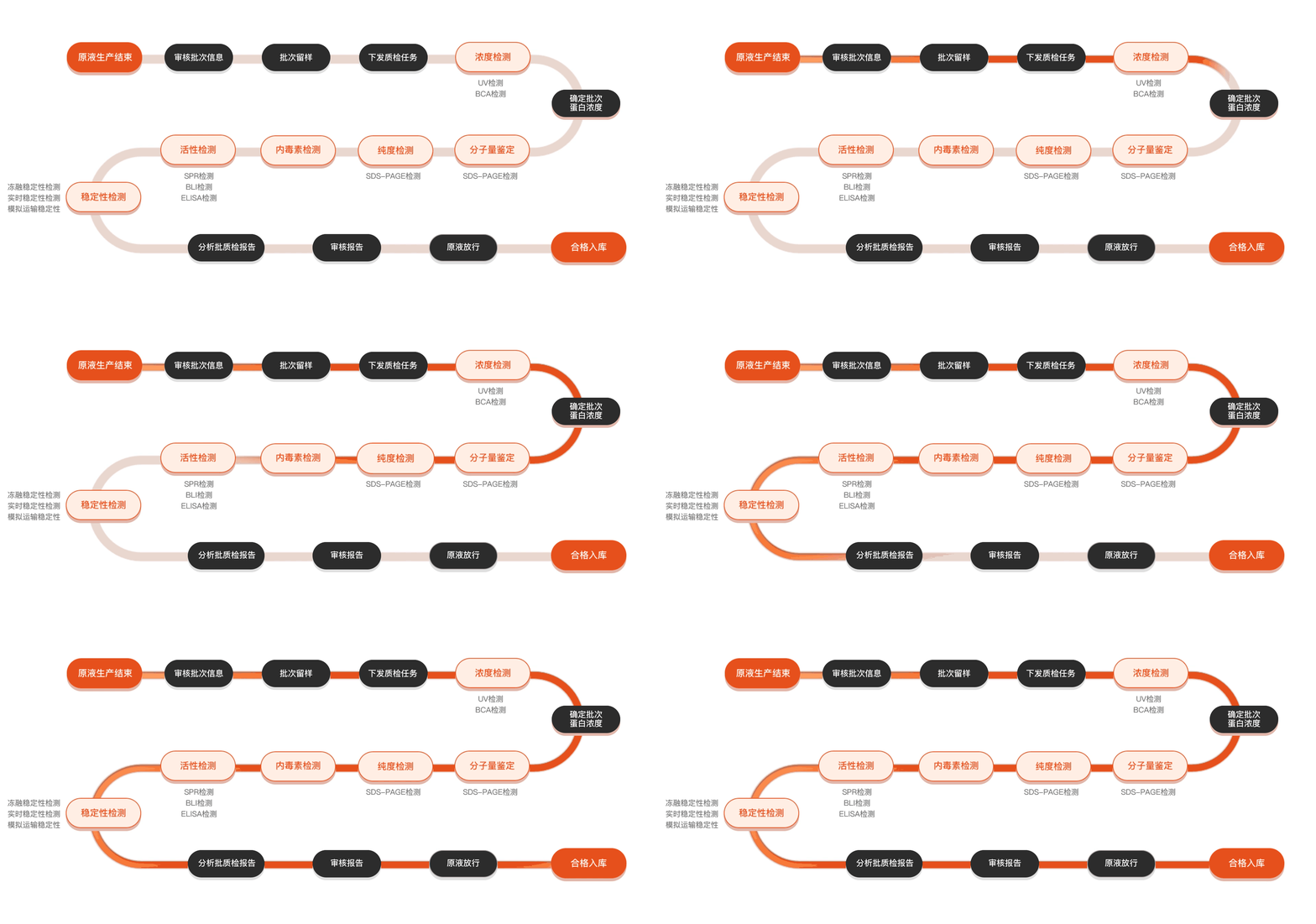
Quality inspection process
Related Products
Protein Description
C16orf86, also known as the chromosome 16 open reading frame 86, is a protein of growing interest in the field of molecular biology and human health. Initially characterized through genomic studies, C16orf86 is believed to play a significant role in various cellular processes, including cell cycle regulation and apoptosis. Recent research has indicated that alterations in C16orf86 expression may be associated with several diseases, particularly cancer, suggesting its potential as a biomarker for disease progression or treatment response. The study of C16orf86 recombinant protein has gained traction, as it allows researchers to further investigate its biochemical properties and functional mechanisms in vitro. Producing a recombinant version of this protein can facilitate high-throughput screening and help elucidate its interactions with other macromolecules, such as DNA and RNA, as well as its involvement in cellular signaling pathways. Understanding the precise role of C16orf86 in cellular processes could lead to novel therapeutic strategies and enhance our comprehension of its implications in various pathologies. The ongoing research surrounding C16orf86 signifies its potential impact on both basic science and clinical applications, making it an important target in the exploration of molecular mechanisms underlying human diseases.