Analytical Data
-
Gene name
murI
- Application
-
Alternative Names
murI;Glutamate racemase
-
Species
E.coli
-
Source
E. coli
-
Tag
His tag N-Terminus
-
Purity
Greater than 90% as determined by SDS-PAGE.
-
Uniprot
P73737
-
Expression Region
1-279aa
-
AA Sequence
MREPQRSRIG VFDSGVGGLT VLRELYRQLP KESILYFGDT ARLPYGKRSP QVILQYVREI LTWMAAEEVK MVIMACNTSS ALALETVQQE FNMPILGVIL PGARAAVRQG RRIGVISTPA TAASNAYRHA IHEITPDALV WQMACPEFVP LIEQNRLHDP YTLEVAKGYL QPLLDADIDT LVFGCTHYRH LTPVFQQILP SHIRLVDPAS HVVKAARQEL EVMGLRNSEM SIATRFTVSG CPQQFAELSH QWLGFTPMVE KISLPCLSSI CPQPLEIRE
-
Molecular Weight
31.2 kDa
-
Endotoxin
< 1.0 EU per μg protein as determined by the LAL method.
-
Form
Freeze-dried powder
-
Buffer formulation
PBS, pH7.4, containing 0.01% SKL, 1mM DTT, 5% Trehalose and Proclin300.
-
Reconstitution
Reconstitute in ddH2O to a concentration of 0.1-0.5 mg/mL. Do not vortex.
- Customization
-
Stability Test
The thermal stability is described by the loss rate. The loss rate was determined by accelerated thermal degradation test, that is, incubate the protein at 37℃ for 48h, and no obvious degradation and precipitation were observed. The loss rate isless than 8% within the expiration date under appropriate storage condition.
-
Storage & Shelf Life
Samples are stable for up to twelve months from date of receipt at -20℃ to -80℃. Store it under sterile conditions at -20℃ to -80℃. It is recommended that the protein be aliquoted for optimal storage. Avoid repeated freeze-thaw cycles.
-
Shipping
In general, recombinant proteins are supplied as lyophilized powder and shipped at ambient temperature. For bulk packages, the proteins are provided as frozen liquid and shipped with blue ice, unless otherwise requested by the customer.
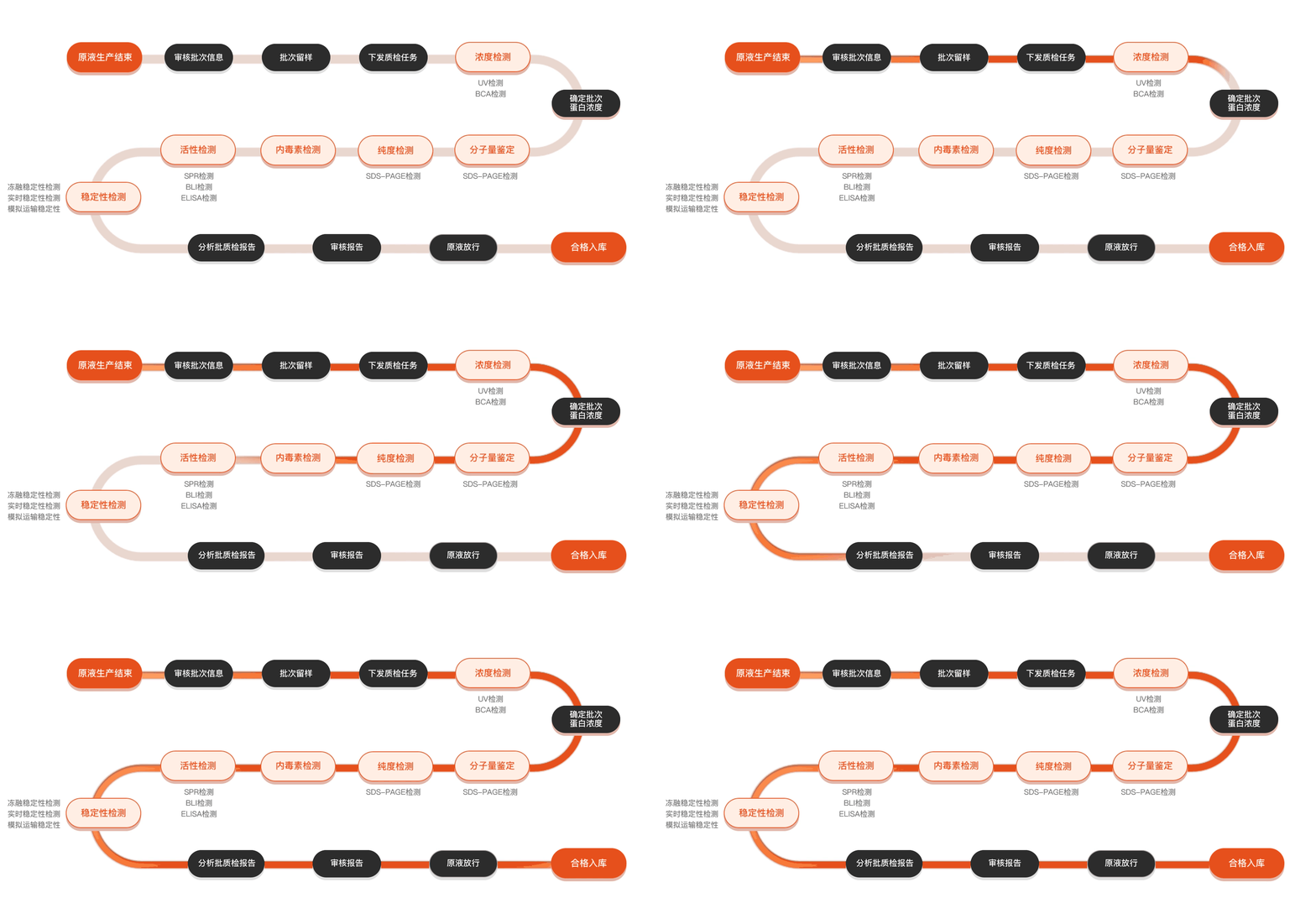
Quality inspection process
Related Products
Protein Description
MurI is a crucial protein involved in the regulation of peptidoglycan biosynthesis and cellular morphology in bacteria. Its primary function is to facilitate the incorporation of murein monomers into the bacterial cell wall, thereby maintaining the structural integrity of the cell. Understanding the mechanisms underlying MurI's action is essential for developing novel antibacterial strategies, especially in the face of increasing antibiotic resistance. Research has demonstrated that MurI interacts with various components of the bacterial cell division machinery and is involved in the modulation of cell shape and growth rates. The growing concern over multidrug-resistant bacterial strains highlights the urgent need for new antimicrobial agents targeting unique bacterial processes, like those mediated by MurI. Structural studies, including X-ray crystallography and cryo-electron microscopy, have provided insights into the protein's conformation and potential binding sites, paving the way for rational drug design. By characterizing MurI's biochemical properties and interactions, researchers aim to uncover its role in cell wall synthesis and explore its potential as a target for new therapeutic compounds. This research not only contributes to fundamental bacterial biology but also has significant implications for addressing public health challenges posed by antibiotic-resistant pathogens.