Analytical Data
-
基因名
COL10
- Application
-
别名
COL10;CLL1;Collectin-10
-
种属
Human
-
表达系统
E. coli
-
标签
His tag N-Terminus
-
纯度
Greater than 90% as determined by SDS-PAGE.
-
蛋白编号
Q9LUA9
-
表达区间
1-373aa
-
氨基酸序列
MGYMCDFCGE QRSMVYCRSD AACLCLSCDR NVHSANALSK RHSRTLVCER CNAQPASVRC SDERVSLCQN CDWSGHDGKN STTTSHHKRQ TINCYSGCPS SAELSSIWSF CMDLNISSAE ESACEQGMGL MTIDEDGTGE KSGVQKINVE QPETSSAAQG MDHSSVPENS SMAKELGVCE DDFNGNLISD EVDLALENYE ELFGSAFNSS RYLFEHGGIG SLFEKDEAHE GSMQQPALSN NASADSFMTC RTEPIICYSS KPAHSNISFS GITGESNAGD FQDCGASSMK QLSREPQPWC HPTAQDIIAS SHATTRNNAV MRYKEKKKAR KFDKRVRYVS RKERADVRRR VKGRFVKSGE AYDYDPMSPT RSY
-
内毒素
< 1.0 EU per μg protein as determined by the LAL method.
-
性状
Freeze-dried powder
-
缓冲液
PBS, pH7.4, containing 0.01% SKL, 1mM DTT, 5% Trehalose and Proclin300.
-
复溶方法
Reconstitute in ddH2O to a concentration of 0.1-0.5 mg/mL. Do not vortex.
- 个性化定制
-
稳定性测试
The thermal stability is described by the loss rate. The loss rate was determined by accelerated thermal degradation test, that is, incubate the protein at 37℃ for 48h, and no obvious degradation and precipitation were observed. The loss rate isless than 8% within the expiration date under appropriate storage condition.
-
保存条件 & 期限
Samples are stable for up to twelve months from date of receipt at -20℃ to -80℃. Store it under sterile conditions at -20℃ to -80℃. It is recommended that the protein be aliquoted for optimal storage. Avoid repeated freeze-thaw cycles.
-
运输条件
In general, recombinant proteins are supplied as lyophilized powder and shipped at ambient temperature. For bulk packages, the proteins are provided as frozen liquid and shipped with blue ice, unless otherwise requested by the customer.
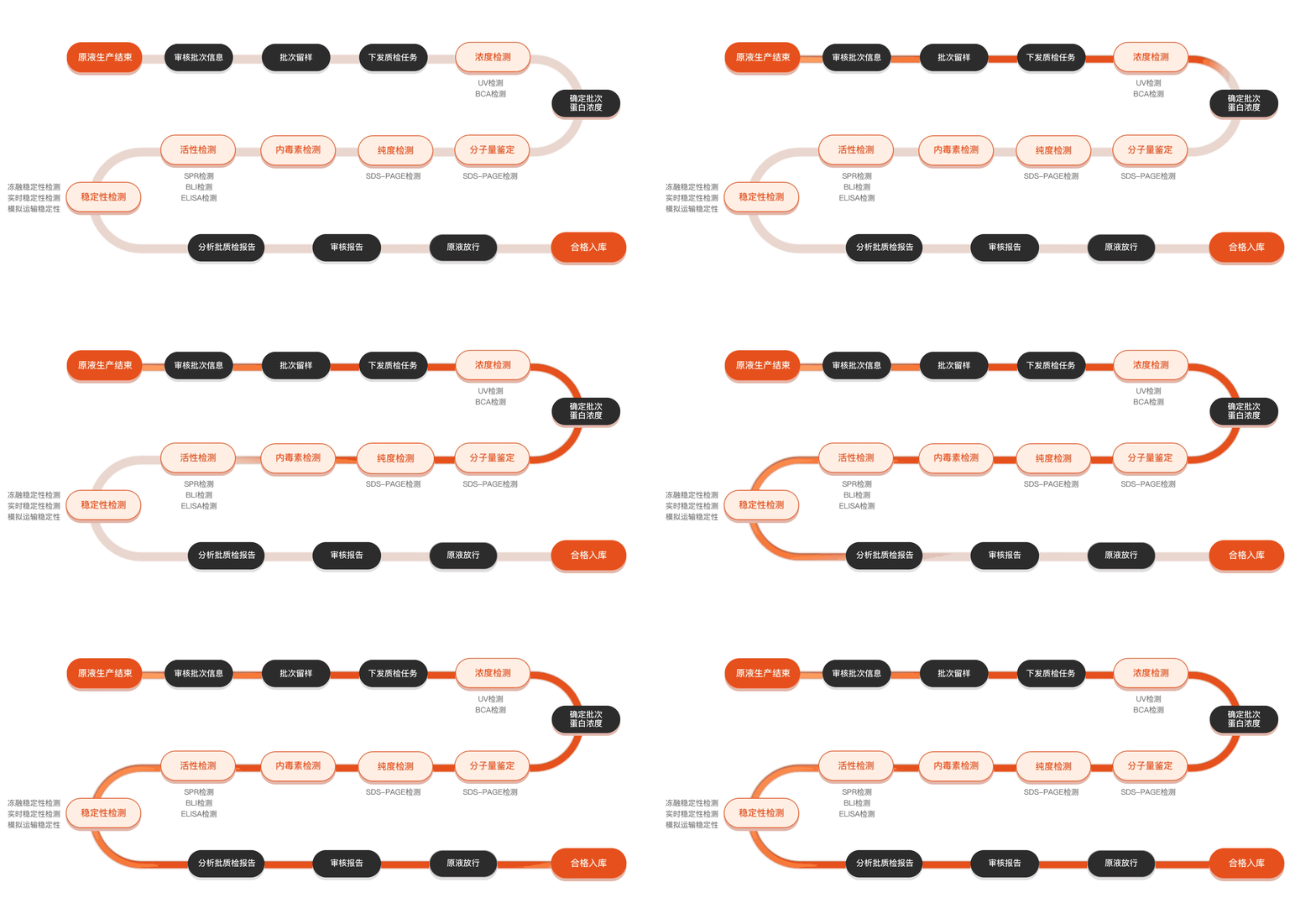
Quality inspection process
Related Products
Protein Description
COL10, or type X collagen, is a fibrillar collagen primarily expressed in hypertrophic cartilage during endochondral ossification. It plays a crucial role in the development of long bones and is associated with the growth plate's maturation and subsequent mineralization. Research into COL10 recombinant proteins has gained traction due to their potential applications in regenerative medicine and tissue engineering, particularly for cartilage repair and osteoarthritis treatment. Understanding the structure and function of COL10 is vital for developing therapeutic strategies aimed at enhancing cartilage regeneration and understanding pathologies related to skeletal disorders. Recent advances in molecular biology and protein engineering have enabled the production of recombinant COL10 proteins, providing valuable tools for studying its role in cartilage biology and facilitating the development of novel biomaterials that mimic the native extracellular matrix. Furthermore, the ability to produce and modify COL10 in vitro opens new avenues for investigating cartilage-specific signaling pathways, interactions with other extracellular matrix components, and their influence on chondrocyte behavior, ultimately advancing our knowledge in orthopedics and regenerative therapies.