Analytical Data
-
基因名
COL15
- Application
-
别名
COL15;BP180;BPAG2;Collagen alpha-1(XVII) chain
-
种属
E.coli
-
表达系统
E. coli
-
标签
His tag N-Terminus
-
纯度
Greater than 90% as determined by SDS-PAGE.
-
蛋白编号
Q9C7E8
-
表达区间
1-433aa
-
氨基酸序列
MSSSERVPCD FCGERTAVLF CRADTAKLCL PCDQQVHTAN LLSRKHVRSQ ICDNCGNEPV SVRCFTDNLI LCQECDWDVH GSCSVSDAHV RSAVEGFSGC PSALELAALW GLDLEQGRKD EENQVPMMAM MMDNFGMQLD SWVLGSNELI VPSDTTFKKR GSCGSSCGRY KQVLCKQLEE LLKSGVVGGD GDDGDRDRDC DREGACDGDG DGEAGEGLMV PEMSERLKWS RDVEEINGGG GGGVNQQWNA TTTNPSGGQS SQIWDFNLGQ SRGPEDTSRV EAAYVGKGAA SSFTINNFVD HMNETCSTNV KGVKEIKKDD YKRSTSGQVQ PTKSESNNRP ITFGSEKGSN SSSDLHFTEH IAGTSCKTTR LVATKADLER LAQNRGDAMQ RYKEKRKTRR YDKTIRYESR KARADTRLRV RGRFVKASEA PYP
-
内毒素
< 1.0 EU per μg protein as determined by the LAL method.
-
性状
Freeze-dried powder
-
缓冲液
PBS, pH7.4, containing 0.01% SKL, 1mM DTT, 5% Trehalose and Proclin300.
-
复溶方法
Reconstitute in ddH2O to a concentration of 0.1-0.5 mg/mL. Do not vortex.
- 个性化定制
-
稳定性测试
The thermal stability is described by the loss rate. The loss rate was determined by accelerated thermal degradation test, that is, incubate the protein at 37℃ for 48h, and no obvious degradation and precipitation were observed. The loss rate isless than 8% within the expiration date under appropriate storage condition.
-
保存条件 & 期限
Samples are stable for up to twelve months from date of receipt at -20℃ to -80℃. Store it under sterile conditions at -20℃ to -80℃. It is recommended that the protein be aliquoted for optimal storage. Avoid repeated freeze-thaw cycles.
-
运输条件
In general, recombinant proteins are supplied as lyophilized powder and shipped at ambient temperature. For bulk packages, the proteins are provided as frozen liquid and shipped with blue ice, unless otherwise requested by the customer.
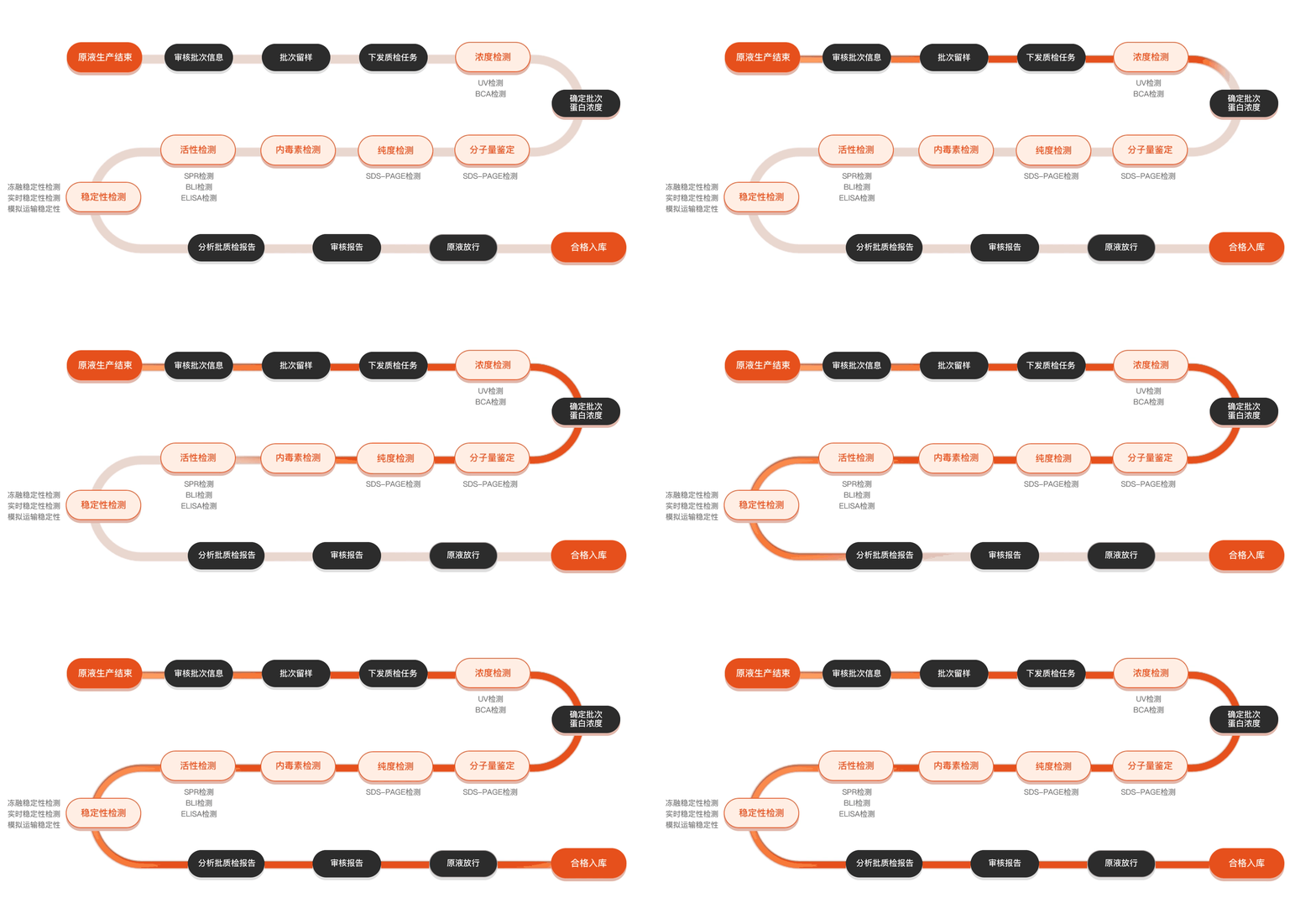
Quality inspection process
Related Products
Protein Description
COL15 is a type of collagen that plays a crucial role in the extracellular matrix (ECM) of connective tissues, influencing various physiological processes, including cell adhesion, migration, and proliferation. Research into COL15 recombinant protein has gained traction due to its potential applications in tissue engineering and regenerative medicine. The study of COL15 is particularly relevant for understanding its contribution to tissue integrity and repair mechanisms, especially in response to injury or disease. Unlike other collagen types, COL15 exhibits unique structural properties, such as its ability to form fibrils and interact with other ECM components, which may enhance cell signaling and support cellular functions. Additionally, COL15 is implicated in various pathological conditions, including fibrosis and certain types of cancer, drawing attention to its therapeutic potential. The production of COL15 recombinant protein through advanced biotechnological methods enables researchers to investigate its biophysical properties and biological activities in vitro and in vivo. By elucidating the roles of COL15 in cellular behavior and ECM dynamics, scientists aim to harness its properties for innovative therapeutic strategies, including scaffold development for tissue regeneration and targeted drug delivery systems. Thus, the exploration of COL15 recombinant protein not only advances our fundamental understanding of collagen biology but also paves the way for novel clinical applications that could improve outcomes in regenerative therapies and tissue repair.