Analytical Data
-
基因名
SKIL
- Application
-
别名
SKIL;SNO;Ski-like Protein
-
种属
Human
-
表达系统
E. coli
-
标签
His tag N-Terminus
-
纯度
Greater than 90% as determined by SDS-PAGE.
-
蛋白编号
P12757
-
表达区间
1-684aa
-
氨基酸序列
MENLQTNFSL VQGSTKKLNG MGDDGSPPAK KMITDIHANG KTINKVPTVK KEHLDDYGEA PVETDGEHVK RTCTSVPETL HLNPSLKHTL AQFHLSSQSS LGGPAAFSAR HSQESMSPTV FLPLPSPQVL PGPLLIPSDS STELTQTVLE GESISCFQVG GEKRLCLPQV LNSVLREFTL QQINTVCDEL YIYCSRCTSD QLHILKVLGI LPFNAPSCGL ITLTDAQRLC NALLRPRTFP QNGSVLPAKS SLAQLKETGS AFEVEHECLG KCQGLFAPQF YVQPDAPCIQ CLECCGMFAP QTFVMHSHRS PDKRTCHWGF ESAKWHCYLH VNQKYLGTPE EKKLKIILEE MKEKFSMRSG KRNQSKTDAP SGMELQSWYP VIKQEGDHVS QTHSFLHPSY YLYMCDKVVA PNVSLTSAVS QSKELTKTEA SKSISRQSEK AHSSGKLQKT VSYPDVSLEE QEKMDLKTSR ELCSRLDASI SNNSTSKRKS ESATCNLVRD INKVGIGLVA AASSPLLVKD VICEDDKGKI MEEVMRTYLK QQEKLNLILQ KKQQLQMEVK MLSSSKSMKE LTEEQQNLQK ELESLQNEHA QRMEEFYVEQ KDLEKKLEQI MKQKCTCDSN LEKDKEAEYA GQLAELRQRL DHAEADRQEL QDELRQEREA RQKLEMMIKE LKLQILKSSK TAKE
-
内毒素
< 1.0 EU per μg protein as determined by the LAL method.
-
性状
Freeze-dried powder
-
缓冲液
PBS, pH7.4, containing 0.01% SKL, 1mM DTT, 5% Trehalose and Proclin300.
-
复溶方法
Reconstitute in ddH2O to a concentration of 0.1-0.5 mg/mL. Do not vortex.
- 个性化定制
-
稳定性测试
The thermal stability is described by the loss rate. The loss rate was determined by accelerated thermal degradation test, that is, incubate the protein at 37℃ for 48h, and no obvious degradation and precipitation were observed. The loss rate isless than 8% within the expiration date under appropriate storage condition.
-
保存条件 & 期限
Samples are stable for up to twelve months from date of receipt at -20℃ to -80℃. Store it under sterile conditions at -20℃ to -80℃. It is recommended that the protein be aliquoted for optimal storage. Avoid repeated freeze-thaw cycles.
-
运输条件
In general, recombinant proteins are supplied as lyophilized powder and shipped at ambient temperature. For bulk packages, the proteins are provided as frozen liquid and shipped with blue ice, unless otherwise requested by the customer.
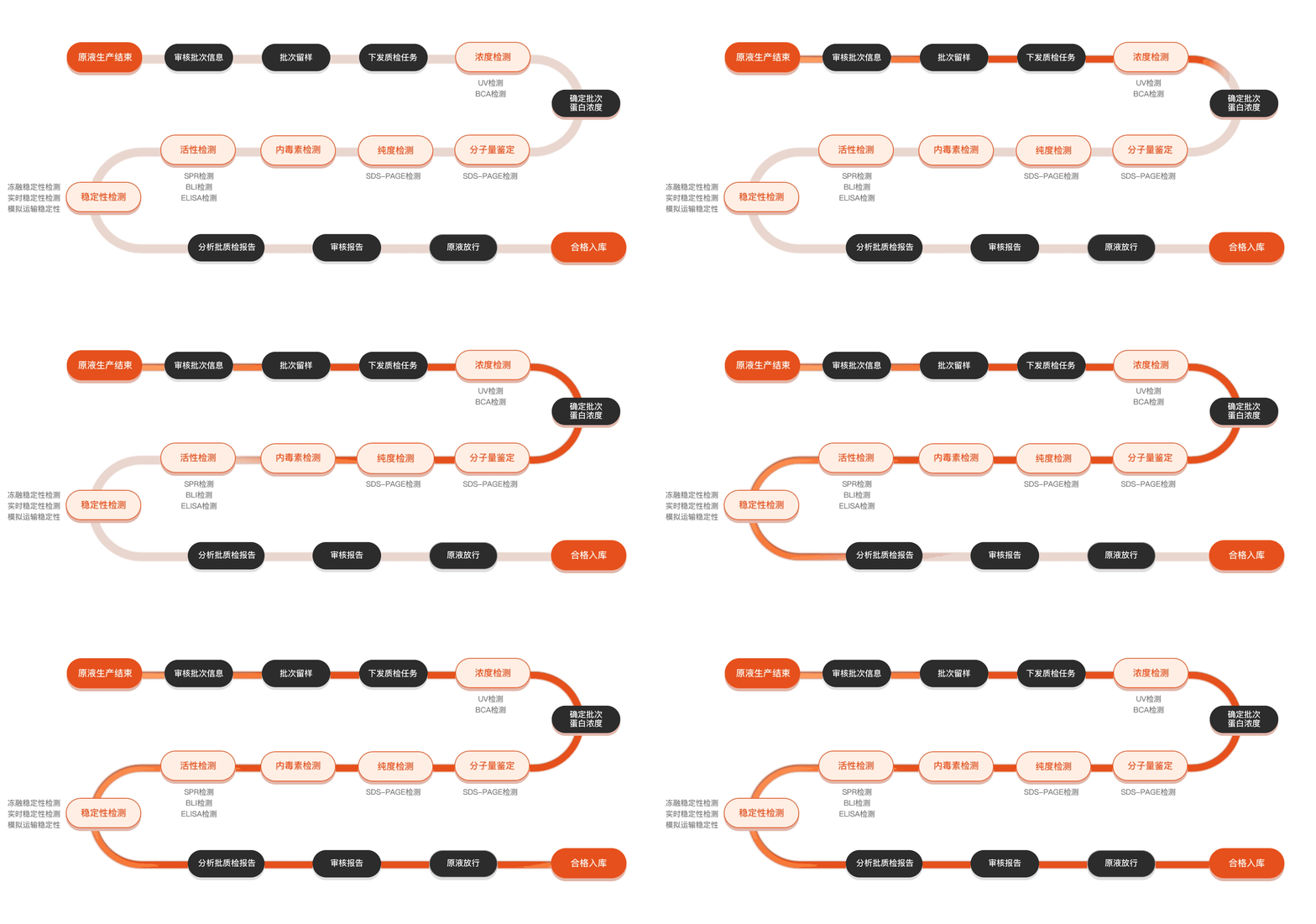
Quality inspection process
Related Products
Recombinant Human SRPX Protein,His
Cat:PAX2000-11665
Recombinant E.coli pos5 Protein,His
Cat:PA2000-3500
Protein Description
The study of SKIL (SKI-like) recombinant protein has garnered significant attention in recent years due to its potential roles in various biological processes, including development, cell signaling, and tumorigenesis. SKIL is an important member of the Ski family of proteins, which are known to act as transcriptional co-repressors by interacting with the Smad proteins in the TGF-β signaling pathway. This interaction is crucial for regulating cellular responses to growth factors, thereby influencing processes such as differentiation and proliferation. Dysregulation of SKIL has been implicated in several cancers, making it a target of interest for therapeutic intervention. The exploration of SKIL recombinant protein extends beyond basic research; it aims to elucidate the structural and functional mechanisms underlying its interactions within cellular pathways. Recombinant expression systems allow for the production of SKIL protein in sufficient quantities for functional assays, structural studies, and drug development. Understanding the molecular mechanisms by which SKIL modulates signaling networks may provide insights into novel cancer therapies and enhance our comprehension of developmental biology. As such, the ongoing research endeavors related to SKIL recombinant protein not only aim to unravel the complexities of its biological roles but also to leverage this knowledge for clinical applications in oncology and regenerative medicine.