

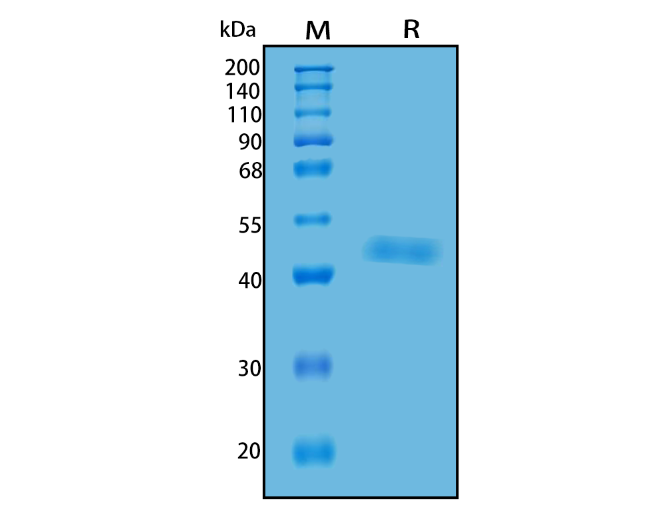
Analytical Data
-
Gene name
FAH
- Application
-
Alternative Names
FAH;Fumarylacetoacetase
-
Species
Human
-
Source
E. coli
-
Tag
His tag N-Terminus
-
Purity
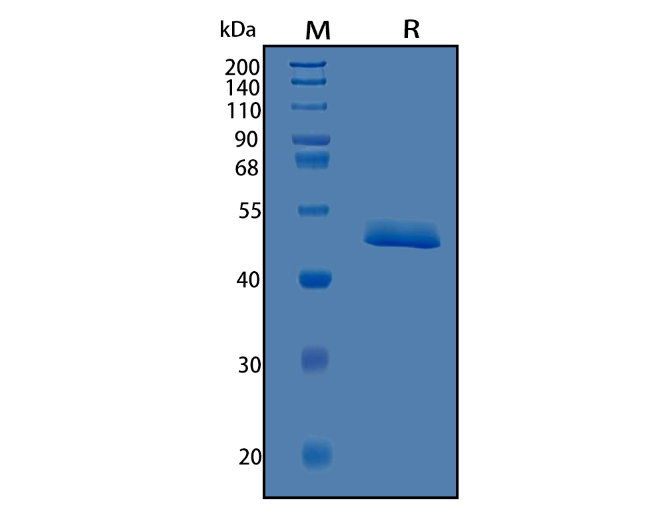
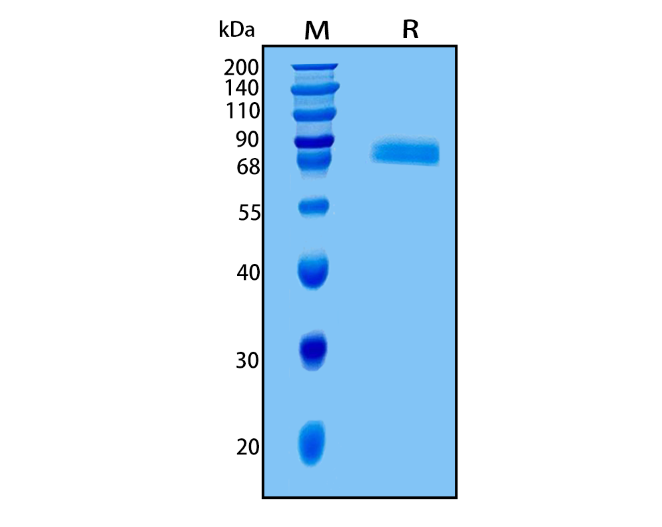
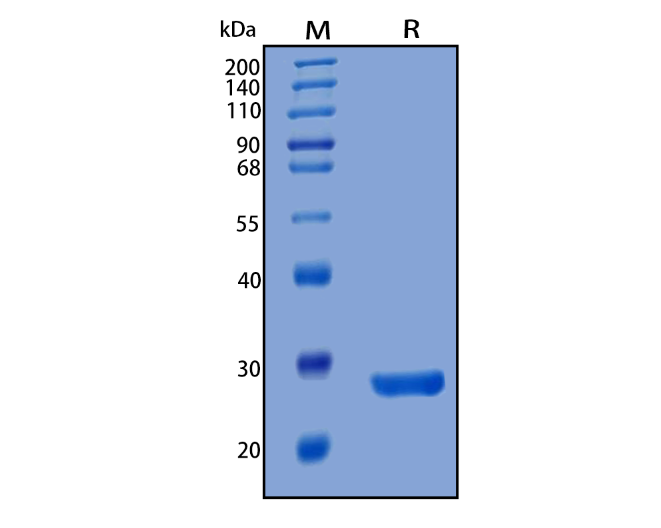
Greater than 90% as determined by SDS-PAGE.
-
Uniprot
P16930
-
Expression Region
2-419aa
-
AA Sequence
SFIPVAEDS DFPIHNLPYG VFSTRGDPRP RIGVAIGDQI LDLSIIKHLF TGPVLSKHQD VFNQPTLNSF MGLGQAAWKE ARVFLQNLLS VSQARLRDDT ELRKCAFISQ ASATMHLPAT IGDYTDFYSS RQHATNVGIM FRDKENALMP NWLHLPVGYH GRASSVVVSG TPIRRPMGQM KPDDSKPPVY GACKLLDMEL EMAFFVGPGN RLGEPIPISK AHEHIFGMVL MNDWSARDIQ KWEYVPLGPF LGKSFGTTVS PWVVPMDALM PFAVPNPKQD PRPLPYLCHD EPYTFDINLS VNLKGEGMSQ AATICKSNFK YMYWTMLQQL THHSVNGCNL RPGDLLASGT ISGPEPENFG SMLELSWKGT KPIDLGNGQT RKFLLDGDEV IITGYCQGDG YRIGFGQCAG KVLPALLPS
-
Molecular Weight
46,3Kda
-
Endotoxin
< 1.0 EU per μg protein as determined by the LAL method.
-
Form
Freeze-dried powder
-
Buffer formulation
PBS, pH7.4, containing 0.01% SKL, 1mM DTT, 5% Trehalose and Proclin300.
-
Reconstitution
Reconstitute in ddH2O to a concentration of 0.1-0.5 mg/mL. Do not vortex.
- Customization
-
Stability Test
The thermal stability is described by the loss rate. The loss rate was determined by accelerated thermal degradation test, that is, incubate the protein at 37℃ for 48h, and no obvious degradation and precipitation were observed. The loss rate isless than 8% within the expiration date under appropriate storage condition.
-
Storage & Shelf Life
Samples are stable for up to twelve months from date of receipt at -20℃ to -80℃. Store it under sterile conditions at -20℃ to -80℃. It is recommended that the protein be aliquoted for optimal storage. Avoid repeated freeze-thaw cycles.
-
Shipping
In general, recombinant proteins are supplied as lyophilized powder and shipped at ambient temperature. For bulk packages, the proteins are provided as frozen liquid and shipped with blue ice, unless otherwise requested by the customer.
Quality inspection process

Related Products
Identification
Protein Description
FAH (fumarylacetoacetate hydrolase) is a crucial enzyme involved in the metabolic pathway of tyrosine, essential for the proper degradation of phenylalanine and tyrosine in the liver. Deficiency in this enzyme leads to a rare genetic disorder known as hereditary tyrosinemia type 1 (HT1), characterized by the accumulation of toxic metabolites that can cause severe liver and kidney damage, as well as neurological complications. The study and development of recombinant FAH proteins have garnered significant attention, particularly as potential therapeutic agents for HT1. Advances in molecular biology techniques, including genetic engineering and protein expression systems, allow for the production of functional FAH proteins that can be used in enzyme replacement therapies or as a basis for gene therapy approaches. Understanding the structure-function relationships of FAH, alongside the exploration of its stability and activity in various physiological conditions, is essential for developing effective treatments. Additionally, recombinant FAH provides a valuable tool for investigating the enzyme's role in metabolic regulation and offers insight into potential biomarkers for monitoring disease progression and response to therapy. Overall, the research on recombinant FAH not only addresses a critical medical need but also enhances our understanding of metabolic disorders associated with tyrosine catabolism.







